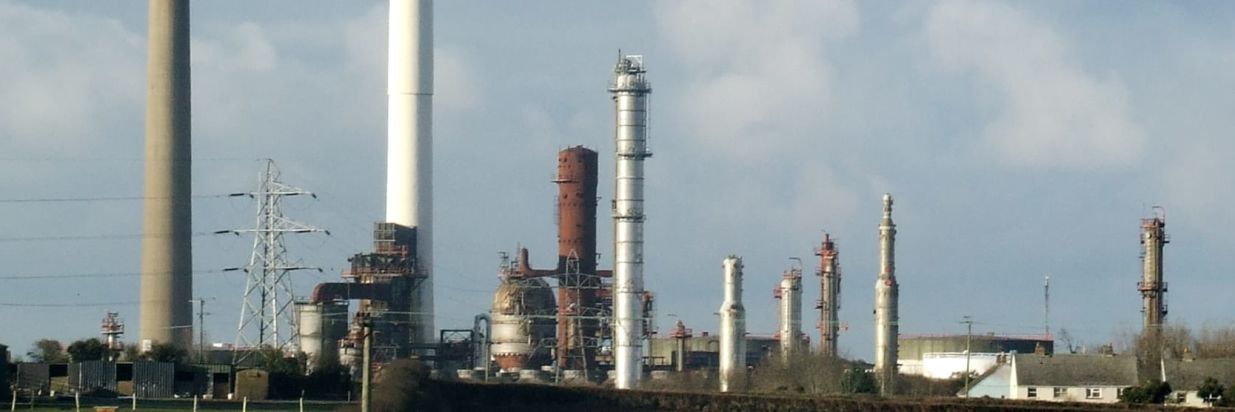
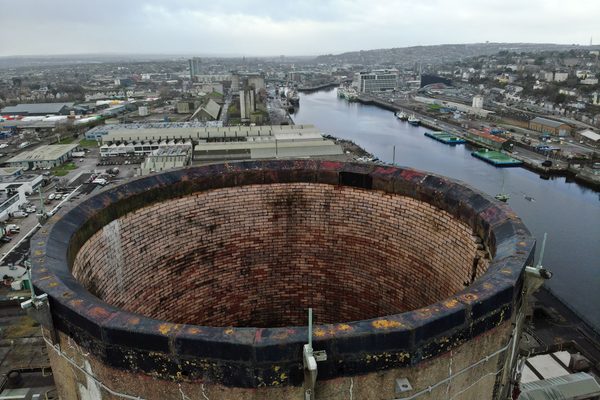
Industrial chimneys can be 100 metres or more in height. A full external inspection using rope access or scaffolding takes days to set up and carries significant height risk. Our drones survey the complete external shaft, cap, and lining from base to top in a single flight. Where internal inspection is required, our confined space drone inspects the full interior of the flue without any person entering the stack — no confined space entry permit, no decommissioning, no cooling-down period.
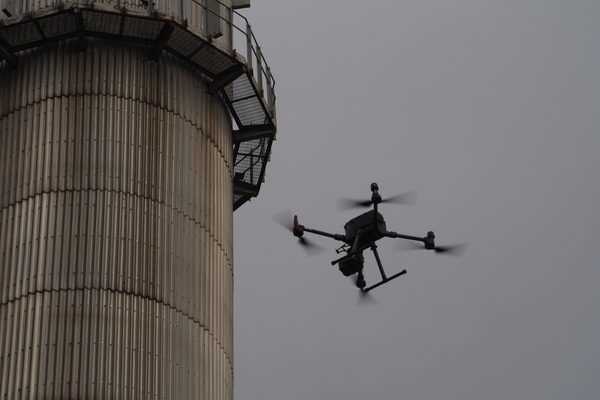
A single flight covers the full height of the shaft, cap, and lining — regardless of chimney height. The drone operates at a safe standoff distance throughout, with no scaffolding, no rope access, and no workers at height. What we detect externally: mortar joint deterioration, brick and concrete spalling, corrosion, cap damage, and lightning conductor condition.
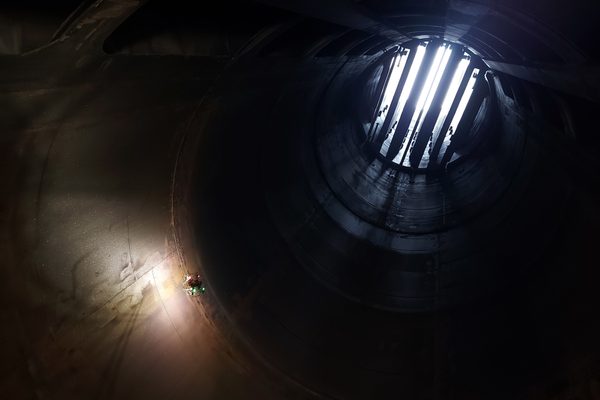
The confined space drone enters through the base hatch — not from the top — and inspects the interior on ascent. Entry from the base gives the pilot a clear view ahead, so any probes, sensors, or penetrations protruding into the stack are visible and can be inspected carefully before the drone reaches them. What we detect internally: lining cracks, spalling, refractory deterioration, water ingress, coating condition, reinforcing ring condition, support structure, and probe and penetration condition.
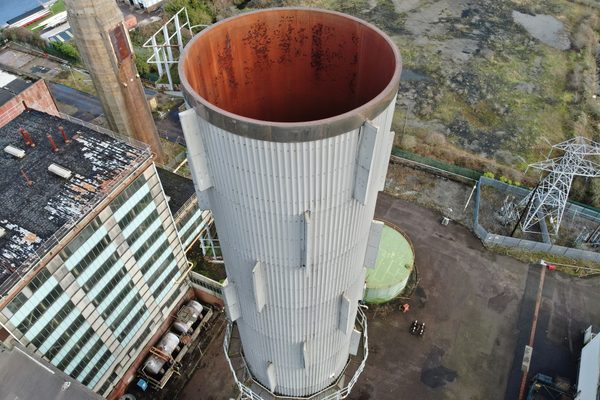
The Elios 3 confined space drone generates a LiDAR point cloud alongside 4K video during the internal inspection. This gives the client a dimensioned record of the stack interior — every crack, spalling zone, coating failure, and structural defect is captured and located in three dimensions. The point cloud is deliverable in standard formats and does not require specialist software to view defect locations.
Every defect is described, categorised by type, and assigned a severity level. The report includes a simple orientation diagram showing each defect’s location within the stack — accessible to non-technical stakeholders without specialist software, and ready to hand directly to your maintenance or repair team.
Full-height external coverage from a safe standoff distance. No access equipment, no setup time, no workers at height — regardless of chimney height.
The confined space drone inspects the full interior without any person entering the stack. No confined space entry permit, no decommissioning, no cooling-down period required.
The complete external shaft, cap, and lining surveyed from base to top in a single flight — mortar joints, spalling, corrosion, cap damage, and lightning conductor condition.
The drone generates a dimensioned 3D record of the stack interior alongside 4K video — every defect located in three dimensions, not just captured on footage.
Full-resolution internal video with still photography of every identified fault. Both delivered alongside the LiDAR point cloud in a single inspection.
Each defect described, categorised, and severity-rated. Includes a simple orientation diagram showing defect locations within the stack — no specialist software needed to read it.
Industrial chimneys can be 100 metres or more in height. Conventional access requires scaffolding or rope access at significant cost and risk. Our drones survey the full external shaft — cap, lining, mortar joints, and lightning conductor — from base to top in a single automated flight, with no access equipment and no workers at height.
The confined space drone enters through the base hatch and flies upward through the full interior of the flue, generating a LiDAR point cloud and 4K video simultaneously. Every crack, spalling zone, coating failure, and structural defect is captured and located in three dimensions. No person enters the stack at any point — no confined space entry permit, no decommissioning, no cooling-down period required.
Every inspection delivers a full-height photographic survey of the external shaft, 4K internal video with still photography of each identified fault, and a LiDAR point cloud of the stack interior — giving the client a dimensioned record of the flue rather than just footage. Faults are compiled into a defect classification report: each defect described, categorised by type, and assigned a severity level. A simple orientation diagram shows each defect’s location within the stack, accessible to non-technical stakeholders without specialist software and ready to hand directly to a maintenance or repair team.
Complex surveys and inspections require more than just a pilot. Our engineers can help you scope your requirements and indentify the right approach.