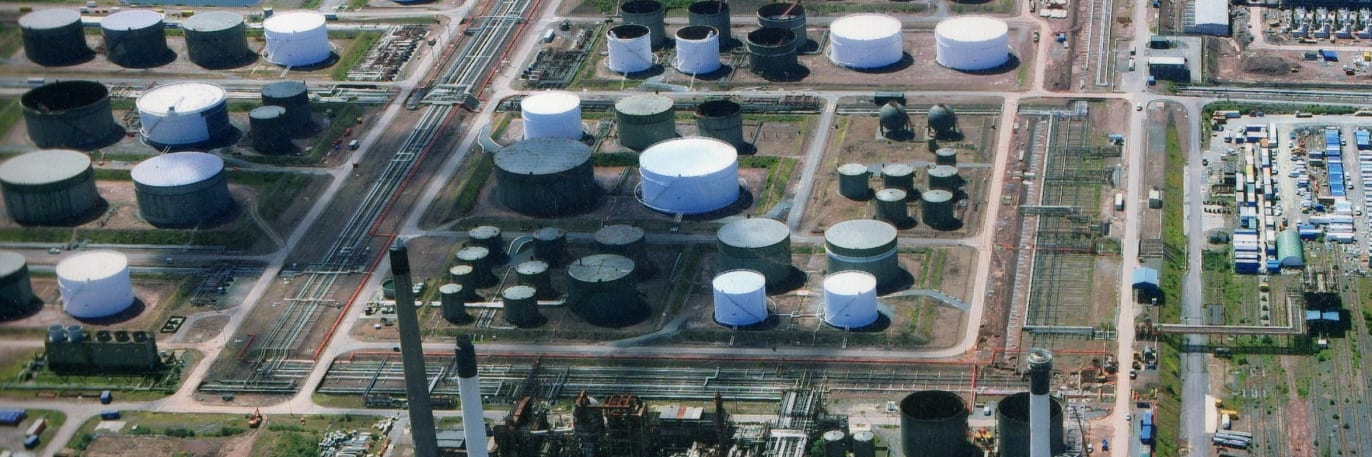
Conventional flare stack inspection requires the flare to be shut down and cooled before anyone can approach — a costly and operationally disruptive process that can take the stack offline for days. A drone inspection can be carried out while the flare remains live, from a safe standoff distance, with no shutdown and no cooling period.
A single flight can cover the full height of the stack — tip, pilot ignition system, radiation shield, supporting steelwork, pipework, gantries, and handrails. Thermal imaging adds tip condition and burner integrity assessment to the visual survey, all in the same deployment.
Can a flare stack be inspected while it is live?
Yes. A drone can inspect a flare stack while the flare remains lit, from a safe standoff distance. This is the single biggest advantage over conventional access methods, which require the flare to be shut down and cooled before anyone can approach — a process that can take the stack offline for days and cost significant production time.
The drone operates at a safe standoff distance and does not interact with the flare. Every site is assessed individually to confirm the safe operating envelope before any work begins.
Discuss your site requirementsWhat does a flare stack inspection cover?
A full inspection covers the complete stack structure: flare tip condition, pilot ignition systems, radiation shield, supporting steelwork, pipework, gantries, handrails, and coating and corrosion across all surfaces. Thermal imaging can add tip condition and burner integrity assessment to the visual survey in the same deployment.
What a drone can detect: corrosion, coating degradation, physical damage, structural deformation, loose or missing parts, and thermal anomalies indicating burner or tip issues.
See the full component-level breakdownCan flares be inspected offshore?
Yes — the same drone inspection capability applies to offshore platforms. The drone operates at a safe standoff distance and does not require physical access to the stack, so the offshore environment does not change the inspection methodology.
Offshore deployments are assessed on a site-by-site basis to account for platform-specific access, weather windows, and operational constraints.
Discuss your offshore requirementsDo you offer other oil and gas inspection services?
Yes. Flare stacks sit within the wider oil and gas picture — we also inspect pipe racks, storage tanks, pressure vessels, wellheads, and structural steelwork across oil and gas facilities. All of these are covered on the oil and gas infrastructure page.
See our oil and gas infrastructure inspection servicesDo you offer other energy sector services?
Yes. Beyond oil and gas, we inspect wind turbines, utility-scale solar farms, and high-voltage power grid infrastructure. All of these are covered on the energy sector page.
See our full energy sector services





























The defining advantage of drone inspection for flare stacks is that the flare does not need to be shut down or cooled. A drone can survey the full height of the stack from a safe standoff distance while the flare remains lit — eliminating the days of downtime and production loss that conventional access methods require.
How close does the drone get to a live flare?
The drone operates at a safe standoff distance determined during pre-work planning. The safe operating envelope is assessed individually for each site based on the flare type, thermal output, wind conditions, and stack configuration. The drone does not fly through or above the flame.
A site-specific Risk Assessment and Method Statement is prepared and agreed with the site health and safety officer before fieldwork begins.
Discuss your site requirementsWhat about working at height regulations?
The Safety, Health and Welfare at Work (Work at Height) Regulations 2006 (S.I. No. 318 of 2006) require that work at height be avoided where it is reasonably practicable to do so. A drone inspection satisfies this requirement at the first step of the hierarchy of control — no one leaves the ground.
Because no personnel work at height, the duties to provide fall protection, guardrails, or rescue arrangements do not arise.
More about our regulatory complianceWhere can a drone fly in industrial settings in Ireland?
All drone operations in Ireland are regulated by the Irish Aviation Authority under the EASA framework (S.I. No. 24 of 2023). Engineers with Drones holds an EASA Specific Category Operational Authorisation (IRL.UAS.AUTH1002) — the first company in Ireland to receive this level of authorisation — which permits operations beyond Open category limits: over populated areas, near airports, and above sensitive infrastructure.
For active industrial sites, a site-specific Risk Assessment and Method Statement is typically prepared and agreed with the site health and safety officer before fieldwork begins.
More about our operational authorisations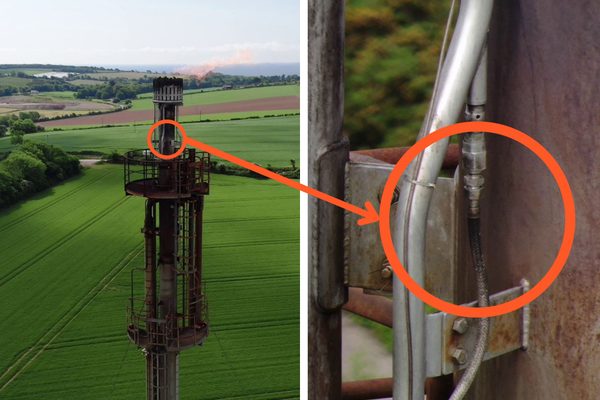
A single flight covers the complete flare stack structure from base to tip. Every component is systematically inspected and photographed in sequence, with dedicated close-range passes on each area — tip, pilot, shield, structure, pipework, gantries, handrails, and coating condition. The same methodology applies whether the stack is at an onshore refinery or an offshore platform.
Burner nozzle integrity, carbon build-up, cracking, and physical damage visible from close-range high-resolution imagery.
Condition and positioning of pilot burners, igniters, and flame detection equipment.
Integrity and alignment of the heat shield protecting the stack structure from tip heat.
Steelwork corrosion, coating degradation, bolt condition, and any signs of structural deformation.
Condition of gas supply lines, steam lines, and associated fittings running up the stack.
Access platform integrity, grating condition, handrail security, and ladder fixings.
Security, corrosion, and structural integrity of all handrail systems on platforms and access ways.
Paint system condition, coating failure, surface corrosion, and pitting across all external surfaces.
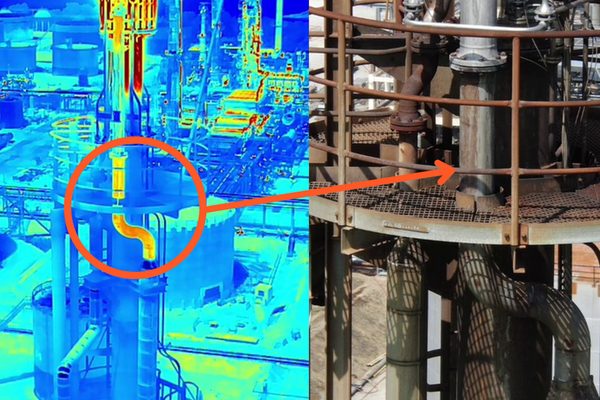
Drones equipped with thermal imaging cameras — operated by trained thermographers — can add tip condition and burner integrity assessment to the visual survey in the same deployment. Thermal imaging can detect temperature anomalies that indicate burner damage, refractory lining wear, or uneven heat distribution, all while the flare remains lit.
What can thermal imaging detect on a flare stack?
Thermal imaging can detect burner tip damage (uneven temperature distribution across the burner nozzle), refractory lining degradation (heat escaping through worn or missing lining), and flame impingement on the stack structure that may indicate a burner alignment issue.
All EWD drone operators are trained thermographers. Thermal data is captured, processed, and included in the inspection report alongside the visual photography — giving you a complete picture of stack condition in a single deployment.
More about thermal imaging inspections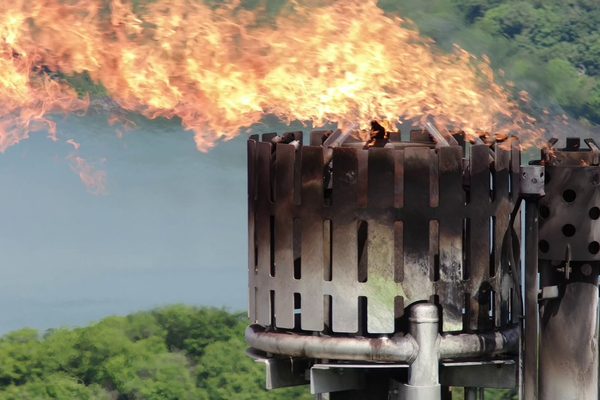
Every defect is described, categorised by type, and assigned a severity level. The report includes a simple orientation diagram showing each defect’s location on the stack — accessible to non-technical stakeholders without specialist software, and ready to hand directly to your maintenance or engineering team. Skip to see what a typical inspection delivers...
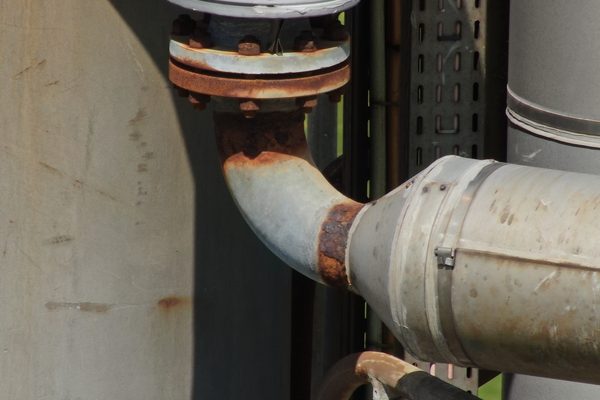
Inspect the flare stack while it remains live and lit. No cooling period, no production downtime — the drone operates at a safe standoff distance throughout the inspection.
Full-height external coverage from base to tip in a single flight. No access equipment, no setup time, no workers at height — regardless of stack height.
Tip condition, burner integrity, and refractory lining assessed by trained thermographers in the same deployment as the visual survey — no return visit needed.
Every component systematically inspected: tip, pilot ignition, radiation shield, supporting structure, pipework, gantries, handrails, and coating condition.
Same methodology, same deliverables — whether the flare stack is at an onshore refinery or an offshore platform. Site-specific planning accounts for weather windows and platform access.
Each defect described, categorised, and severity-rated. Includes an orientation diagram showing each defect’s location on the stack — no specialist software needed.
The operational case for drone inspection of flare stacks turns on a single fact: the flare does not need to be shut down. Conventional access — scaffolding, rope access, or crane — requires the flare to be taken offline and cooled, costing days of production time before the first inspection image is captured. A drone survey operates at a safe standoff distance while the flare remains lit, eliminating that downtime entirely.
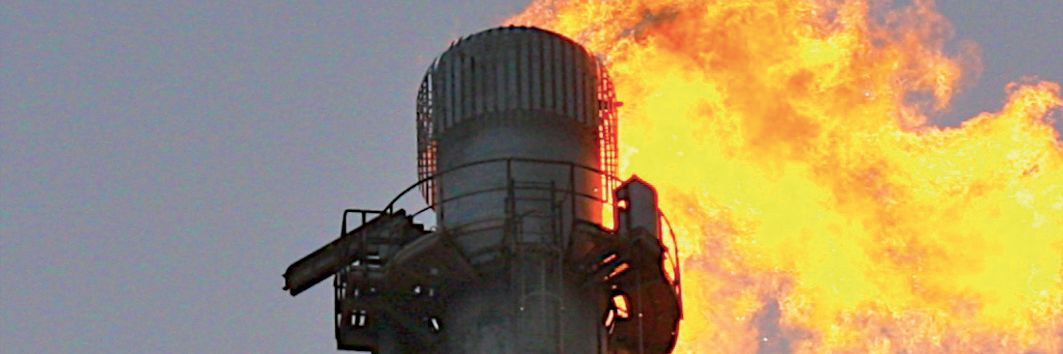
The drone inspection methodology is the same whether the flare stack is at an onshore refinery, a petrochemical plant, or an offshore platform. Site-specific planning accounts for the additional constraints of offshore work — weather windows, platform access, and helicopter transfer schedules — but the inspection itself is unchanged: safe standoff, live-stack operation, full component coverage.
Tell us what you need to know, and we will work with you to design actionable deliverables that give you the outcomes you need.
A typical inspection delivers full-height high-resolution photography of the complete stack structure, thermal imagery of the tip and burner where required, and 4K video of the full inspection flight — all captured in a single deployment without shutting down the flare. A typical flare stack inspection can be completed in a single site visit, with the full defect classification report delivered within a few working days.
Faults are usually compiled into a defect classification report: each defect described, categorised by type, and assigned a severity level. A simple orientation diagram shows each defect’s location on the stack, accessible to non-technical stakeholders without specialist software and ready to hand directly to a maintenance or engineering team.
Every component photographed from base to tip — tip, pilot, shield, structure, pipework, gantries, handrails, and coating condition.
Tip condition and burner integrity assessed by trained thermographers in the same deployment as the visual survey.
Full-flight footage of the inspection, supported by still photography of every identified defect.
Each defect described, categorised, and severity-rated. An orientation diagram shows where every fault sits on the stack.
Complex surveys and inspections require more than just a pilot. Our engineers can help you scope your requirements and indentify the right approach.