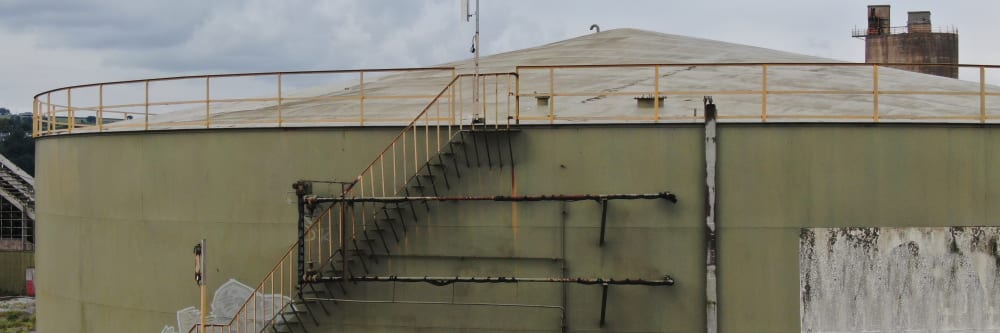
Storage tanks, silos, pressure vessels, water tanks, and fire water tanks need regular inspection, but conventional access carries a heavy operational burden. In a lot of cases, confined space entry permits, atmospheric monitoring and a standby rescue crew are mandatory before anyone can enter. The preparation alone can take days, and the asset is offline throughout.
A confined space drone inspection uses a cage-protected UAV which enters through the existing access hatch and inspects every internal surface under live pilot guidance. No human entry, no permits, no decommissioning or cleaning are required. External surfaces are covered simultaneously by an aerial drone equipped with high-resolution 4K and thermal imaging cameras, detecting corrosion, coating failure, wall thinning, and structural anomalies in a single mobilisation. The inspection is completed in hours, not days, and you receive a full annotated condition report tailored to your requirements, with the asset back in service with minimal downtime.
What is a confined space drone?
A confined space drone is a purpose-built UAV designed to fly inside enclosed structures where standard drones cannot operate. Standard drones rely on GPS to hold position; inside a tank, silo, or pressure vessel, there is no GPS signal. A confined space drone navigates from the pilot's live video feed instead, stabilising itself with onboard visual sensors.
The defining feature is a protective cage that surrounds the propellers. In an open drone, any contact with a wall causes an immediate crash. The cage absorbs those impacts, allowing the drone to bounce off surfaces and continue flying. The cage-protected confined space drone carries a 4K camera and is small enough to enter through a standard 50cm access hatch.
Find out more about our confined space drone inspectionsHow do confined space drone inspections work?
The drone enters through the existing access hatch and is flown manually by a qualified engineer watching a live high-definition feed from outside. The interior — walls, roof structure, floor, and penetrations — is covered systematically, with the full flight recorded as continuous video. For a typical steel tank, the interior inspection is completed in under two hours.
After the flight, the footage is reviewed and every finding — corrosion, coating failure, structural deformation, sediment build-up — is compiled into an annotated condition report. No human entry, no permits, and no decommissioning are required.
Find out more about our confined space drone inspectionsWhat is 3D modelling?
3D modelling — also called photogrammetry — uses overlapping photographs taken from different angles to reconstruct an asset as a measurable three-dimensional model you can inspect, measure, and annotate from your desk.
For tanks and silos, an aerial drone captures the external surfaces — roof, shell, fittings, and pipework — while a confined space drone can generate a 3D point cloud of the interior. The two can be combined into a single digital record, giving you a complete model of the structure without anyone entering it.
Learn more about our 3D mapping servicesWhat are orthophotos and orthomosaics?
An orthophoto is an aerial image that has been geometrically corrected so that every pixel represents a true top-down view, free from the perspective distortion of a regular photograph. Unlike a standard aerial photo, you can measure true distances on an orthophoto: the span of a tank roof, the area of a corroded section, the coordinates of a specific defect. When multiple orthophotos are stitched together to cover an entire asset or site, the result is an orthomosaic. These can be huge and incredibly detailed: a single orthomosaic of a multi-tank storage facility can be hundreds of megapixels in size, with every square metre of every tank surface visible and every anomaly located to within centimetres.
For a tank farm or storage facility, the orthomosaic can be a key deliverable. Every tank is accurately positioned, every defect is located by GPS coordinates, and the image can be loaded directly into CAD, GIS, or asset management software. It is the difference between “here is a photograph of your tanks” and “here is a measurable, georeferenced map of every asset on your site. You can zoom in to see every bolt.”



































The interior of a tank, silo, or pressure vessel is one of the hardest inspection environments to reach. Traditional access means erecting scaffolding inside the asset, rigging winch lines, or committing to a confined space entry — each with cost, schedule, and safety consequences. A cage-protected confined space drone enters through the existing access hatch — typically 50 cm or smaller — and inspects the full interior: walls, floor, roof structure, and penetrations, with the pilot and all personnel remaining safely outside.
How does the drone reach the inside of a tank or silo?
The confined space drone enters through the asset’s existing access hatch and flies the interior on the pilot’s live video feed — no GPS required inside, and no scaffolding, winches, or access equipment of any kind. A protective cage absorbs any contact with internal surfaces so the flight continues safely.
More about confined space drone inspectionsWhy is the interior so difficult to reach by traditional methods?
Reaching the interior traditionally means preparing for confined space entry: permits, atmospheric testing, and rescue arrangements under S.I. No. 218 of 2001 — plus internal scaffolding that must be erected and dismantled inside the asset. A drone inspection avoids all of this because no person enters the space.
More about confined space regulations in Ireland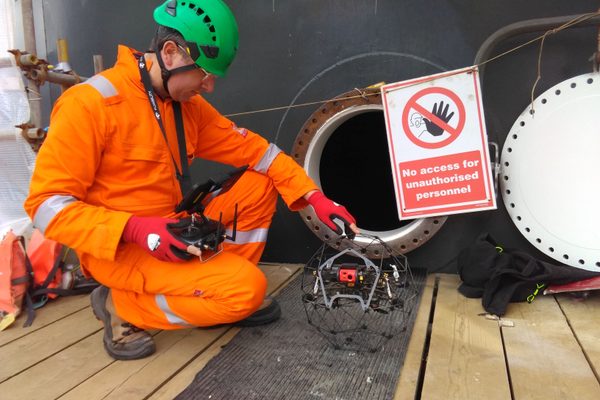
Drone 3D modelling turns a tank, silo, or vessel into a measurable digital twin that the engineering team can inspect from the office. Defects — coating failure, deformation, poorly executed repairs — can be located on the model, marked, and shared with suppliers or repair contractors at the click of a button, without anyone returning to site. Repeated surveys build a dated visual record of the asset, so change can be tracked between inspection cycles.
What is a digital twin of a tank or silo?
A digital twin is a detailed 3D replica of the asset, built from overlapping drone photography or LiDAR, that can be rotated, zoomed, and measured on screen. Every defect found on site can be located and marked on the model, giving the whole team a single reference point for the asset’s condition.
More about 3D mapping and digital twinsCan repeat surveys track change over time?
Yes. Each survey produces a dated model, so the current condition can be compared against a previous baseline — whether a coating defect has grown, a deformation has progressed, or a repair has held. This turns the digital twin into an ongoing monitoring record rather than a one-off snapshot.
Discuss ongoing monitoring for your assets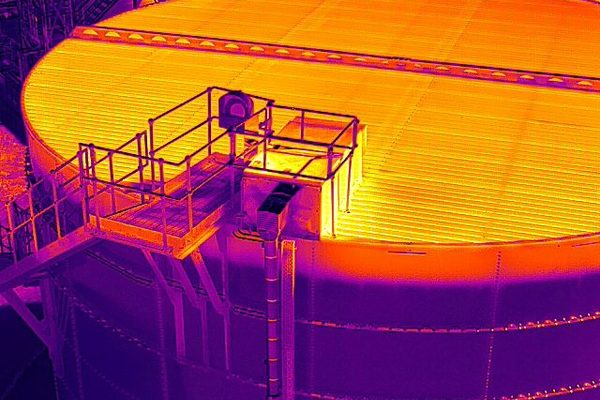
Drones equipped with thermal imaging cameras reveal the irregularities a standard camera cannot. A corroded or thinned section of tank wall conducts heat differently from the surrounding steel; moisture trapped behind linings and heat loss through damaged insulation each produce a measurable thermal signature at the surface. The thermal pass pinpoints where to focus maintenance attention before a defect becomes a failure.
What does thermal imaging detect on tanks and silos?
A thermal camera detects temperature differentials across the surface of the asset. On a tank or silo, these differentials can reveal corrosion thinning the wall, coating failure, moisture trapped behind linings, and heat loss through damaged insulation — none of which would be visible to the naked eye or a standard camera.
More about thermal imaging inspectionsCan thermal imaging see through tank walls?
No — this is a common misconception. Thermal imaging does not see through materials. It measures the rate at which different areas of the surface emit heat energy. A corroded or thinned section of a tank wall conducts heat differently from the surrounding steel, and that difference shows up at the surface as a detectable thermal anomaly. The camera captures the surface temperature pattern, not what is behind or beneath it.
More about thermal imaging inspections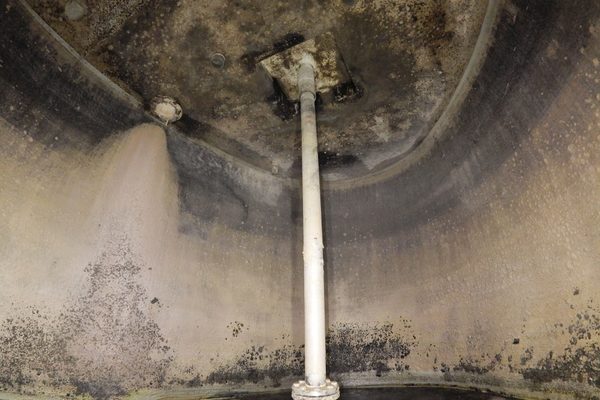
Orthomosaic technology turns drone photography into a measurable map of the asset. On a tank or silo, the orthomosaic records the diameter of the roof and shell, the position of nozzles, hatches, and flanges, and the extent of every visible surface defect — each measurement accurate to within a few centimetres and tied to real-world coordinates.
How accurate are orthomosaic measurements?
A properly georeferenced orthomosaic can locate a feature to within a few centimetres of its true real-world position. Ground control points (GCPs) are typically used to tie the model to known coordinates, giving survey-grade accuracy suitable for measuring tank diameters, weld seam positions, and the extent of coating defects.
When an orthomosaic is loaded into CAD or GIS software, you can click any two points and read the distance between them directly. This means you can measure a corroded patch on a tank roof, the displacement of a pipe support, or the area of a coating failure without returning to site with a tape measure.
More about 3D mapping and orthomosaic deliverablesWhat can you measure on an orthomosaic of a tank or silo?
On a tank or silo orthomosaic, you can measure the diameter of the roof and shell, the location and dimensions of access hatches, flanges, and nozzles, and the extent of any visible surface defect. For a tank farm, the orthomosaic positions every tank relative to every other tank, with measurements accurate enough to feed directly into an asset register or maintenance planning system.
See 3D mapping and orthomosaic capabilities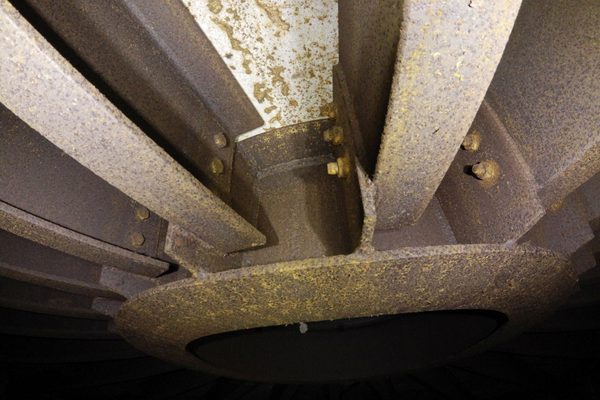
No confined space entry permit, no atmospheric monitoring, no standby rescue crew. The drone enters through the existing access hatch, inspects every internal surface, and returns. Under Irish law (S.I. No. 218/2001), confined space entry must be avoided where reasonably practicable — drone inspection satisfies this duty directly.
No internal scaffolding erected inside the asset, no materials passed through narrow hatches, no access equipment of any kind. The drone flies the interior as it stands.
A confined space drone covers the interior while an aerial drone surveys the roof, shell, fittings, and pipework simultaneously — both surfaces documented in a single mobilisation.
Assets do not need to be taken offline, drained, cleaned, or purged before inspection. The drone works in the structure as it stands, with the asset remaining in service.
A thermal camera pass detects corrosion, coating failure, wall thinning, and insulation loss — defects invisible to the naked eye — while the 4K camera records every surface in high definition.
Every finding is GPS-tagged, classified by severity, and delivered as a professional condition report your maintenance team, insurer, or consulting engineer can act on directly.
Tanks and silos need regular inspections, usually every 5 to 10 years, but traditional methods involve ropes, cranes or scaffolding, which carry safety risks and potential for damage. With confined-space drones, we can inspect faster and safer, without entering the tank. You get the information you need with far less risk or downtime.
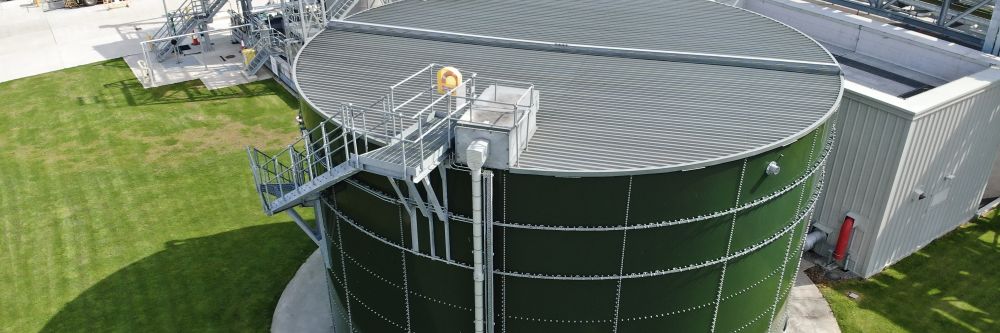
Tank maintenance comes with the usual issues — corrosion, weather damage, and wear — whether it's LNG, freshwater or oil storage. A drone survey can identify areas of thermal abnormality and cold spots in a fraction of the time of traditional methods, without the labour and time-intensive need for cranes, rope, or scaffolding. Survey flights can be flown at whatever angle and distance a defect needs to be documented, all recorded in high-definition detail.
Confined space work in Ireland is governed by the Safety, Health and Welfare at Work (Confined Spaces) Regulations 2001 (S.I. No. 218 of 2001). This framework states that confined space entry must be avoided where it is reasonably practicable to achieve the work purpose without it. That's where drones come into play. For tank, silo, and vessel inspections, a confined space drone satisfies this duty directly — nobody ever needs to enter the asset.
Does a drone inspection satisfy the legal requirements?
For confined space entry regulations — yes. Regulation 5 of S.I. No. 218/2001 requires that entry be avoided where reasonably practicable, and a cage-protected confined space drone doing the internal visual survey is an established, recognised means of satisfying that duty. The drone enters through the existing access hatch, captures high-resolution 4K video of every internal surface under live pilot guidance, and nobody enters the asset.
However, confined space regulations govern how an inspection is carried out safely — they do not cover whether the tank or silo itself is structurally sound or fit for continued service. For a formal assessment of tank integrity — such as an API 653-compliant inspection designed to verify structural condition, prevent catastrophic failure or leaks, and determine remaining safe operational life — an API-certified inspector must be involved. Engineers with Drones is not API registered. Where an API 653 inspection is required, we work alongside the client's API-certified inspector: we capture the visual and thermal data by drone, and they assess it against the API standard and sign off the report.
More about confined space regulations in Ireland HSA Code of Practice for Working in Confined Spaces (PDF)What is required if confined space entry cannot be avoided?
Where entry is unavoidable, the regulations require prior hazard identification, a written risk assessment, and a documented safe system of work before anyone enters. The HSA’s Code of Practice for Working in Confined Spaces treats a formal permit-to-work as the standard control measure. Suitable rescue arrangements — including trained personnel and appropriate equipment — must also be in place before entry begins.
Learn about our approach to HSSE HSA Code of Practice for Working in Confined Spaces (PDF)Do ADR regulations apply to tank inspections?
For road tanks carrying dangerous goods, Irish ADR law (S.I. No. 349 of 2011) governs the periodic inspection and testing requirements for the tank itself. Where an ADR-required inspection involves internal confined space entry, the confined spaces regime under S.I. No. 218/2001 continues to apply to the entry activity.
Engineers with Drones do not carry out mandatory ADR inspections. There are currently four inspection bodies appointed by the HSA for the inspection of road tanks in Ireland. These are:
Fitzgerald Commercials Limited (Cork) TankSafe Solutions Limited (Dublin and UK) Tank Testing Services (IRL) Limited (Meath, Donegal & Antrim) Hartford Steam Boiler Ireland Limited (Dublin)Where can I find out more about confined space regulations in Ireland?
Human entry to confined spaces is carefully regulated within Ireland and internationally. Here are some of the key regulatory frameworks.
HSA Code of Practice for Working in Confined Spaces (PDF) S.I. No. 218/2001 — Safety, Health and Welfare At Work (Confined Spaces) Regulations, 2001 Health and Safety Authority (HSA) - Confined Spaces Guidance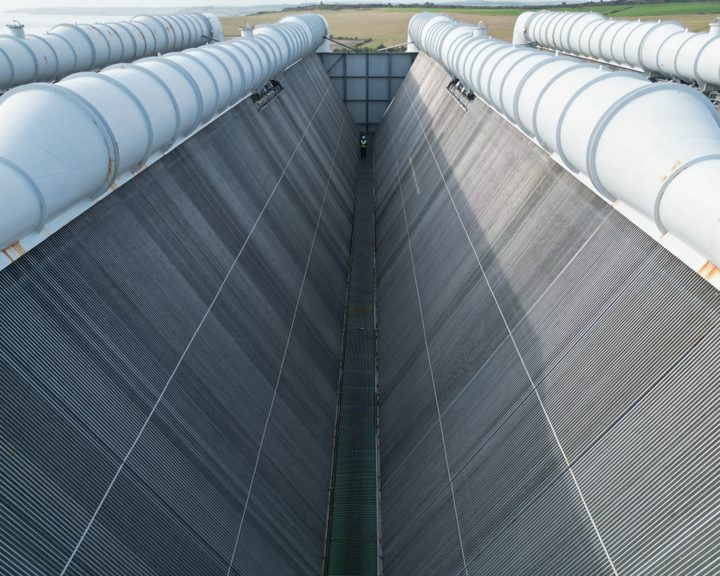
Confined space drone inspection of every stage of a gas-fired HRSG during a major shutdown, 4K video of the heat exchangers, exhaust stack and site infrastructure.
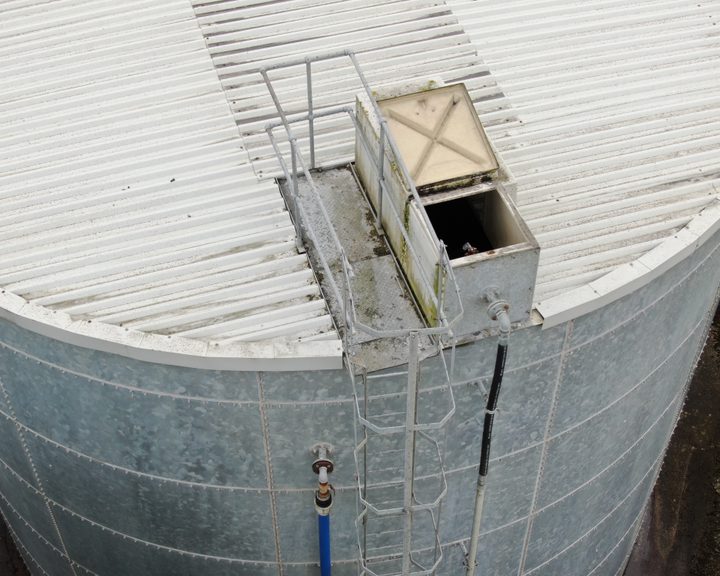
Engineers With Drones carried out a detailed inspection of a large above-ground galvanised steel water tank used for fire suppression, using a confined space drone to access the interior.
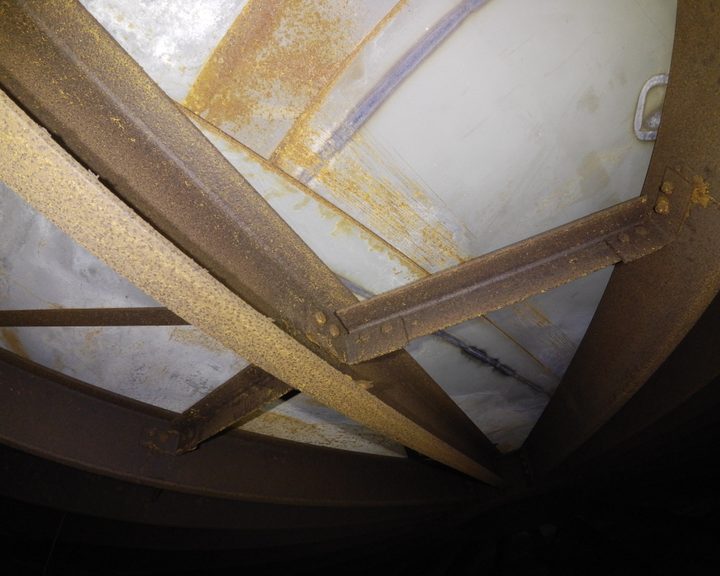
Engineers With Drones used a confined space drone to inspect a large steel ethanol tank on a natural gas processing facility — eliminating the need for scaffolding or personnel entry.
Complex surveys and inspections require more than just a pilot. Our engineers can help you scope your requirements and indentify the right approach.