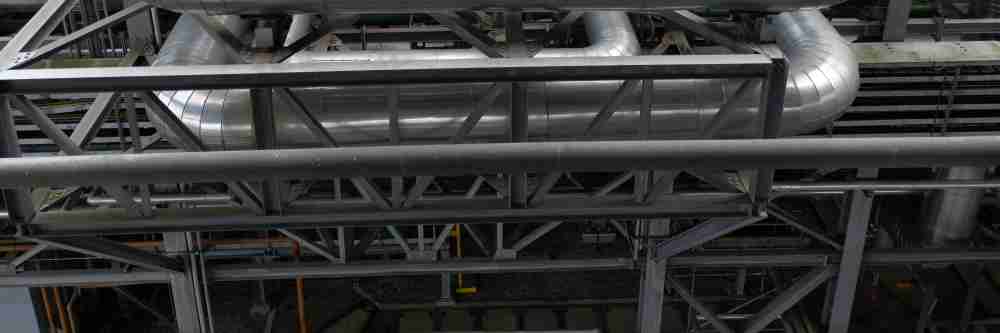
Arranging scaffolding for a pipe rack inspection can add days of setup before the first image is captured. A drone survey typically covers elevated pipework, valve actuators, supports, and lagging from a standoff distance — no access equipment, no workers at height, no disruption to plant operations.
For pipeline corridors, a drone can cover several kilometres of route in a single flight, capturing high-resolution imagery and thermal data along the full length. Ground movement, vegetation encroachment, and thermal anomalies at joints and fittings are all detectable without shutting down the line or excavating the route.
What can a drone see on a pipe rack?
A drone inspection can capture the condition of pipework, flanges, valve actuators, supports, lagging, and insulation across an entire rack in a single flight. Thermal imaging can detect temperature anomalies that may indicate corrosion under insulation (CUI), steam tracing failures, or blocked lines — all without removing lagging or shutting down the line.
More about thermal imaging for industrial plantCan a drone detect a pipeline leak?
Yes. A drone equipped with a thermal camera can detect the heat differential caused by pressurised gas or liquid escaping from a pipeline or fitting. Thermal imaging is also effective for identifying underground pipe routes and tracing leaks where the temperature difference between the pipe contents and surrounding ground is sufficient.
See what a pipeline corridor inspection coversDo you need to shut down the plant for a pipe rack inspection?
No. A drone inspection operates at a safe standoff distance and does not interact with the pipework. The inspection can typically be carried out while the plant remains in full operation — no shutdown, no decommissioning, and no disruption to production.
Discuss your site requirementsWhat is the turnaround time for a pipeline or pipe rack inspection?
A typical pipe rack inspection can be completed in a single site visit, with the full defect classification report delivered within a few working days. Pipeline corridor inspections vary with route length — timelines are confirmed before any work begins based on the specific site, scope, and deliverables required.
Discuss your inspection timelineA single flight covers the full length of a pipe rack — elevated pipework, flanges, valve actuators, supports, lagging, and insulation. The drone operates at a safe standoff distance throughout, with no scaffolding, no rope access, and no workers at height. What a drone can detect on a pipe rack: corrosion under insulation (CUI), coating failure, support structure deterioration, loose or missing fasteners, and thermal anomalies at flanges and valves.
What about working at height regulations in Ireland?
The Safety, Health and Welfare at Work (Work at Height) Regulations 2006 (S.I. No. 318 of 2006) require that work at height be avoided where it is reasonably practicable to do so. A drone survey satisfies this requirement at the first step of the hierarchy of control — the inspection is carried out from a safe standoff distance with no personnel working at height.
Because no one leaves the ground, the duties to provide fall protection, guardrails, or rescue arrangements for work at height do not arise. The regulation’s framework — avoid, prevent, minimise — is satisfied without progressing beyond the first obligation.
More about our regulatory complianceWhere can a drone fly in commercial and industrial settings in Ireland?
All drone operations in Ireland are regulated by the Irish Aviation Authority under the EASA framework (S.I. No. 24 of 2023). Engineers with Drones holds an EASA Specific Category Operational Authorisation (IRL.UAS.AUTH1002) — the first company in Ireland to receive this level of authorisation — which permits operations beyond Open category limits: over populated areas, near airports, and above sensitive infrastructure.
For active industrial sites, a site-specific Risk Assessment and Method Statement is typically prepared and agreed with the site health and safety officer before fieldwork begins.
More about our operational authorisations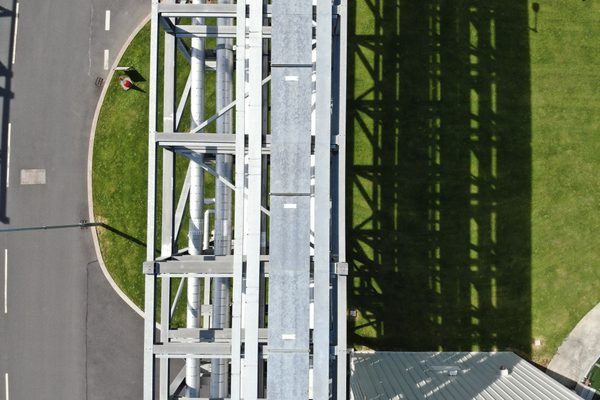
A drone can cover several kilometres of pipeline route in a single flight, capturing high-resolution imagery and thermal data along the full corridor. From the air, ground movement, subsidence, erosion, vegetation encroachment, and third-party activity near the pipeline are all visible — often before they cause a problem at pipe level. On above-ground sections, supports, coating condition, and external corrosion are documented as part of the same flight.
Can a drone inspect a buried pipeline?
A drone cannot see through soil, but it can detect the surface indicators of subsurface pipeline issues — ground movement, subsidence, erosion, vegetation stress caused by a leak, and unauthorised excavation or construction activity along the route. Thermal imaging can also detect the heat signature of a buried pipeline where the temperature differential between the pipe contents and surrounding ground is sufficient.
On above-ground sections of the same pipeline — valve stations, river crossings, exposed segments — a drone can carry out a full visual and thermal inspection of the pipework, supports, and coatings.
More about thermal imaging for pipeline inspectionHow quickly can a pipeline corridor be surveyed?
Coverage speed depends on route length, terrain, and the inspection scope. A drone survey can typically cover several kilometres of pipeline corridor in a single day — far faster than a walking inspection and with a consistent aerial perspective that makes ground movement and vegetation encroachment immediately visible.
Discuss your pipeline inspection requirements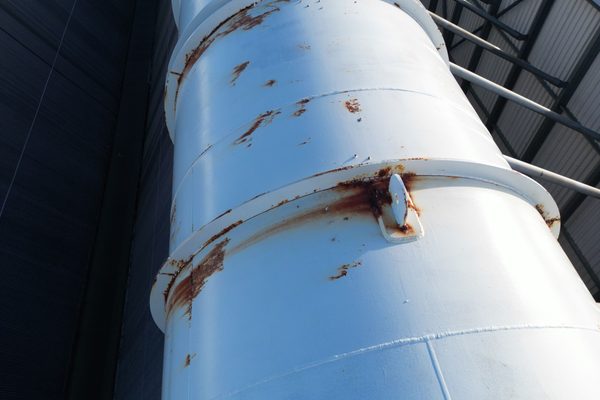
A drone equipped with a thermal camera can detect the heat differential caused by pressurised gas or liquid escaping from a pipeline or fitting. Thermal imaging is also effective for identifying steam tracing failures, blocked lines, and temperature anomalies that may indicate corrosion under insulation — all without removing lagging or shutting down the line. On buried pipelines, thermal imaging can trace the pipe route and identify leak points where the temperature difference between the pipe contents and surrounding ground is sufficient.
What types of gas leaks can thermal imaging detect?
Thermal cameras detect the temperature differential created when pressurised gas escapes — this is visible whether the gas is methane, steam, compressed air, or refrigerant. The camera does not identify the gas type; it identifies the thermal anomaly at the leak point, which can then be investigated.
All EWD drone operators are trained thermographers, so the thermal data captured during an inspection is interpreted by qualified personnel — not simply recorded and handed over raw.
More about thermal imaging servicesCan thermal imaging detect corrosion under insulation (CUI)?
Thermal imaging can detect temperature anomalies on lagged pipework that may indicate CUI before it becomes visible externally. Wet or deteriorated insulation conducts heat differently from dry, intact insulation — the thermal camera picks up these temperature differences at the surface, allowing inspection without removing lagging or shutting down the line.
More about thermal imaging for industrial plant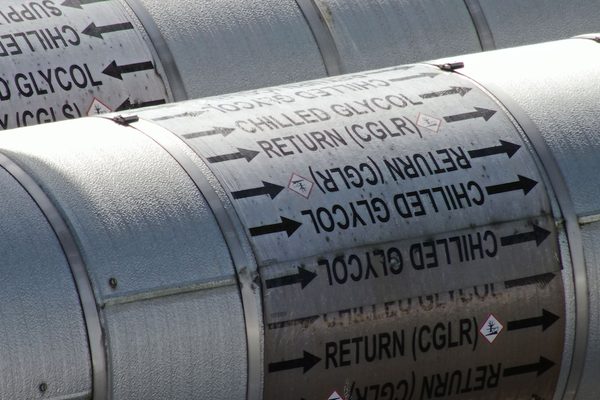
Every defect is described, categorised by type, and assigned a severity level. The report includes a simple orientation diagram showing each defect’s location within the pipe rack or along the pipeline corridor — accessible to non-technical stakeholders without specialist software, and ready to hand directly to your maintenance or repair team.
What does a defect classification report include?
Each defect is photographed, GPS-tagged, described, categorised by type (corrosion, coating failure, mechanical damage, insulation deterioration, etc.), and assigned a severity level. The report includes an orientation diagram that maps each defect to its location within the asset — so a maintenance team can locate and address every finding in the field without interpretation.
Discuss your reporting requirementsWhat formats are the deliverables provided in?
Deliverables are tailored to your requirements — there is no fixed off-the-shelf format. A PDF condition report with embedded imagery, defect tables, and orientation diagrams is what most clients ask for, and is the most common output. Imagery can also be provided as standalone files with GPS metadata. Additional formats — including spreadsheet defect registers and GIS-compatible outputs — can be accommodated where your internal systems require them.
Discuss your deliverable format requirements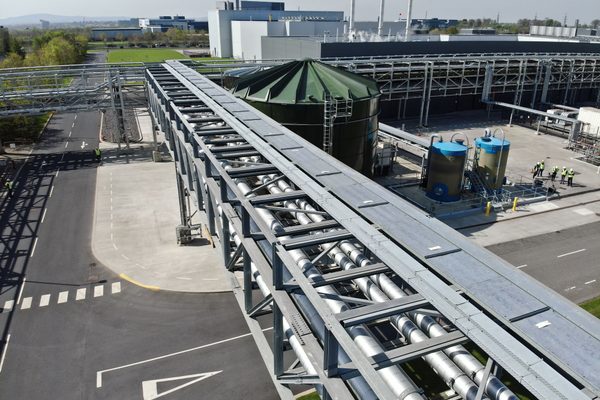





















































Thermal imaging can detect temperature anomalies that may indicate CUI on lagged pipework before it becomes visible externally — no insulation removal, no shutdown required.
A drone can inspect elevated pipework, valve actuators, supports, and lagging while the plant remains in full operation. No scaffolding, no rope access, no disruption to production.
Thermal cameras can identify product leaks, steam tracing failures, and blocked lines from a standoff distance — no physical contact with pipework required.
A drone survey can cover several kilometres of pipeline route in a single flight — identifying ground movement, vegetation encroachment, and third-party activity along the corridor.
Every defect is photographed and georeferenced, so your maintenance team can locate and address each issue in the field without interpretation.
Where pipelines pass through culverts or enclosed structures, a confined space drone can inspect without human entry — no permit, no decommissioning, no standby rescue team (S.I. No. 218 of 2001).
Conventional access for a pipe rack inspection requires scaffolding, mobile elevating work platforms, or rope access — at significant cost and with personnel at height throughout. A drone survey can cover the full rack — elevated pipework, flanges, valve actuators, supports, lagging, and insulation — from a safe standoff distance, with no access equipment and no workers at height. Thermal imaging can be captured during the same flight to identify CUI, steam tracing failures, and blocked lines.
A drone can cover several kilometres of pipeline route in a single flight, capturing high-resolution visual and thermal data along the full corridor. Ground movement, subsidence, erosion, vegetation encroachment, and third-party activity near the pipeline are all visible from the air — often before they cause a problem at pipe level. On above-ground sections, supports, coating condition, and external corrosion are documented as part of the same flight, giving a complete corridor record in a fraction of the time of a walking inspection.
Tell us what you need to know, and we will work with you to design actionable deliverables that give you the outcomes you need.
A typical pipe rack inspection delivers a full photographic survey of elevated pipework, flanges, valve actuators, supports, lagging, and insulation — with thermal imaging captured during the same flight to identify CUI, steam tracing failures, and blocked lines. For pipeline corridors, the deliverable is a georeferenced photographic and thermal survey covering the full route, with ground movement, vegetation encroachment, and thermal anomalies at joints and fittings all documented.
Faults are usually compiled into a defect classification report: each defect described, categorised by type, and assigned a severity level. A simple orientation diagram shows each defect’s location within the asset, accessible to non-technical stakeholders without specialist software and ready to hand directly to a maintenance or repair team.
Every pipe, flange, support, and coating condition photographed in high resolution from a safe standoff distance.
Thermal data captured alongside visual imagery — CUI, steam tracing failures, and blocked lines identified in a single flight.
Each defect georeferenced so your maintenance team can locate and address every finding in the field.
High quality footage of the pipe rack or pipeline corridor, supported by still photography of every identified defect.
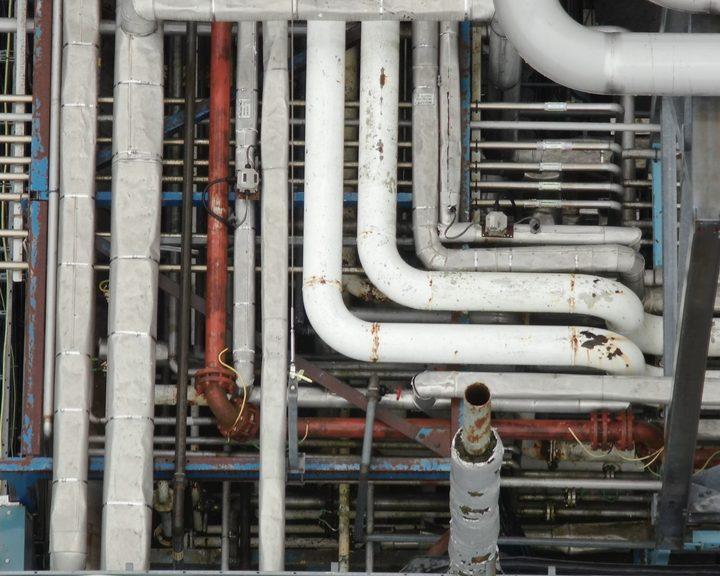
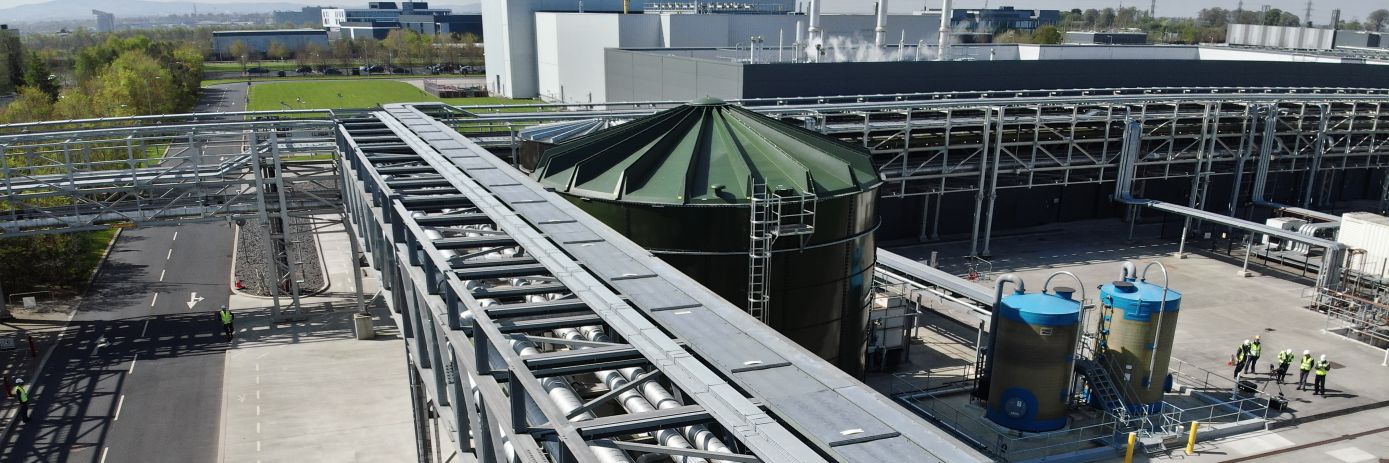
Engineers With Drones used a drone to carry out a detailed inspection of pharmaceutical plant pipe racks, providing complete coverage of upper surfaces without the need for climbers or mobile elevating work platforms.
Complex surveys and inspections require more than just a pilot. Our engineers can help you scope your requirements and indentify the right approach.