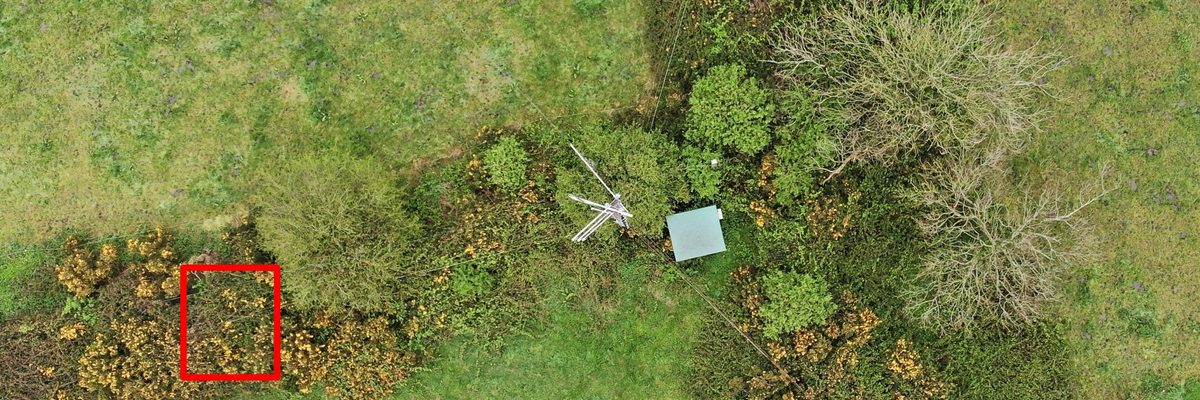
A stayed lattice radio mast on a high point in Cobh, Cork Harbour, inspected by drone

Radio mast inspection

Cobh, Cork Harbour Critical port communications infrastructure inspected without downtime using high-optical-zoom drone photography.
Overview

The Job at a Glance

A condition survey of a critical radio mast serving Cork Harbour, carried out using high-optical-zoom drone photography from a safe standoff distance. The stayed lattice steel mast was captured in full — structure, stays, anchor points, and antenna mountings — without any operational downtime.

Cobh, Cork Harbour

Located on a remote high point overlooking the harbour, this mast handles all ship-to-shore communications for vessels entering and leaving Cork Harbour.

Zero downtime

The inspection was carried out while the mast remained fully operational. No transmission interruption, no service disruption to the port.

High optical zoom

Long-range zoom lenses kept the drone at a safe distance from the mast, eliminating any risk of radio frequency interference with live transmissions.

Full condition report

Every defect individually captured, classified by severity, and assigned a unique ID — a complete, referenced condition record for the engineering team.

The context

A critical piece of harbour infrastructure

Cork Harbour is one of the busiest commercial ports in Ireland, handling a constant flow of vessel traffic. Every ship entering or leaving the harbour relies on communications routed through the client's radio mast in Cobh. Situated on a remote high point in the town — not at a building or facility, but at an elevated, isolated location — this mast is a lynchpin of maritime safety and port operations.

The mast itself is a relatively small stayed lattice steel structure: three sets of stays, each with a lower and an upper stay, supporting the mast and its antenna array. Despite its modest size, its operational importance meant that any downtime was out of the question. The client needed a full condition assessment of the structure — the lattice, the stays, the anchor points, and the antenna mountings — without interrupting a single transmission.

A stayed lattice radio mast and its surrounding area on a high point in Cobh, Cork Harbour
The stayed lattice radio mast situated on a remote high point in Cobh, overlooking Cork Harbour.
The challenge

Inspecting a live radio mast without disruption

An engineering consultancy brought Engineers With Drones in to carry out the inspection. The brief was straightforward but demanding: produce a detailed condition report on every element of the mast while it remained live and transmitting.

Two constraints shaped the entire approach. First, the mast could not be taken offline — it handles all ship-to-shore communications for Cork Harbour, and any interruption would have immediate operational consequences. Second, flying a drone close to an active radio mast introduces a risk of radio frequency interference. The frequencies in use at the site were not in the same band as the drone's control and transmission frequencies, so there was confidence that the drone itself would not be affected. However, getting too close could still interfere with the mast's own transmissions.

The solution was to keep the drone at a safe standoff distance throughout the inspection — and this is where high-optical-zoom lenses made the difference.

Methodology

Three-angle flight profile with high-optical-zoom photography

Because the mast was a stayed structure with three sets of stays, the flight profile had to be carefully designed to avoid any risk of the drone becoming entangled. The team planned a three-angle approach, with each flight path positioned between the stays and aligned roughly 120° apart around the mast.

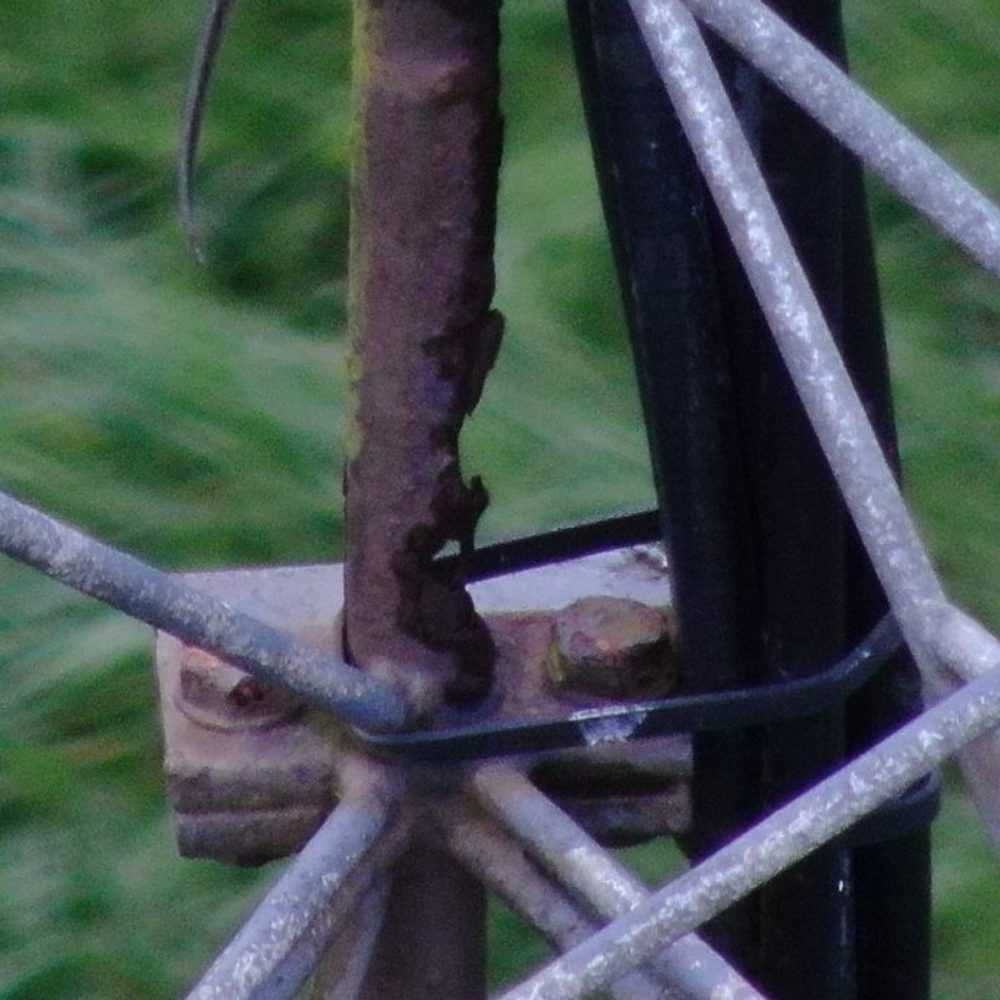
On each of the three angles, the drone was flown from the base of the mast to the top, capturing the full height of the lattice steel structure in high-resolution detail. The high-optical-zoom lens allowed the camera to get right into the steelwork — individual lattice members, bolted connections, and surface corrosion — all from a safe distance that posed no risk to the mast's radio operations.

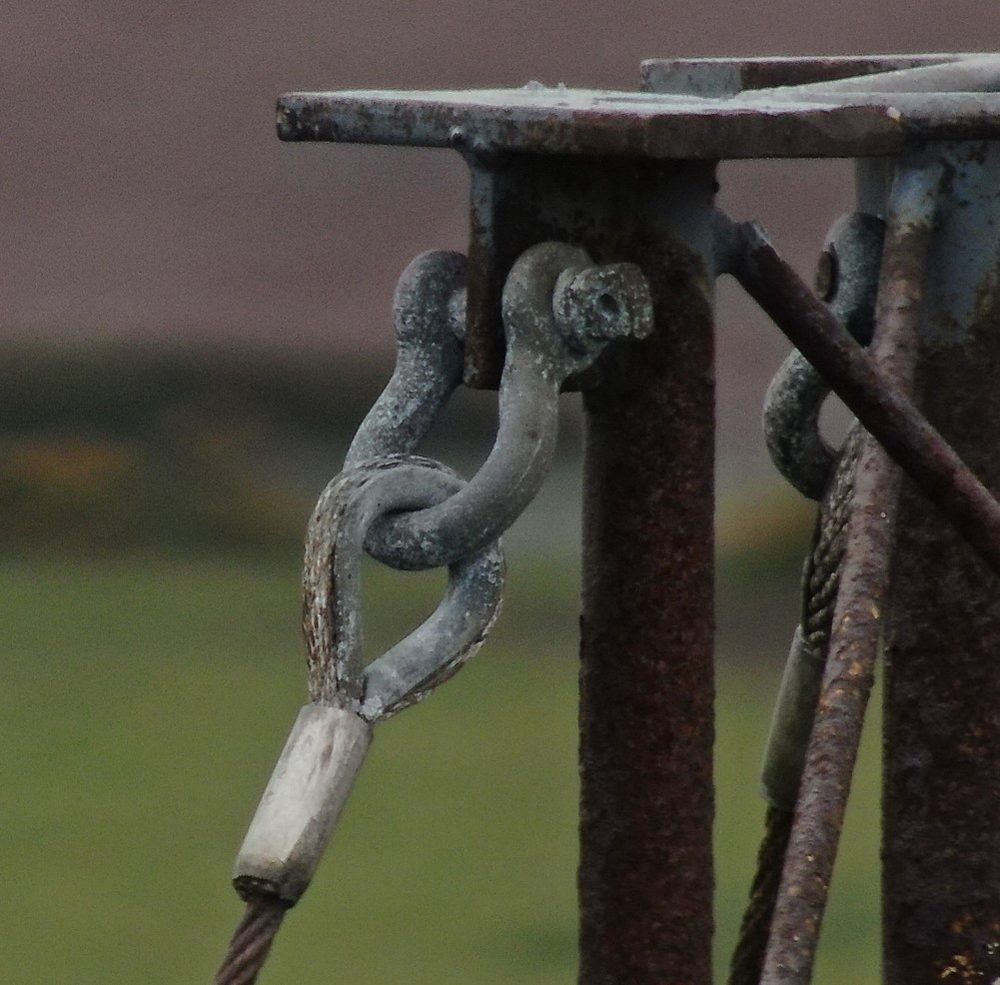
Beyond the lattice itself, the team also captured detailed imagery of every stay and anchor point, both on the mast and at ground level. The antenna array at the top of the mast was inspected in the same way, with particular attention to the securing points and fixtures that hold each antenna in place.

Close-up of the stayed lattice radio mast structure, showing the stays and lattice steel members
High-optical-zoom imagery captured the lattice steel structure and stay anchor points in fine detail, all from a safe standoff distance.
Findings

Heavy corrosion found in the lattice structure

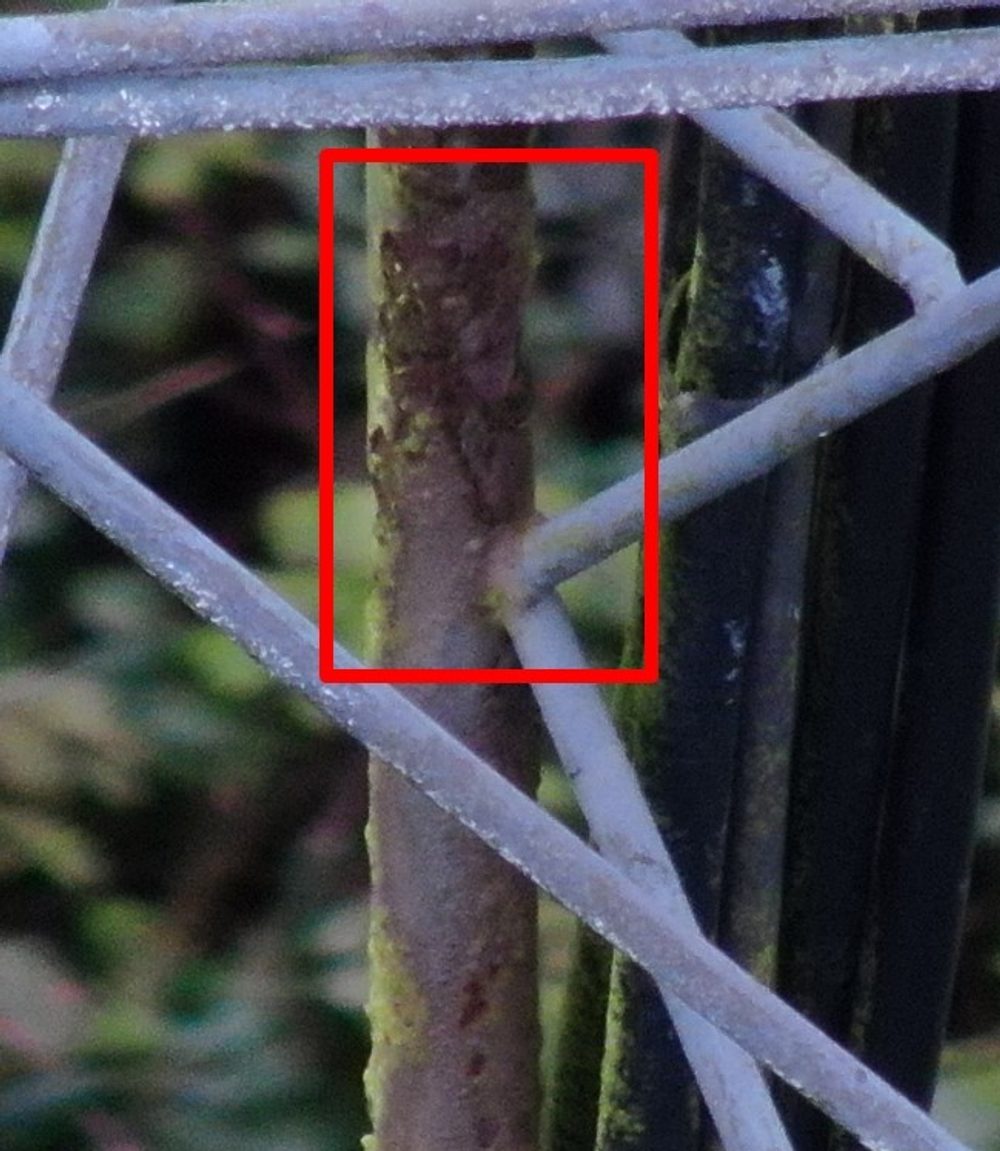
The imagery revealed a number of issues that required attention. Most significantly, there was heavy corrosion in some of the lattice steel members. The lattice structure itself — the redundancy built into its triangulated design — was the only thing keeping the mast standing in those areas. Had the structure relied on individual members rather than a lattice, the corrosion would have posed an immediate structural risk.

Close-up detail of corrosion on the lattice steel members of the radio mast
Heavy corrosion visible on the lattice steel members. The triangulated lattice design provided structural redundancy that kept the mast standing in affected areas.

The stays and anchor points were also documented in full, ensuring that the condition report reflected the entire mast assembly and not just the steel lattice. On the antenna array, one or two issues were identified with securing points and fixtures, and these were included in the report alongside the structural findings.

Outcome

A full condition report with every defect classified

Once the field work was complete, all of the captured imagery was brought back to the office for processing. Each defect was isolated and documented individually: a text description of the issue, a classification level, a severity rating, and a unique reference ID. This meant that every finding could be referenced and tracked through to remediation by the client's engineering team.

The report gave the client a complete, prioritised picture of the mast's condition — which defects needed immediate attention, which could be monitored, and where the structure was in good health. Most critically, it identified the areas of heavy corrosion in the lattice before they could develop into a more serious structural failure.

Deliverables

What the client received

High-resolution defect imagery

Each defect captured in high detail from multiple angles in the field, giving the engineering team a clear visual record of every issue.

Classified defect register

Every defect assigned a unique ID, a text description, a classification, and a severity level — fully referenced and trackable.

Full structural coverage

Lattice steel structure, all six stays, mast and ground anchor points, and antenna securing fixtures — the complete mast assembly documented.

Condition survey report

A consolidated report presenting all findings in a structured format, ready for immediate use by the engineering consultancy and the client.

Comparative methodology

Why they chose us

To inspect a live radio mast in a remote location without downtime, the client needed a method that kept personnel off the structure, maintained a safe distance from live transmissions, and still captured detail fine enough to classify corrosion in individual lattice members. High-optical-zoom drone photography delivered all three.

Access method
Safe standoff distance vs rope access on a live mast

The drone operated well clear of the structure throughout, with the zoom lens doing the close-up work — no personnel at height near live transmissions.

Operational impact
Zero downtime vs potential service interruption

The mast remained fully operational throughout the inspection, with no interruption to Cork Harbour's ship-to-shore communications.

Coverage
Full 360° capture vs limited climbing routes

Three flight angles at roughly 120° apart captured every face of the lattice, every stay, and every anchor point — no blind spots.

Efficient option Our method

Using a drone

High-optical-zoom drone photography captured the full mast assembly — lattice, stays, anchor points, and antennas — from a safe standoff distance with zero operational downtime.

  • Safe standoff from live transmissions The drone operated at a distance that posed no risk of radio frequency interference, while the high-optical-zoom lens captured fine structural detail.
  • Three-angle flight profile Flights were positioned between the stays at roughly 120° apart and flown bottom to top on each angle, covering every face of the mast.
  • Full mast assembly documented Lattice steel structure, all six stays, mast and ground anchor points, and antenna securing fixtures — nothing was missed.
  • Zero downtime for the port The inspection was completed while the mast remained fully live, with no interruption to Cork Harbour's ship-to-shore communications.
  • Classified, trackable defect report Every defect was assigned a unique ID, text description, classification, and severity level — fully referenced for the engineering team.
Project status Completed and delivered
Manned approach Traditional method

Without a drone

A traditional inspection of a stayed lattice radio mast would require rope access teams climbing the structure — working at height near live radio transmissions with limited vantage points.

  • Rope access teams on a live mast Climbing a transmitting mast puts personnel in close proximity to active antennas, raising both safety and operational concerns.
  • Potential service disruption A manned climb of a critical communications mast may require reduced power or a transmission shutdown during the inspection.
  • Limited vantage points Rope access follows a single climbing route and cannot easily capture the mast from three evenly spaced angles around its circumference.
  • Slower deployment and setup Rope access requires rigging, safety checks, and a larger crew — adding time and cost compared to a single drone deployment.
  • No systematic defect register Manual note-taking during a climb cannot match the density and traceability of a photographically referenced defect-by-defect report.
Operational impact Heavier crew, potential downtime, slower output
Let's talk

Speak to an engineer about your project

Complex surveys and inspections require more than just a pilot. Our engineers can help you scope your requirements and indentify the right approach.

Talk to an engineer

+353 (0)21 202 8281

Quickest for technical scoping

Email your brief

info@engineerswithdrones.ie

Best for sending detailed specs

Next steps

Where to find out more

You can find out more about our telecoms tower inspection services and our general tower inspection services. For similar steel lattice inspection work, see our bridge inspection case study. For another Cork Harbour project, read our harbour pier wall inspection case study. Alternatively, you can contact us here to ask what we can do for you.

Last Updated: