Golden Falls Hydroelectric Station Inspecting a live penstock on the River Liffey safely and efficiently, without putting a single diver at risk.
Overview
The Job at a Glance
A comprehensive underwater ROV inspection of the penstock, expansion joint, inlet screens, gates, and spiral casing at Golden Falls hydroelectric station - executed entirely from the roadside with zero diver entry.
2-metre diameter
The internal diameter of the riveted steel penstock we successfully navigated.
17-metre depth
The maximum depth safely reached by our ROV right at the turbine inlet's spiral casing.
Zero divers
The entire inspection was conducted remotely from the surface. No personnel entered the water at any point.
Four critical zones
Complete visual data captured for the penstock walls, expansion joint, inlet screens and gates, and the spiral casing.
The challenge
Getting eyes inside one of the most hazardous structures on a hydroelectric dam
A penstock is the steel tube that channels high-pressure water from a reservoir directly into a power-generating turbine. It's one of the most critical - and inherently dangerous - structures on any hydroelectric plant. Traditionally, getting a clear picture of its internal condition meant either a complete, highly disruptive dam drain-down or sending commercial divers into a hazardous confined space where the risks can be life-threatening.
The operators at Golden Falls, a hydroelectric station on the River Liffey in Co. Wicklow, brought their problem to Engineers With Drones. They needed a complete, reliable condition report on their penstock without the extreme risks and downtime of a traditional inspection. Our solution? Deploy a specialized underwater ROV.
The Methodology
Planning the inspection - drawings, egress, and engineering the approach
We're engineers first. Before any equipment leaves the office, we analyse the engineering drawings and detailed cross-sections provided by the client. This allows us to map out a clear access route and, critically, a fail-safe egress model. In ROV operations, especially in confined infrastructure, the primary question isn't just "how do we get the ROV in?" - it's "how do we guarantee we can get it back out?"
Our identified access path was an air shaft running from the top of the dam directly down to the penstock. At approximately one metre square, it was perfectly sized to deploy the ROV. Crucially, where the shaft met the penstock, the concrete featured a smooth radius rather than a sharp 90-degree corner, ensuring our tether could run cleanly without snagging. Because the penstock sits at an angle, the transition from the vertical shaft into the pipe was highly manageable for cable routing.
Safety is paramount. Strict mechanical and electrical isolations were implemented to ensure no gates could be opened and no turbines could start during the operation. We conducted thorough field-level risk assessments on-site, verifying our desk-based plan against reality before a single piece of equipment touched the water.
The air shaft access point - approximately one metre square, running from the top of the dam directly down to the penstock.
Execution
Navigating the penstock - where orientation is everything
Freshwater ROV work in Irish rivers is rarely a crystal-clear experience. Visibility is constantly compromised by sediment, microorganisms, and suspended material. When you're inside a two-metre diameter black steel tube, if you're on the left wall, you can't see the right. If you're at the top, the bottom is invisible. Maintaining strict spatial awareness - knowing exactly where the ROV is relative to the structure at all times - is the core technical skill of this operation.
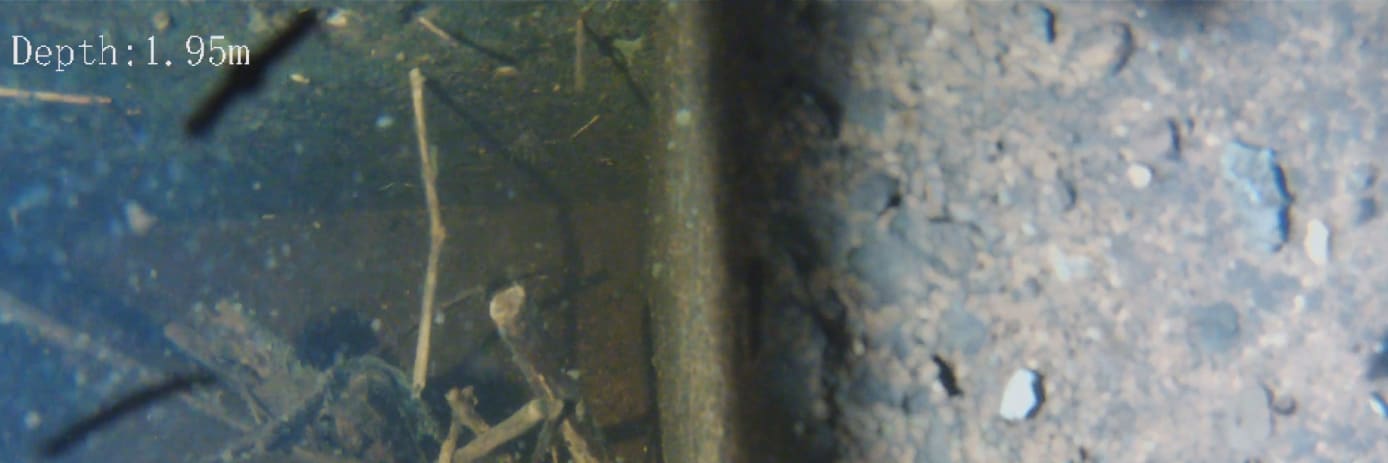
Once deployed down the air shaft, the inspection proceeded methodically. We mapped the critical interface between the dam's concrete and the riveted steel penstock. The penstock walls themselves - constructed of overlapping steel plates fastened with heavy rivets, identical to a Victorian-era ship's hull - were inspected section by section. We verified zero issues at the concrete-to-steel transition and found no structural defects along the penstock walls.
Orientation is absolutely everything. You really need to just be orientated. And once you are, it all makes complete sense.
Bob FoleyEngineers With Drones
FindingsThe critical interface between the dam's concrete and the riveted steel penstock - zero issues found at this transition.
Findings
Inspecting the expansion joint, screens, and spiral casing
The expansion joint - targeting the focal point
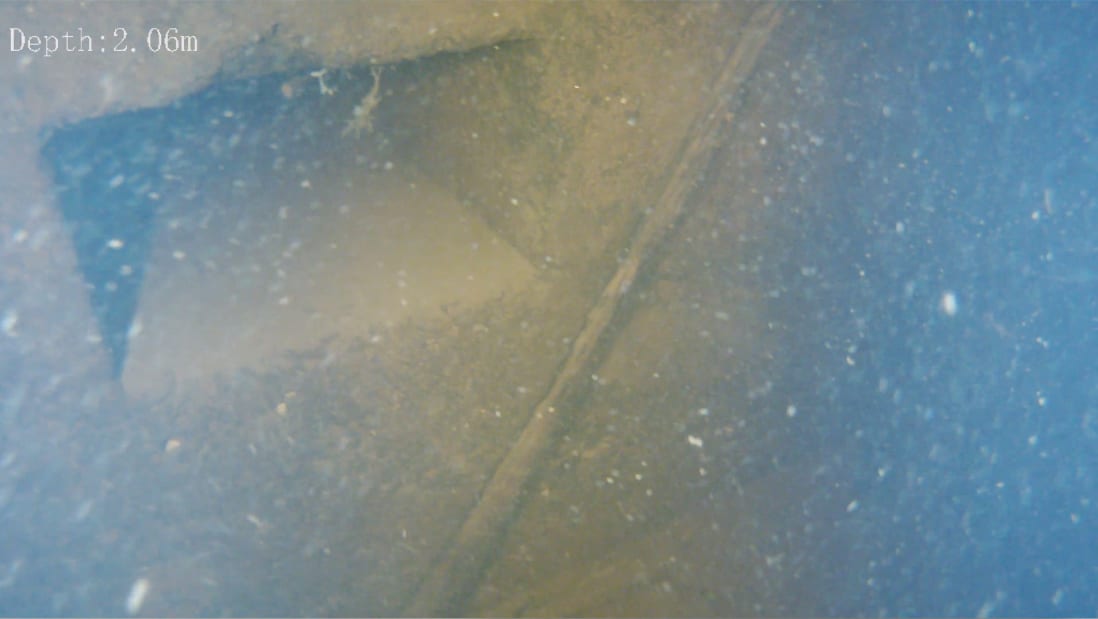
The Golden Falls penstock features a bellows-style expansion joint. This is designed to accommodate longitudinal movement as the sheer volume of steel expands and contracts. Because these joints naturally accumulate material and are a primary focal point for corrosion, the client specifically needed eyes on this area.
The HD footage captured the joint in full detail: a continuous gap allowing relative movement between the steel sections. We identified significant silt buildup inside the joint, which is entirely consistent with the turbine being offline for an extended period prior to our inspection. Without flow, sediment settles. This clear visual evidence gave the client exactly what they needed: clear data to decide whether to authorise a costly drain-down and clean. They could now plan, budget, and justify the remediation properly before committing a single penny.
The bellows-style expansion joint, clearly showing the continuous gap and the significant silt accumulation consistent with a prolonged period of no water flow.
Screens and inlet gates
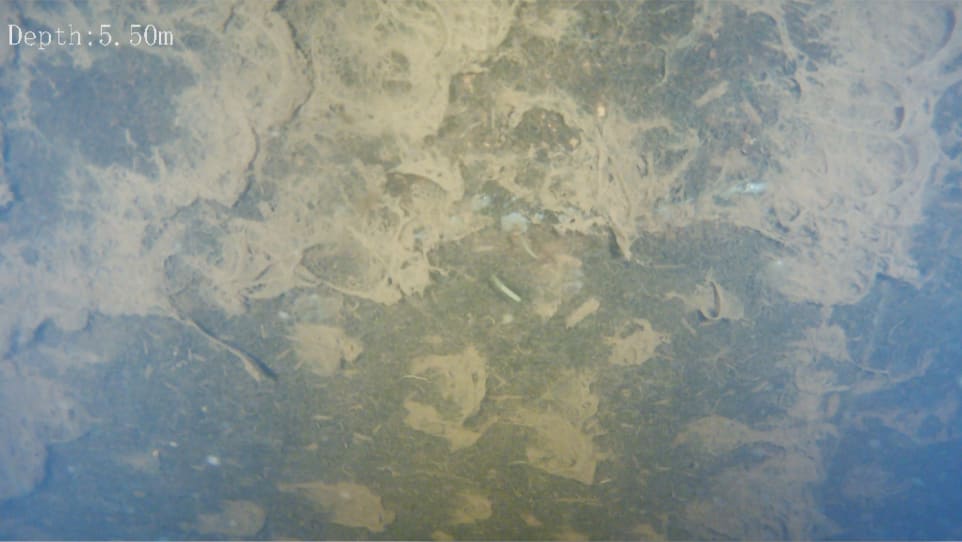
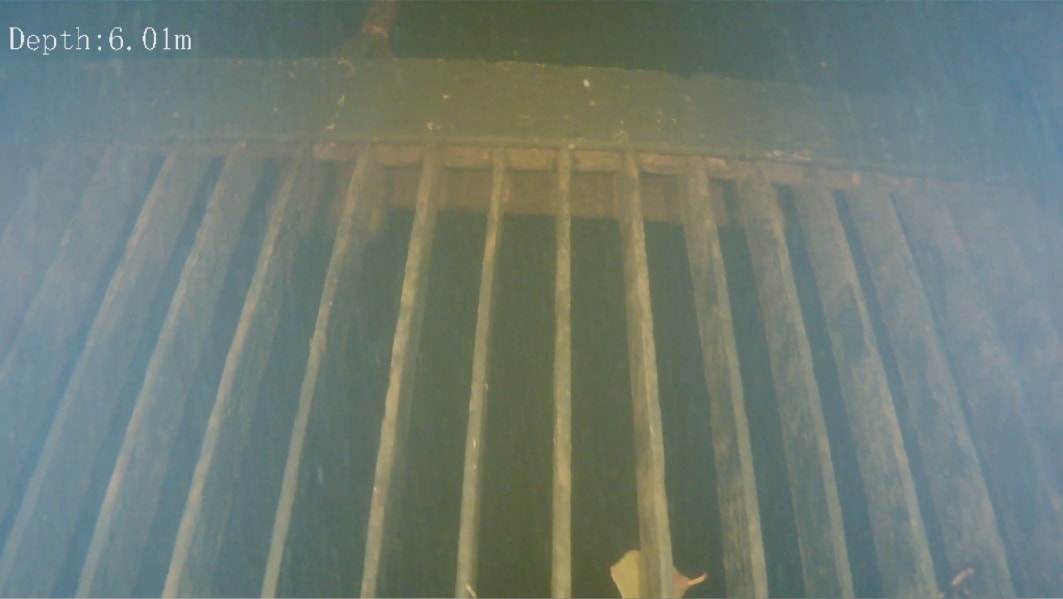
Our engineers extended the inspection up to the debris screens at the water intake, as well as the gate slots, gate seals, and the concrete seating surfaces. The screens were found to be in good condition, showing only minor, expected leaf and debris accumulation. The concrete integrity and steel condition around the gate slots were thoroughly verified.
The inlet screens and gate slots - found to be in good condition with only minor, expected leaf and debris accumulation.
The spiral casing at the turbine inlet
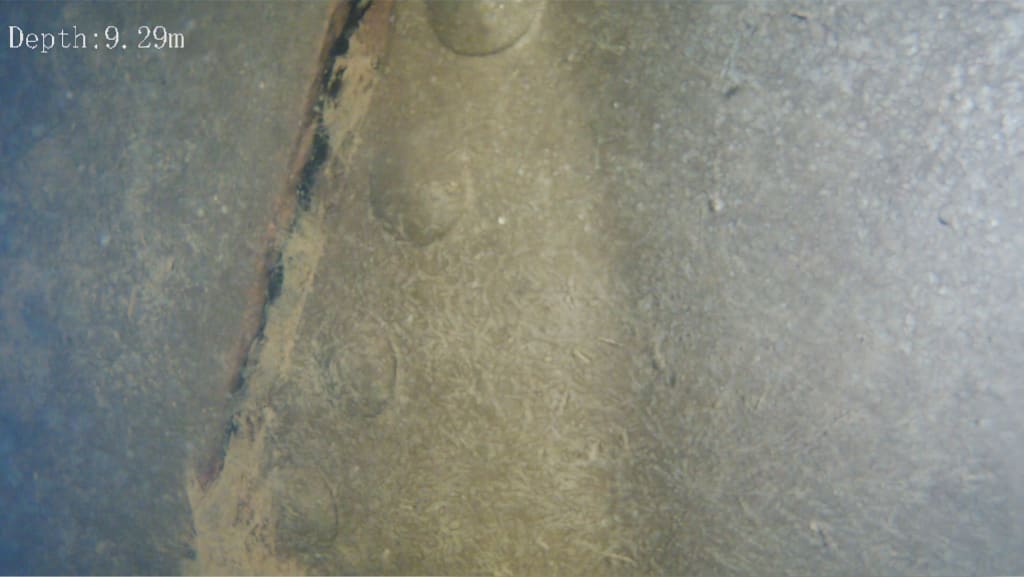
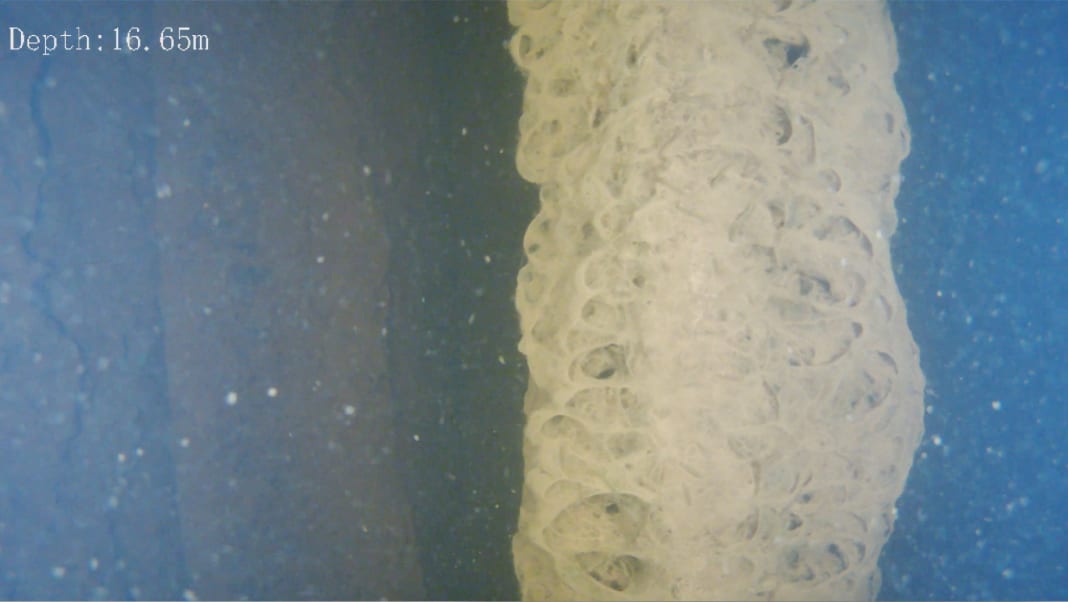
Finally, the ROV navigated downstream through the turbine outlet and straight into the spiral casing - the shell-shaped chamber where water rapidly accelerates into the turbine. Sitting at nearly 17 metres deep, this is one of the most inaccessible parts of the entire facility. The footage revealed significant vegetation growth on the bronze turbine castings, again confirming a prolonged period without water flow. We successfully inspected the turbine hub and blade arrangement, navigating through minor turbulence and bubbles caused by slight leakage past the isolated gate.
The spiral casing at nearly 17 metres depth - the most inaccessible part of the facility. Vegetation growth on the bronze turbine castings confirms the extended period of no water flow.
Video footage
ROV Penstock Inspection
Watch the ROV navigate the air shaft, trace the riveted steel penstock walls, and inspect the expansion joint, inlet screens, and spiral casing at Golden Falls. This raw footage highlights the silt accumulation inside the expansion joint, delivering a definitive, plain-English picture of the asset's condition.
ROV footage from inside the Golden Falls penstock, clearly showing the Victorian-style riveted steel structure and the bellows expansion joint.
Outcome
A complete condition report, zero downtime
The client received a comprehensive, plain-English HD video record of their penstock, expansion joint, screens, gates, and spiral casing. We successfully inspected and documented every critical area of interest. The primary findings - silt in the expansion joint and vegetation in the spiral casing - were directly tied to the turbine's inactivity and are now clearly quantified in footage the client can instantly review, share, and act upon.
What traditionally demands a planned drain-down operation - involving peat sealing, gate isolation, full dewatering, hazardous confined-space entry, and substantial costs - was instead executed in a single, safe field visit. We operated entirely from the roadside, delivering complete clarity with zero personnel entering the water.
Comparative methodology
Why they chose an ROV
For this inspection, we chose the ROV approach because it delivered complete visual data on the penstock condition without the extreme hazards, costs, and downtime of a traditional drain-down and diver entry.
Safety
Zero diversvs confined-space diving
The entire inspection was conducted remotely from the roadside. No personnel entered the penstock or the water at any point.
Cost
No drain-downvs plant shutdown + peat sealing
Eliminated the need for full facility isolation, expensive sealing processes, and the major operational downtime of a traditional penstock inspection.
Data quality
HD video recordvs walkdown or diver inspection
Every critical zone was captured in high-definition video that the client can instantly review, share, and act upon.
Efficient optionOur method
Using an ROV
A safe, efficient, and highly targeted solution using advanced ROV technology.
Complete visual access with zero diver riskInspection of the entire penstock, expansion joint, screens, gates, and spiral casing — all conducted remotely from the surface.
Fail-safe tether-based egressThe ROV is securely retrievable at all times via its tether, with a carefully planned access route through the air shaft.
Roadside operationAll inspection work was conducted safely from the roadside under normal working conditions, with no site modifications required.
Zero downtime, zero drain-downNo expensive sealing processes, no gate isolation, and no operational shutdown — the inspection was completed in a single field visit.
Instantly actionable HD videoThe client received a plain-English HD video record of all findings, ready to review, share, and act upon immediately.
Project statusComplete and verified
Manned approachTraditional method
Without an ROV
The expensive, hazardous, and time-consuming traditional approach.
Diver entry into a live penstockSending personnel into a hazardous confined space introduces life-threatening risks, even with full safety protocols in place.
Full facility drain-down requiredThe entire penstock must be dewatered before any personnel can safely enter, requiring complex peat-sealing and gate isolation.
Major operational disruptionThe plant is taken offline for the duration — with extensive lead times and lost generation, rather than a single field visit.
Substantial costs and lead timesTraditional penstock inspection requires extensive planning, specialist diving teams, and significantly higher budget commitment.
Confined-space hazards persistEven in a fully drained penstock, personnel face confined-space entry hazards including limited access, poor air quality, and structural risks.
Operational impactHigher risk, cost and downtime
Let's talk
Speak to an engineer about your project
Complex surveys and inspections require more than just a pilot. Our engineers can help you scope your requirements and indentify the right approach.