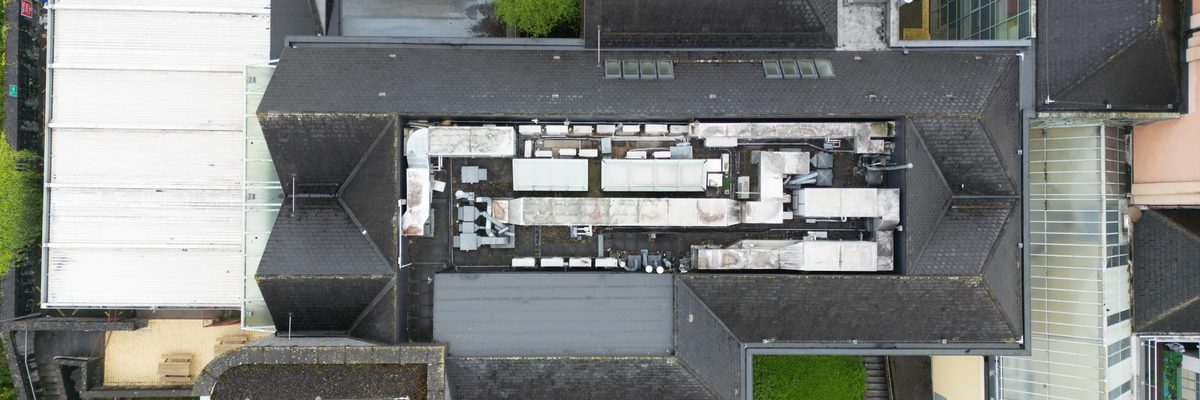
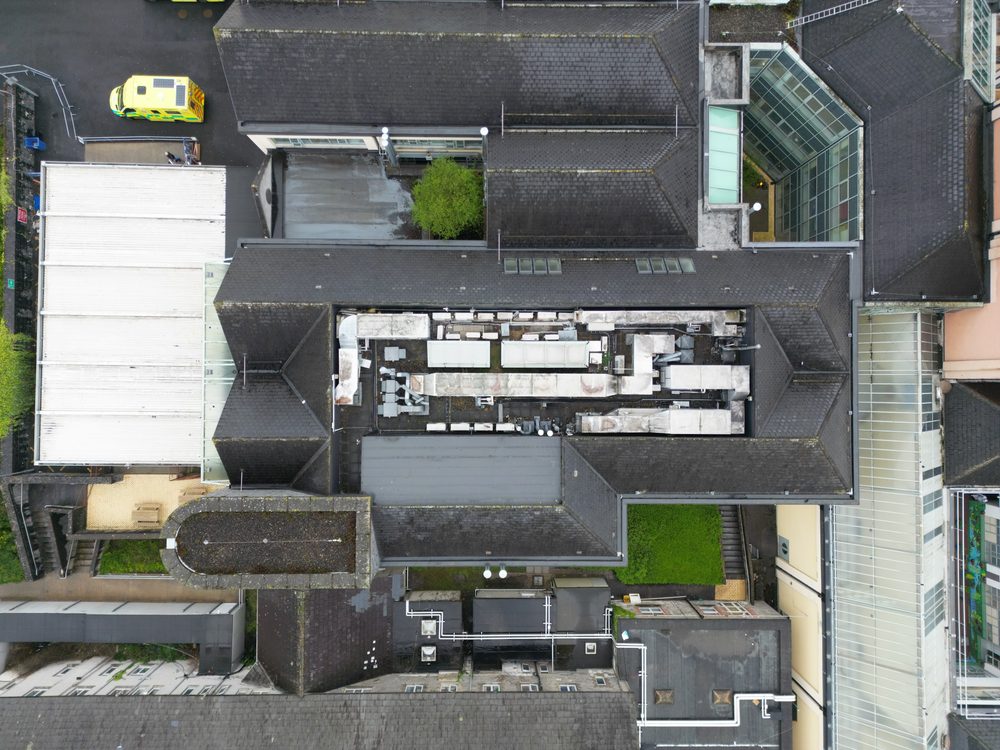
Aerial view of Naas Hospital showing the mix of older and newer buildings across the campus

Roof inspection of Naas Hospital

20–30 individual roofs surveyed across a regional hospital campus using a sub-250g C0 drone — all fieldwork completed without disrupting patient care.
Overview

The Job at a Glance

A comprehensive drone roof condition survey across Naas Hospital, a small regional hospital with buildings ranging from 70–80 years old to modern extensions. Engineers With Drones inspected every roof on the campus over two days, using a sub-250g C0 class drone. The client, a specialist roofing contractor, received organised per-roof reports with annotated defect imagery, using their own naming conventions so every finding was immediately actionable.

Naas Hospital, Co. Kildare

A small regional hospital with a mix of historic and modern buildings — from small boiler houses to the main ward block.

1.5–2 days on site

All fieldwork across the entire campus was completed without disrupting hospital operations, patients, or staff.

Sub-250g C0 class drone

A lightweight, ultra-quiet drone capable of flying safely over people in a busy public hospital environment.

20–30 individual roofs

Every roof across the campus was systematically inspected, from small standalone structures to the main hospital building.

Per-roof condition reports

Reports organised using the contractor’s own building names, with annotated defect images, severity ratings, and descriptions.

Findings: cracked slates, debris, substandard flashing

Defects were identified, photographed, annotated, and categorised across the full campus — giving the contractor a prioritised work list.

The challenge

Roof inspection of a regional hospital with decades of built heritage

A specialist roofing contractor who handles all roofing issues at Naas Hospital asked Engineers With Drones to carry out a full condition survey of every roof across the campus. The challenge was straightforward but significant: Naas Hospital is a small regional hospital that has existed for a long time, and its estate reflects that history. Roofs range from 70–80 year old structures on older buildings right through to modern extensions. In total, there were somewhere between 20 and 30 individual buildings and roofs on the site, from small boiler houses to the main hospital building itself.

The contractor needed a complete picture of what was happening on every roof across the entire campus. Without that, they could not prioritise the big-ticket issues or plan maintenance work efficiently. Traditionally, inspecting roofs of this age and variety across a live hospital site would require extensive access equipment, lane closures, and disruption to a working hospital, all while managing the safety of patients, visitors, and staff.

Overview of the Naas Hospital campus from the air, showing the mix of older and newer buildings
Naas Hospital campus from the air — a mix of historic and modern buildings, from small boiler houses to the main ward block, all requiring roof condition assessment.
Equipment

A sub-250g drone chosen for hospital safety

For this project, we selected a sub-250g C0 class drone. A hospital is a public area with patients, visitors, and staff moving through it throughout the day. The C0 classification means the drone is so light that it can fly over people without putting them in danger, if it fell on someone, it would not cause injury. It was also exceptionally quiet, keeping a very low profile throughout the inspection. Naas has no air risk issues, so we were able to operate without airspace restrictions.

Despite its small size, the drone was capable of capturing high-resolution imagery of every roof on site, providing the contractor with detailed defect documentation that was immediately usable for planning and costing remedial work.

A roof at Naas Hospital showing the variety of roof styles and materials across the campus
The sub-250g C0 drone captured high-resolution imagery of every roof across the campus, from modern flat roofs to older pitched slate roofs.
Methodology

Systematic roof-by-roof capture across the full campus

On site, the inspection followed a systematic approach. We went through every single roof on the campus one by one, capturing each one and ticking it off as we went. We began by capturing overview imagery of the whole campus to establish spatial context back in the office, essential for knowing exactly where every defect image was taken.

On top of the defect-focused capture, we also took general perspective imagery of each roof. This was not just about immediate defects. The contractor needed to be able to look at any given roof and estimate what it would cost to reroof, reslate, or carry out other future works. The general perspective imagery gave them that capability, making the dataset useful for long-term planning as well as immediate defect rectification.

We captured everything we needed systematically, building-by-building, roof-by-roof, until the entire campus was documented.

Privacy-first capture in a public healthcare setting

A hospital is a public area, and GDPR compliance was a priority from the start. We designed our capture workflow to avoid capturing any personal identification or personal imagery at all. Anything that could be GDPR-sensitive was simply not captured in the field. The drone was flown close to the roof surfaces with the camera oriented towards the building fabric, keeping patients, visitors, vehicles, and staff out of frame entirely. Every image was reviewed in the field, and anything unnecessary was deleted on site.

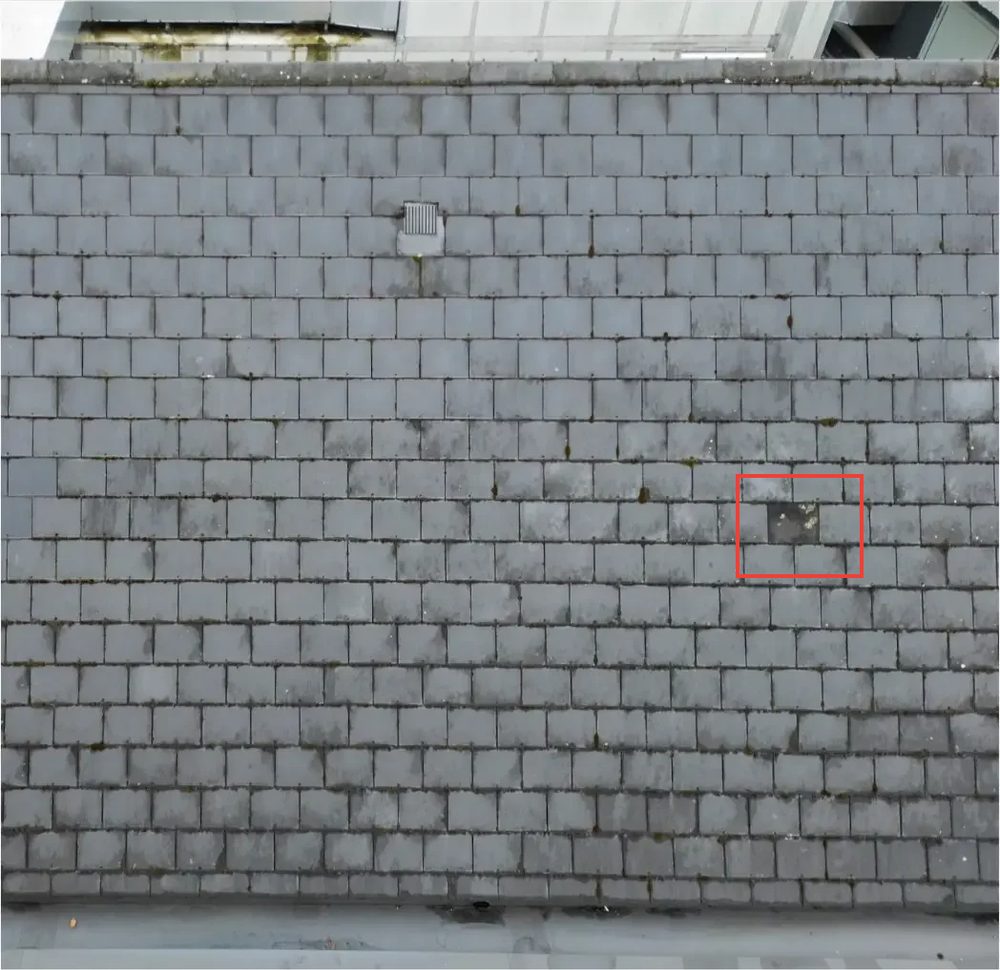
Close-up view of a roof section showing typical defects found during the inspection
The drone was flown close to the roof surface with the camera oriented towards the building fabric, keeping people and personal data out of frame entirely.
Post-processing

Organised by the contractor’s own language

Once all fieldwork was complete and the data verified, we brought everything back to the office for processing. A critical part of making the deliverables useful was how we structured them.

We divided all of the captured imagery into individual roofs, using the naming conventions that the contractor themselves used to describe each building and roof. There was no point inventing our own names for buildings that nobody else would understand. By using the contractor’s own language, every finding was immediately locationable by their team without a translation step.

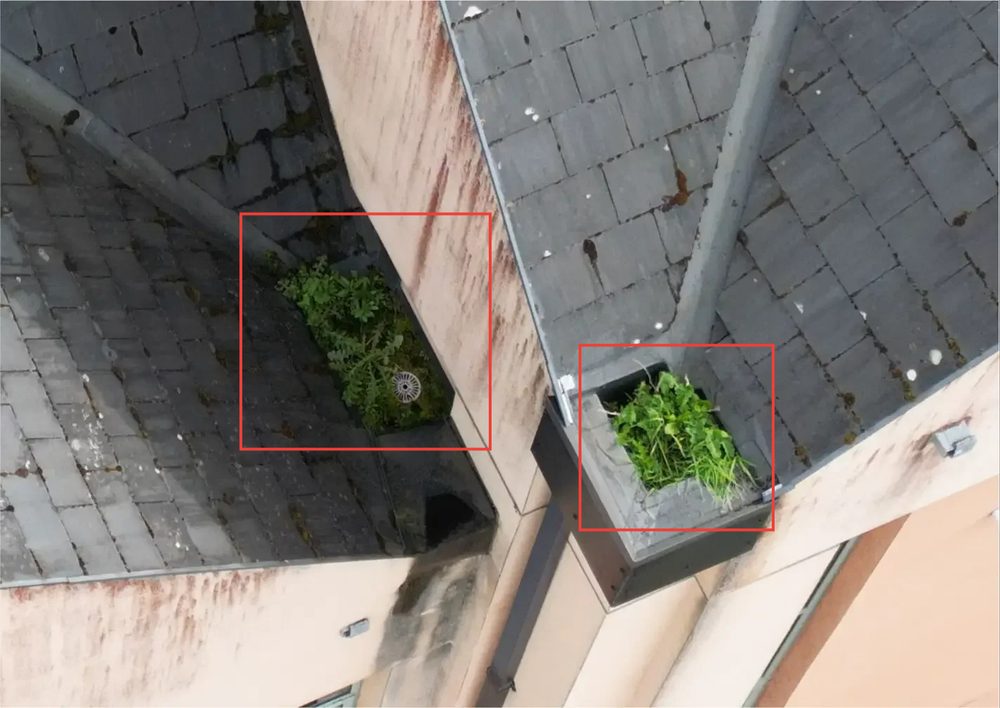
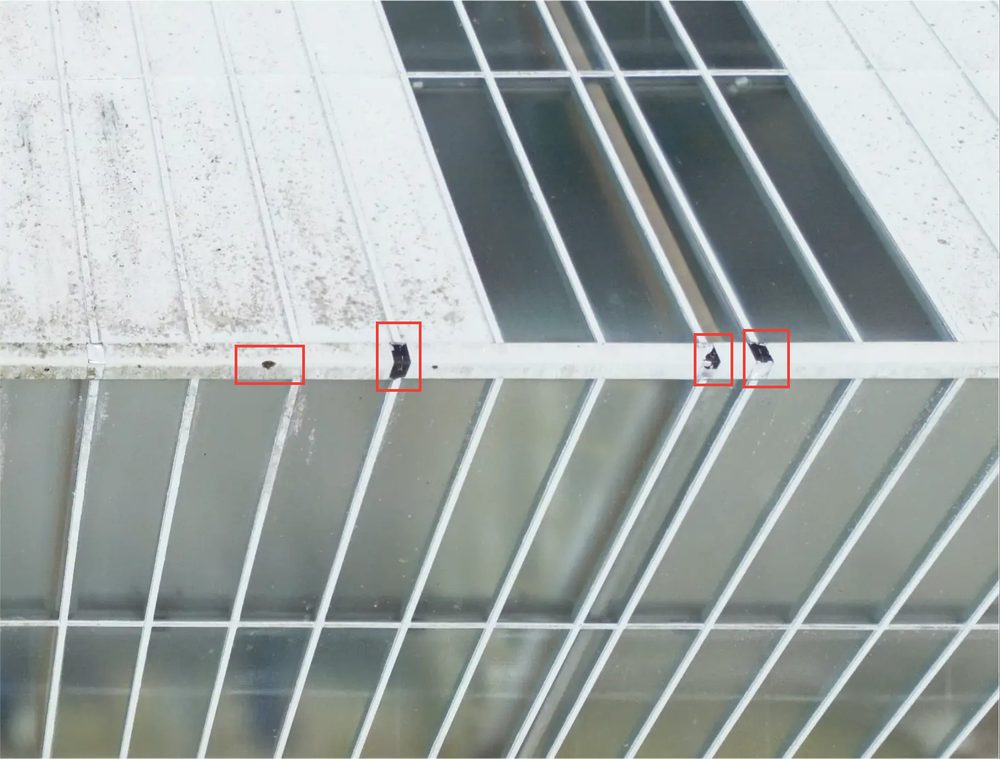
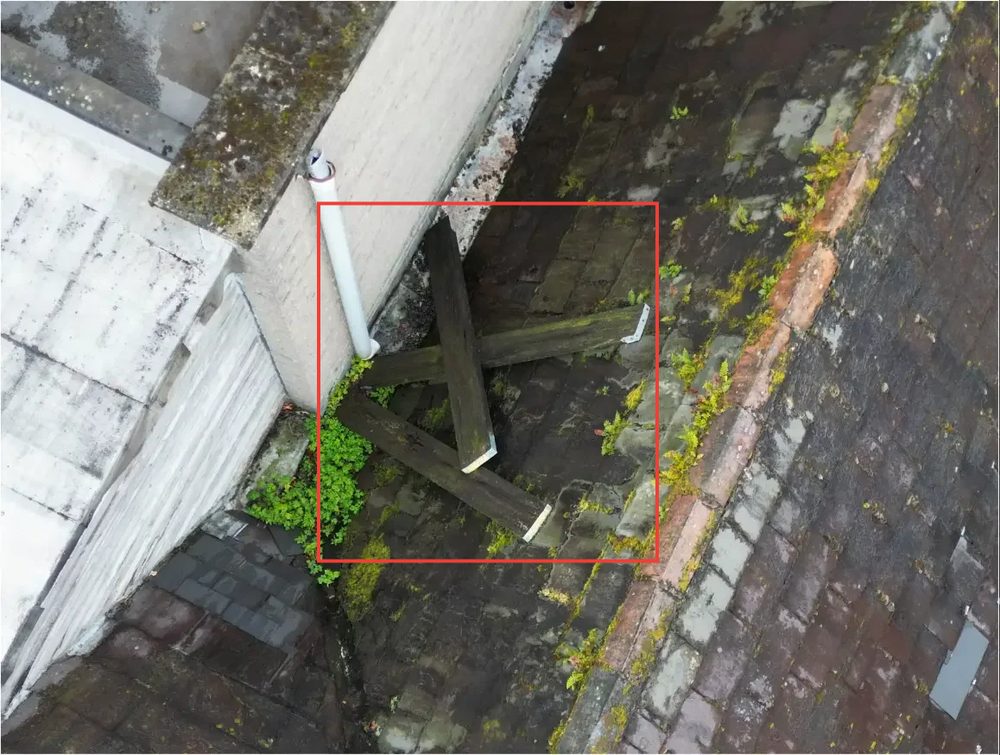
We identified all defects across the dataset: cracked slates, debris that might blow off in a storm, substandard flashing, and other issues. Every defect was photographed, annotated with boxes drawn around the affected area, given a written description, and assigned a severity rating. Any imagery that should not be there was deleted.

Given the number of roofs and buildings, we worked with the client to divide the reports in a way that made them easy to work through. The result was a structured set of per-roof condition reports, each one telling the contractor exactly what needed attention on that building and how urgent it was.

Roof detail captured during the inspection showing the condition of roofing materials
Every defect was photographed, annotated with boxes drawn around the affected area, given a written description, and assigned a severity rating.
Outcome

A complete roof condition dataset for the full hospital campus

The client received a comprehensive set of per-roof condition reports covering every building across Naas Hospital. With every defect annotated, severity-rated, and located using the contractor’s own building naming system, they had everything they needed to understand the state of every roof on the campus and prioritise their remedial work.

The inspection was completed with no disruption to hospital operations. No scaffolding, no access equipment, no lane closures, and no patients, visitors, or staff were disturbed at any point. The sub-250g C0 drone operated safely throughout, and the GDPR-first capture workflow meant there was no privacy liability attached to the dataset.

Beyond immediate defects, the general perspective imagery gave the contractor a long-term planning tool. They could look at any roof on the campus, assess its condition, and make informed decisions about reroofing, reslating, and other capital works, all from a dataset captured in under two days.

Another view of a roof section showing the condition of pitched roofing and flashings
The general perspective imagery gave the contractor a long-term planning tool for reroofing, reslating, and other capital works.
Comparative methodology

Why they chose us

For this hospital roof inspection, a drone delivered complete campus-wide coverage without scaffolding, access equipment, or any disruption to patient care — all in under two days on site.

Time on site
1.5–2 days vs weeks of scaffold mobilisation

All 20–30 roofs across the campus were surveyed in under two days, with no setup or takedown of access equipment.

Disruption to hospital
Zero disruption vs scaffold erection in a live hospital

The drone was inaudible from ground level. Patients, visitors, and staff had no indication an inspection was under way.

Data quality
Per-roof annotated reports vs ad-hoc manual inspection

Every roof documented with defect annotations and severity ratings, organised using the contractor’s own naming system.

Efficient option Our method

Using a drone

This is what the job looked like using drone technology.

  • No scaffolding required All 20–30 roofs were accessed from the air without any access equipment on site.
  • Hospital remained fully operational No disruption to patients, visitors, staff, or hospital operations at any point during the inspection.
  • High-resolution imagery of every roof Even the smallest drone captured detailed defect imagery across the full campus — including 70–80 year old roof structures.
  • Annotated defect reports Every defect was photographed, annotated with boxes, given a severity rating, and organised by the contractor’s own building names.
  • GDPR-first capture workflow The drone was flown close to roof surfaces, keeping people and personal data out of frame entirely.
  • Future planning imagery included General perspective images of each roof gave the contractor a long-term planning tool for reroofing and capital works.
Project status Complete and delivered
Manned approach Traditional method

Without a drone

What the job would have looked like without drone technology.

  • Scaffolding across 20–30 buildings Each roof would require individual scaffold access, taking weeks to mobilise, erect, and dismantle.
  • Major hospital disruption Scaffold erection in a live hospital environment would require lane closures, diversions, and careful coordination with every ward.
  • Personnel working at height Inspectors would need to access each roof and walk its surface, posing fall risks and potential damage to aged roof materials.
  • Inconsistent defect documentation A manual roof survey across 20–30 separate buildings is inherently inconsistent — different angles, different light, different inspectors.
  • Significantly higher cost Days of scaffold hire, multiple site visits, and coordination with hospital access management would multiply the project cost.
  • No GDPR advantage A manual inspection at roof level still raises privacy concerns in a healthcare setting, with no inherent GDPR mitigation.
Operational impact Higher cost, greater risk, more disruption
Let's talk

Speak to an engineer about your project

Complex surveys and inspections require more than just a pilot. Our engineers can help you scope your requirements and indentify the right approach.

Talk to an engineer

+353 (0)21 202 8281

Quickest for technical scoping

Email your brief

info@engineerswithdrones.ie

Best for sending detailed specs

Next steps

Where to find out more

You can find out more about our drone roof inspection services, our heritage building inspections or our insurance inspections. Alternatively, you can contact us here to ask what we can do for you.

Last Updated: