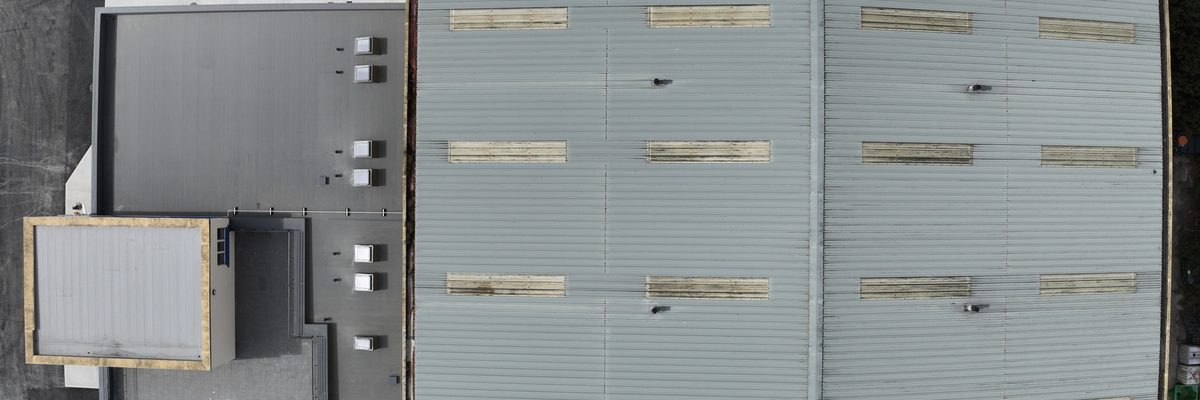
Aerial view of the steel-clad hangar building at Waterford Airport, with the two large doors at the front of the building

Rescue helicopter hangar inspection at Waterford Airport

A 20-year-old steel-clad hangar at Waterford Airport, inspected across the roof, walls and gutters inside a two-hour window agreed with air traffic control.
Overview

The Job at a Glance

Engineers With Drones inspected the search and rescue helicopter hangar at Waterford Airport for a client the team has worked with for a long time. A runway improvement programme had closed the airport to every other flight, opening a rare window for the flight operations. Every aspect of the roof and the walls was captured, along with the gutters, and every defect was written up in a report with a high-resolution image of each one.

At Waterford Airport

Waterford Airport was shut to all flights except the search and rescue helicopter because of an ongoing runway improvement programme.

A two-hour window from ATC

Air traffic control confirmed the helicopter had just departed and would not return for two hours, leaving the area clear.

A 20-year-old steel-clad hangar

A standard square building with two large doors at the front, and leaks and defects that needed attention.

Defect report with imagery

Every defect described, classified by severity, and illustrated with a high-resolution image.

Background

A 20-year-old hangar awaiting maintenance

The job came through a client Engineers With Drones has worked with for a long time. They asked the team to take a really good look at the search and rescue helicopter hangar at Waterford Airport, a building that is unusual to inspect both from a drone point of view and from an aviation point of view.

The hangar is 20 years old, and a new company was taking it over. It had leaks and other defects that needed attention, so the inspection had to be thorough.

The timing suited the job. Waterford Airport was shut to all flights apart from the search and rescue helicopter while a runway improvement programme was under way. Normally it is a relatively busy airport, with a lot of flight school traffic coming and going, but on this occasion it was quiet, so the client said to get it done.

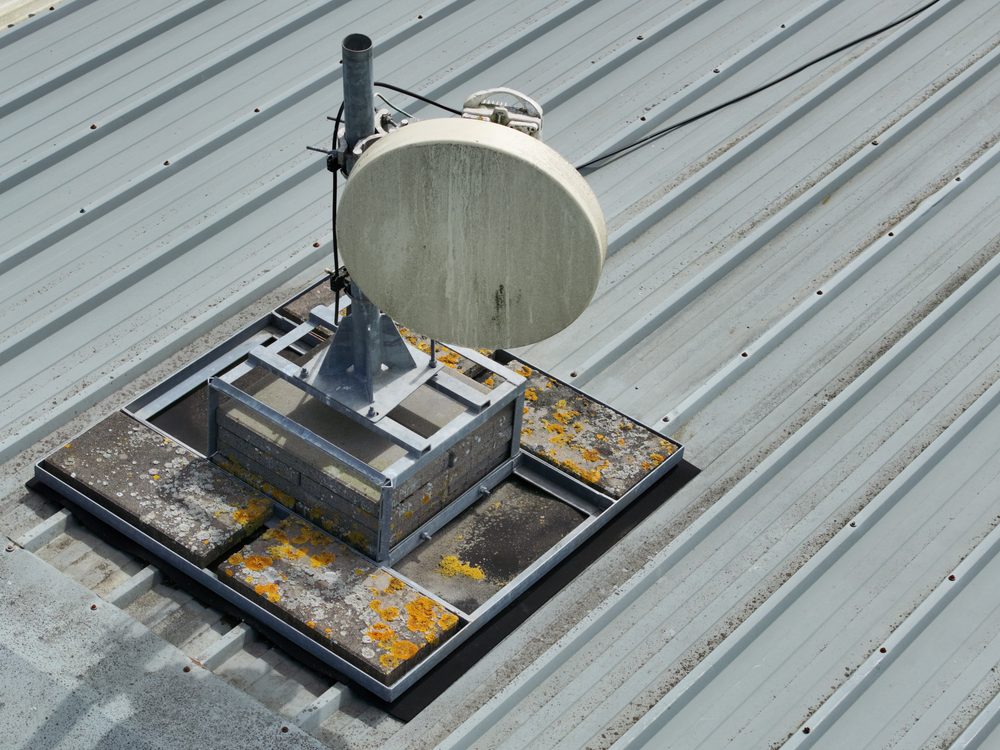
A close-up inspection image showing a roof-mounted antenna and its weighted base on the steel-clad hangar roof
Close-in imagery from the roof capture, showing a roof-mounted antenna and its weighted base on the steel-clad roof.
Aviation approval

The UF101 form, and why not every drone operator can submit one

Even with Waterford Airport closed for all intents and purposes, it was still an active airfield with active aircraft operating out of it. In this case, helicopters. Flying there meant going through the full process of gaining an approval to fly at that location.

That process starts with a specific form, the UF101, submitted to the airport. Only a very limited number of drone companies are in a position to do this. Engineers With Drones is one of them, because the company holds the high-level EASA and IAA Specific Category approval, a SORA-based operational authorisation.

The airport checks the operator's credentials, and then checks what is going to be flown, when it is going to be flown and how. Approval to fly is granted at the airport's discretion. Once that approval came through, the team mobilised with the client.

Methodology

Air traffic control, a two-hour slot, and the capture protocol

On the day, the team made contact directly with Waterford Airport's air traffic control and asked for a slot, giving the time they wanted to fly and a duration of around two hours.

ATC confirmed that the search and rescue helicopter had just departed and would not be back for two hours. That opened up a two-hour window with no traffic in the area and no danger to other aircraft. From that point the drone was handled just like any other airliner or helicopter: cleared to take off, work away, and report back when the job was done.

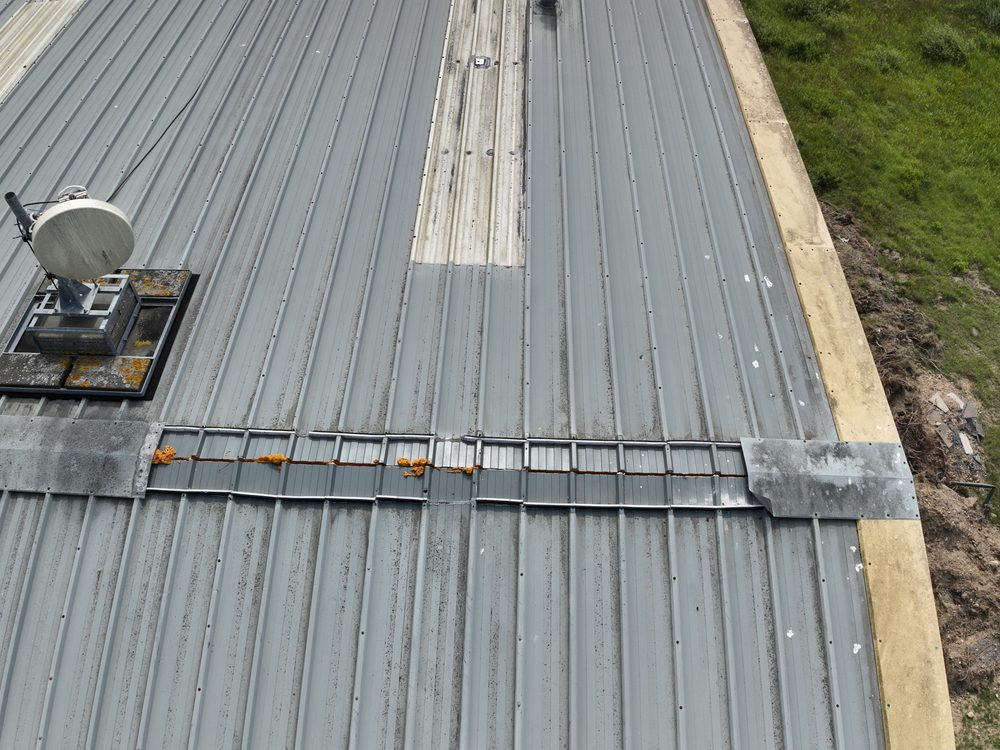
Close-up of the steel-clad hangar roof, showing weathering around the central flashing and around the securing screws
High-resolution captures of the roof surface make it easy to spot potential issues, such as weathering around the central flashing and securing screws.

The building itself is not a complicated one. It is a standard square hangar with two large doors at the front. The capture followed the usual pattern: the roof and any defects on it, then the walls, then close attention to the gutters.

On an older steel-clad building like this, the list of things to look for is well known: cut edge corrosion, tek screws that have gone missing, loose elements of flashing and cap flashing. Steel gutters bring their own problems, because corrosion sets in where there is a lot of sitting water, or a lot of growth and vegetation collecting inside. There was vegetation in the gutters on this building.

Deliverables

A report identifying the location and extent of the defect

The report sets out what defects are present on the building, the severity of each one, its classification and a description. Every defect is illustrated with a high-resolution image, so anyone reading the report can see where that defect sits on the building and how bad it is. From there, a reader who knows the building trade can work out what it would take to put it right.

Defect schedule

Every defect found across the roof, walls and gutters, classified by severity and described one by one.

High-resolution image of each defect

One image per defect, so both its position on the building and its condition are clear to the reader.

Full building coverage

The roof, the walls and the gutters, all captured in detail during the flight.

Data verified before issue

The captured data was checked to confirm it was good before the report was generated and handed over.

Outcome

A swift, 90-minute field operation

The capture was finished in about an hour and a half, well inside the two-hour slot ATC had given and with plenty of time before any other air traffic came back into the area.

The team landed, informed ATC that the work for the day was concluded, and departed without any disruption to operations on the field itself.

The job carried a personal angle for Bob Foley. He did all of his own training at Waterford Airport and worked there for about four years, and he was on site when this hangar was being built around 20 years ago, so he knew the building well from back then. He described it as a nice project, and interesting to be back after so many years, with the chance to interact with manned aviation that close to the airport.

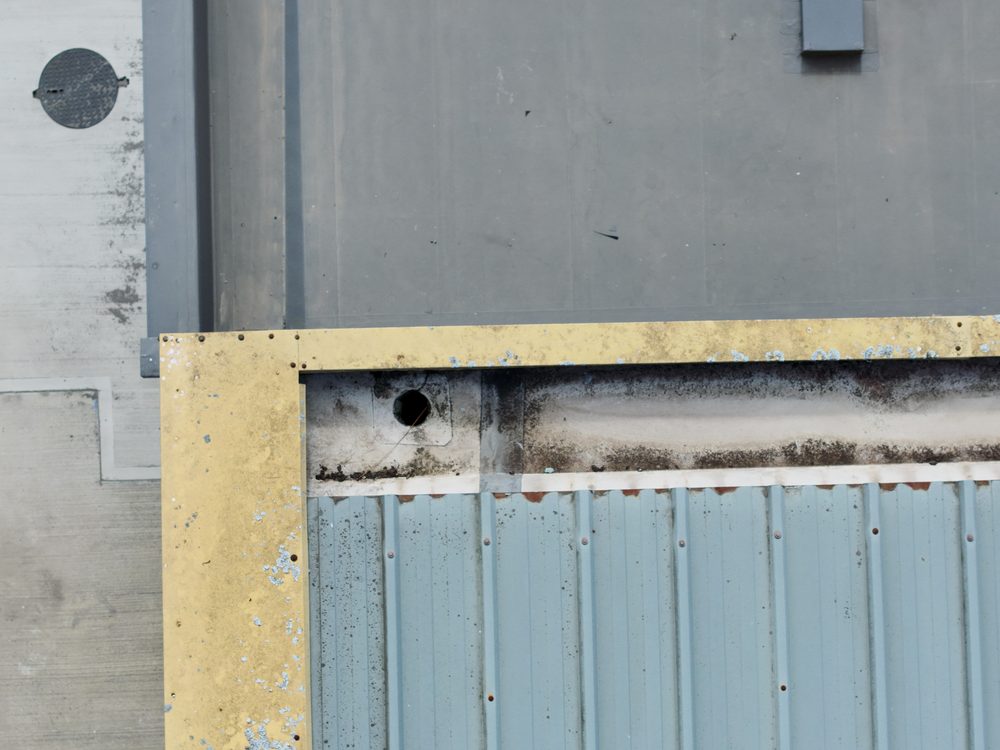
Close-up drone view of the high-level wall elements of the hangar, captured to assess their condition
Close-up drone inspection allows engineers to easily assess the condition of high-level wall elements, identifying areas requiring maintenance.
Comparative methodology

Why they chose us

The alternative would have been to find some other way onto the roof of a large hangar building at Waterford Airport. That would have been a very difficult thing to do, and the drone flight meant the whole job could fit inside a two-hour window agreed with air traffic control.

Access
Flown without access equipment vs access at height

Hangars are large buildings and difficult to access, so this roof would have been hard to inspect with anything other than a drone.

Coverage
All aspects of roof and walls vs a general area of roof

The capture took in the roof, the walls and the gutters, which always get close attention.

Time on site
About 90 minutes of field work vs setting up access

The capture finished well inside the slot, so the team was off the airfield with no disruption to operations.

Efficient option Our method

Using a drone

A drone flight over a 20-year-old steel-clad hangar at Waterford Airport, carried out inside a two-hour window cleared with air traffic control.

  • No access equipment needed on a large building Hangars are naturally large buildings and difficult to access, so nothing had to be set up around the building and nobody had to work at height.
  • Roof, walls and gutters all captured The roof and the walls were covered in the one flight, with close attention to the gutters.
  • A known defect list worked through On an older steel-clad building the things to look for are well known: cut edge corrosion, missing tek screws, loose flashing and cap flashing. Vegetation was found in the steel gutters here.
  • Field work finished in about an hour and a half Well inside the two-hour window agreed with air traffic control, with plenty of time to spare.
  • Airfield operations left undisturbed The team landed, told ATC the work was finished, and departed without disrupting anything on the field.
Project status Completed — defect report delivered
Manned approach Traditional method

Without a drone

Inspecting this roof with anything other than a drone would have been very difficult, because hangars are large buildings and difficult to access.

  • Access equipment on a large hangar roof Getting up there would have meant bringing in access equipment and setting it up around a building that hangars naturally make difficult to reach.
  • Working at height on an active airfield Someone would have had to get up to roof level and work there to record the defects first-hand, on an airfield that was still handling aircraft.
  • The building sits inside an airfield Anyone working at height on it would still need the airport's agreement to be on site, and a slot that fitted around the aircraft using the field.
  • Views limited to a few fixed positions Working from access equipment means seeing the roof from one position at a time, and moving the equipment around to change the angle.
Access method Access equipment on a large hangar building
Let's talk

Speak to an engineer about your project

Complex surveys and inspections require more than just a pilot. Our engineers can help you scope your requirements and indentify the right approach.

Talk to an engineer

+353 (0)21 202 8281

Quickest for technical scoping

Email your brief

info@engineerswithdrones.ie

Best for sending detailed specs

Next steps

Where to find out more

You can find out more about our drone roof inspections or our building inspections, or read about the Specific Category authorisation that lets us take on work like this. Alternatively, you can contact us here to ask what we can do for you.

Last updated: