A gas-fired HRSG power station in Cork, inspected during a major shutdown

HRSG power station inspection

Gas-fired power station, Cork Inspecting every stage of the heat recovery system through a manhole-sized door, with a confined space drone.
Overview

The Job at a Glance

A confined space drone inspection of every stage of a gas-fired HRSG system at a power station in Cork, carried out during a major shutdown. The Flyability Elios drone captured the heat exchanger stages, the exhaust stack and a range of external site assets, delivered as an organised 4K video and photography dataset.

Gas-fired power station, Cork

One of the newest power stations in the country, inspected during a large planned shutdown.

Shutdown window

The inspection supported the site's shutdown and was completed before the unit was buttoned up for restart.

Flyability Elios drone

A cage-protected confined space drone flown through each stage of the HRSG system.

4K video and photography

High-resolution video and stills, organised stage by stage and uploaded to the client's cloud platform.

Background

A recently commissioned gas-fired power station with a demanding shutdown

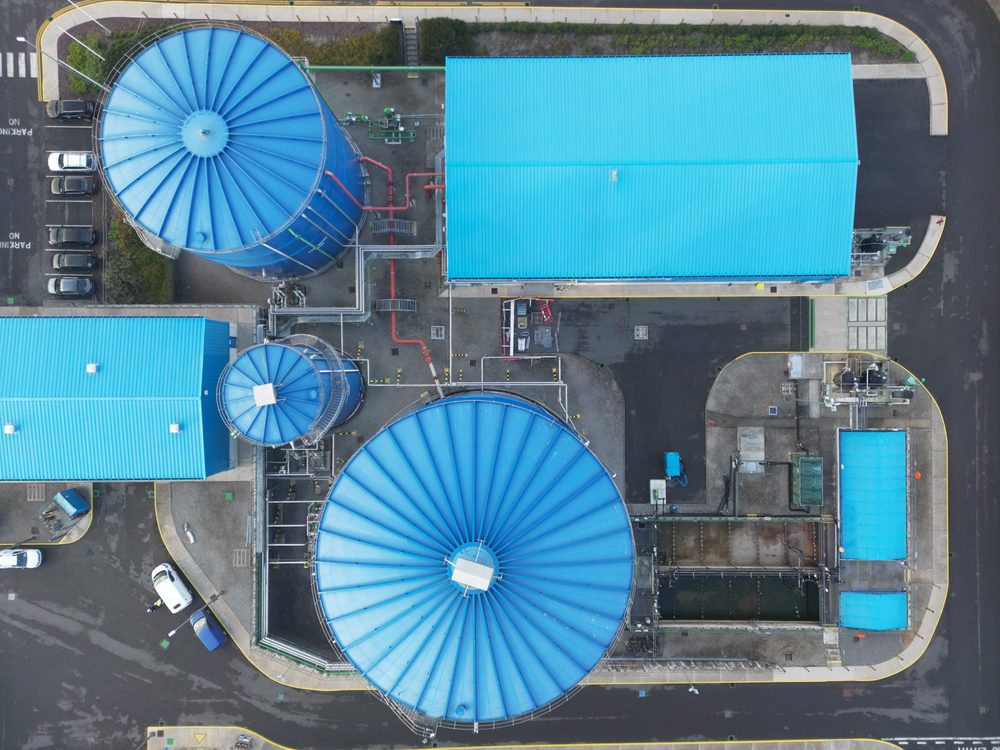
A gas-fired power station in Cork, one of the newest in the country, was heading into a large shutdown that required a great deal of work while the plant was offline. As part of that shutdown, the client asked Engineers With Drones to inspect the heat exchangers within the HRSG system, along with a range of other assets around the site.

HRSG stands for heat recovery steam generation. In practical terms the unit is a very large box, around six or seven stories high and ten to twenty metres wide, containing a series of heat exchangers. Steam from the initial generation passes back through these exchangers to generate even more heat before it is released to the atmosphere.

The HRSG unit at the gas-fired power station in Cork
The HRSG unit inspected during the shutdown.
The challenge

A six-story interior reached through a manhole-sized door

Almost everything inside the HRSG is accessed through a small door, roughly the size of a manhole cover. Inspecting the full height of the heat exchanger stages means getting up really high within a very confined space, which is quite difficult when it has to be done with scaffolding and similar access equipment.

The alternative was a confined space drone. Engineers With Drones deployed the Flyability Elios, a cage-protected drone built specifically to fly inside enclosed structures, and worked through the HRSG stage by stage.

The small access door used to enter the HRSG interior
Almost everything inside the HRSG is reached through a small access door.
Methodology

Stage by stage, from the turbine exit to the top of the stack

The inspection began at the very first stage of the HRSG, just at the exit of the turbine, and captured the whole area around the turbine, a high space with a lot of volume that would otherwise need extensive scaffolding to reach. The team then moved down stage by stage, capturing both the upstream and downstream face of each heat exchange tube element.

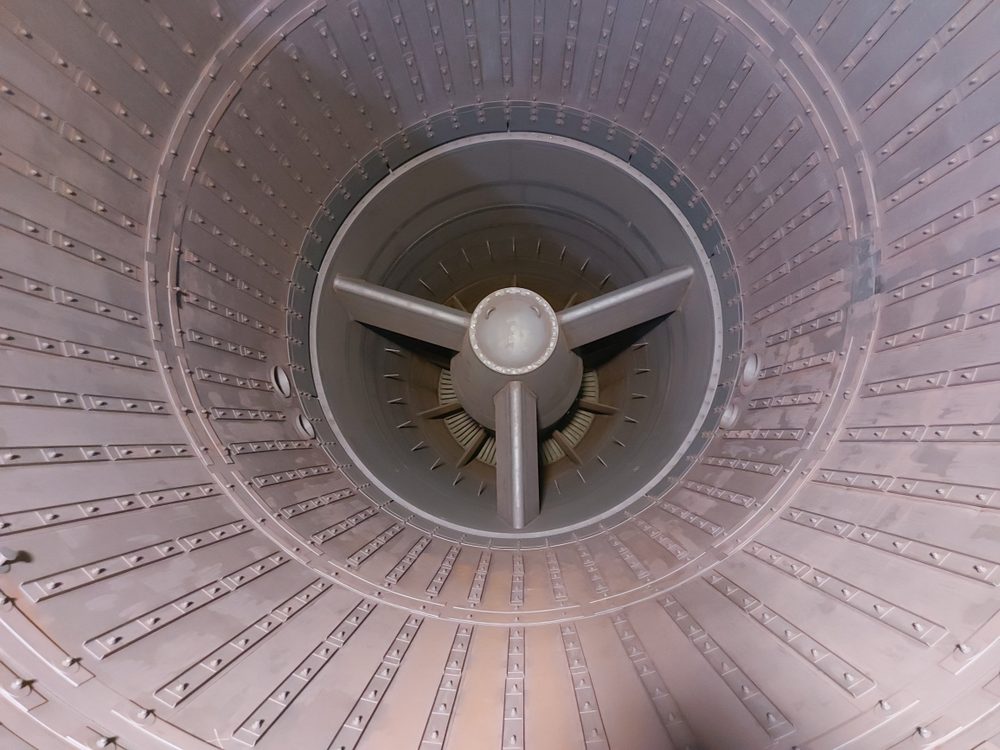
Inside each stage the drone covered the heat exchanging tubes, the gas burners, the roof and structure, the pipework, the plating and the deflector plates. Once the HRSG stages were complete, the drone flew up inside the exhaust stack, recording the louvered vents, any protruding probes, suspect areas and the welds in detail.

Inside a stage of the HRSG showing the heat exchanging tubes
The interior of the HRSG, captured during the shutdown inspection.
Findings

The external assets, the cooling system and a flexible diaphragm

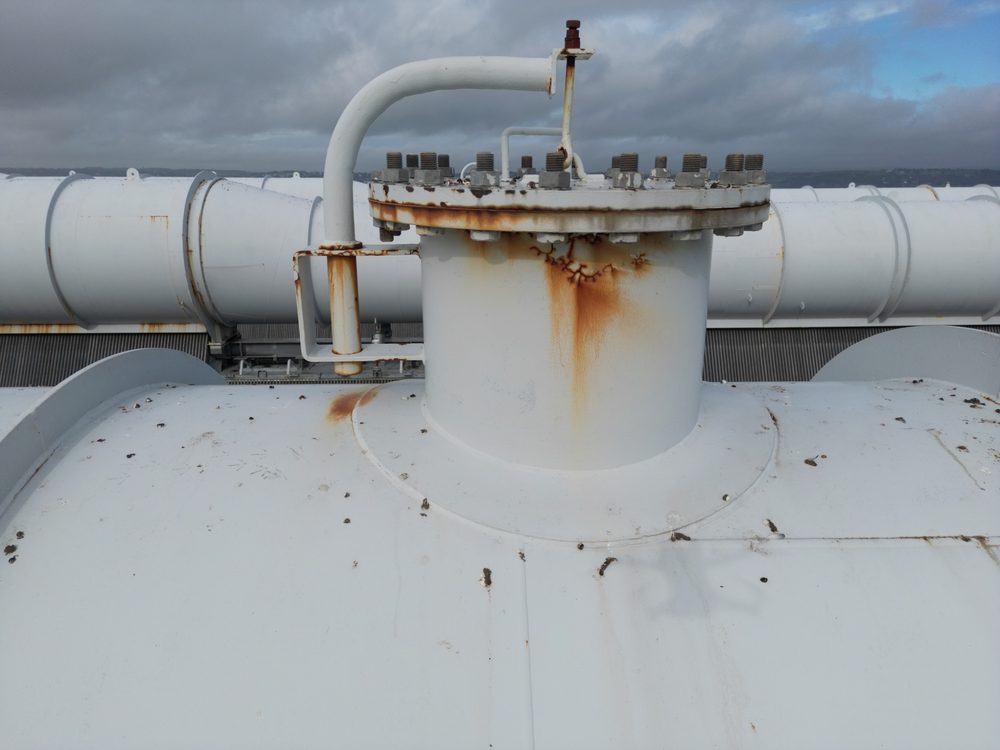
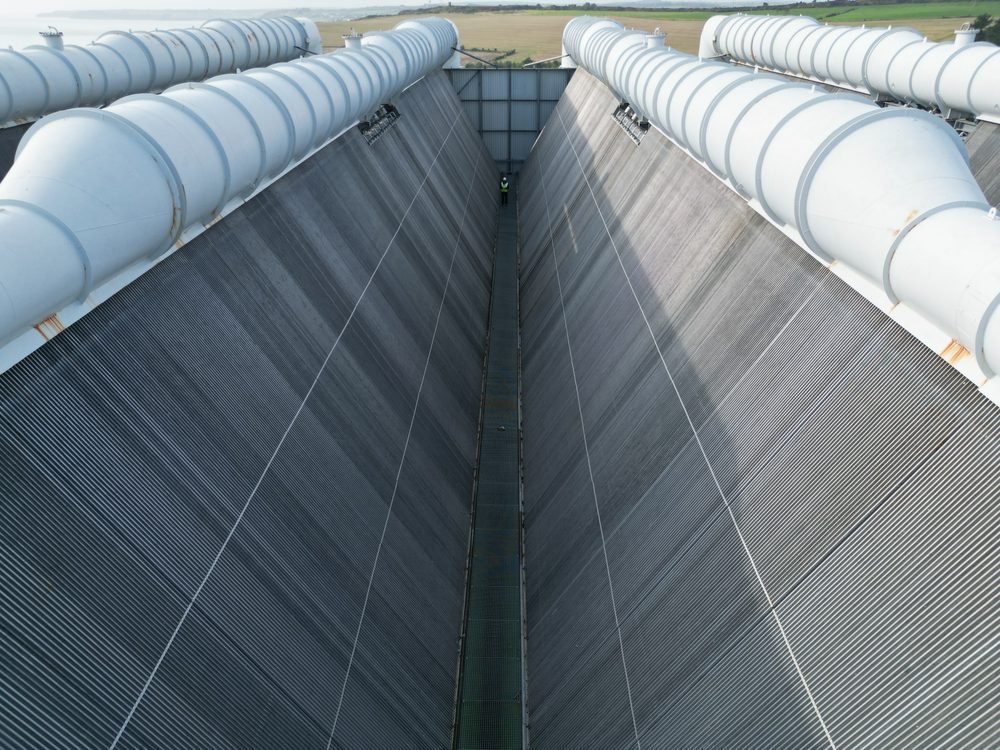
With the internal work complete, the client asked Engineers With Drones to carry out a series of external inspections: high-level vents on the outside of buildings, the outside of the HRSG stack, a large external cooling system and its ducted fans, and the tops and sides of tanks around the site.

The external cooling system and ducted fans inspected during the shutdown
The external cooling system and its ducted fans, inspected from the air.

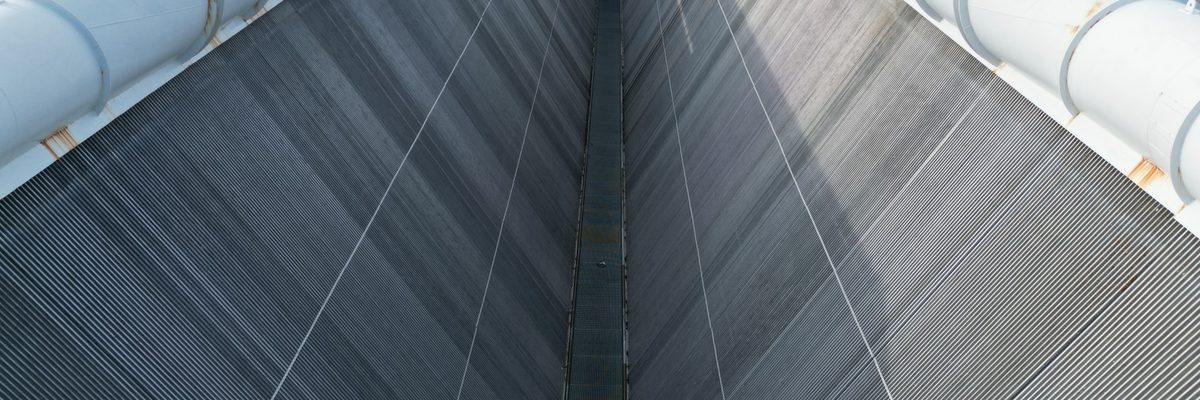
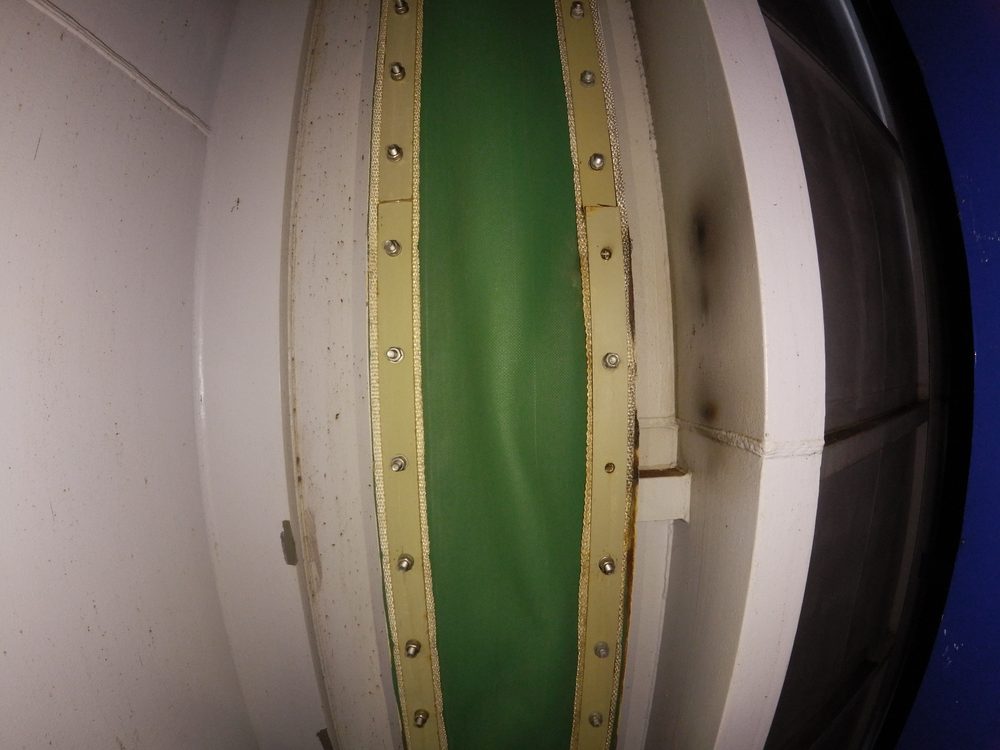
Inside the HRSG building, a flexible diaphragm runs all the way around the unit between the HRSG itself and the stack. The drone inspected the full circumference, and the team found one or two defects on it.

The flexible diaphragm between the HRSG unit and the stack
The flexible diaphragm running around the HRSG unit, where defects were found.

Across the whole job the team were looking for corrosion, missing plates, bent elements and anything else out of the ordinary. In an asset this uniform, much of the inspection comes down to pattern recognition: everything looks the same until it does not, and the moment it looks different is usually where an issue is found. Working alongside an experienced inspector, the drone allowed the team to dial in on those anomalies and verify them close up.

Deliverables

4K video and photography, organised for easy interpretation

4K high-resolution video

Detail video of every aspect of the HRSG interior, captured for experienced inspectors to review.

Photography

Stills captured alongside the video record across the internal and external inspections.

Organised dataset

Every image and video separated into its relevant section so anyone interpreting the data knows exactly what they are looking at.

Cloud platform delivery

The complete dataset uploaded to the client's cloud platform as a record of the shutdown work.

Video footage

Inside the HRSG

4K video captured by the confined space drone during the shutdown, showing the heat exchanger stages, the exhaust stack and the external site assets recorded for the client's inspectors.

Confined space drone footage from the HRSG inspection at the gas-fired power station in Cork.
Comparative methodology

Why they chose us

During a major shutdown, the client needed eyes inside a six-story HRSG where almost every internal surface is reached through a manhole-sized door. A confined space drone let the team cover the full height of every stage without erecting scaffolding inside the unit.

Access
Manhole-sized door vs scaffolding in a confined space

Almost everything inside the HRSG is reached through a door about the size of a manhole cover.

Height
6–7 stories vs extensive scaffolding

The unit stands around six or seven stories high, putting the upper stages well out of reach without significant access equipment.

Coverage
Every stage, both faces vs hard-to-reach volumes

The drone covered each heat exchanger stage in turn, including both the upstream and downstream face of every tube element.

Efficient option Our method

Using a drone

A cage-protected Flyability Elios drone flew through the manhole-sized access and covered the full height of the HRSG, stage by stage, recording everything in 4K.

  • Flies through the manhole-sized door The drone enters through the same small access and covers the interior without erecting scaffolding.
  • Reaches the full height Six or seven stories of heat exchanger stages captured without anyone working at height inside the structure.
  • Stage-by-stage coverage Each stage captured in sequence, including the upstream and downstream face of every heat exchange tube element.
  • 4K record for inspectors High-resolution video of every aspect, from the tubes and gas burners to the roof, pipework and deflector plates.
Project status Completed and delivered
Manned approach Traditional method

Without a drone

Without a drone, the inspection team would have to reach the same areas using traditional access equipment inside a very confined space.

  • Manhole-sized access Almost everything inside the HRSG is reached through a door about the size of a manhole cover.
  • Scaffolding in a confined space Inspecting the heat exchanger stages traditionally means erecting scaffolding inside a very confined space.
  • Working really high up The unit is around six or seven stories high, so the team would need to get really high to cover the upper stages.
  • A lot of inaccessible space Areas such as the space around the turbine exit would need an awful lot of scaffolding to reach.
Traditional approach Extensive scaffolding required
Let's talk

Speak to an engineer about your project

Complex surveys and inspections require more than just a pilot. Our engineers can help you scope your requirements and indentify the right approach.

Talk to an engineer

+353 (0)21 202 8281

Quickest for technical scoping

Email your brief

info@engineerswithdrones.ie

Best for sending detailed specs

Next steps

Where to find out more

If you are planning a shutdown and need eyes inside confined or hard-to-reach plant, our confined space drone inspections cover the same ground without scaffolding. You can also see more of our power and energy work across the site.

Last updated: