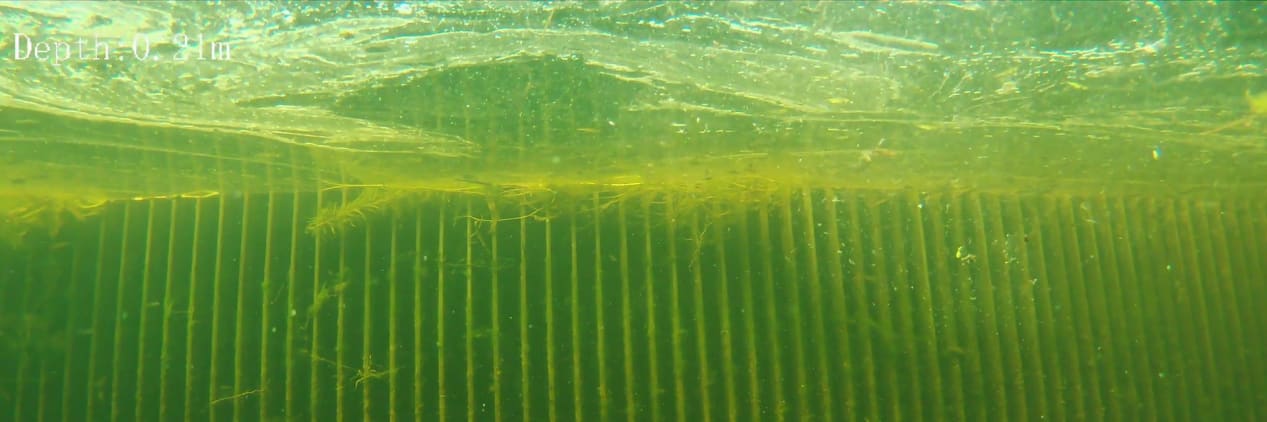
Underwater ROV inspection inside an ESB hydroelectric dam

ESB hydroelectric dam ROV inspections

Inspecting critical hydroelectric infrastructure across Ireland — without divers, scaffolding, or dewatering.
Overview

The Job at a Glance

An ongoing underwater ROV inspection programme across most of the ESB's hydroelectric sites in Ireland. Engineers With Drones are called in by individual site managers to inspect specific assets — inlet screens, outlet screens, turbines, spiral casings, gates, sealing surfaces, scour drains, weirs, and valves — providing high-resolution visual assessment without requiring dewatering or divers.

Multiple ESB hydroelectric sites, Ireland

Ongoing inspection programme covering most ESB-owned hydroelectric stations across the country.

Micro ROV — freshwater inspection

Tethered micro ROV approximately the size of a cereal box, with 4K camera, high-powered lights, and 360-degree thrusters.

Condition assessment of critical assets

Inlet screens, outlet screens, turbines, spiral casings, gates, sealing surfaces, scour drains, weirs, and valves.

No divers, no dewatering

The ROV accesses locations that divers consider too dangerous, and does so without the downtime and cost of draining the structure.

Comparative methodology

Why they chose an ROV

For this inspection programme, we chose the ROV approach because it delivered complete visual data on ESB's critical hydroelectric infrastructure without the extreme hazards, costs, and downtime of traditional diver entry or full dewatering.

Safety
Zero divers vs confined-space diving

Every inspection is conducted remotely. No personnel enter the water, the penstock, or any confined infrastructure at any point.

Cost
No dewatering vs full drain-down + scaffolding

Eliminates the need for expensive dewatering, scaffolding, and extended station shutdowns — inspections are completed in a single day.

Data quality
4K video record vs limited diver visibility

Every critical asset is captured in high-resolution 4K footage that site managers can review, share, and act upon immediately.

Efficient option Our method

Using an ROV

A safe, efficient, and highly targeted solution using advanced ROV technology.

  • No dewatering, no scaffolding The ROV eliminates the need to drain down infrastructure or erect scaffolding — inspections happen in the water with no downtime beyond the deployment itself.
  • Access to spaces divers cannot enter Confined spaces, narrow channels, and complex multi-section routes are accessible to the ROV where divers would refuse entry on safety grounds.
  • 4K imagery with high-powered lighting The ROV's 4K camera and powerful lights capture detailed visual data in the dark, enclosed environments typical of hydroelectric infrastructure.
  • Instant retrievability The tethered ROV can be pulled out immediately if something goes wrong — zero risk to personnel, which is the fundamental safety advantage over a diver.
  • Complex multi-section routes The ROV navigates ventilation shafts, intakes, and other complex access routes that would be impossible for divers or require full dewatering.
Project status Ongoing programme, multiple sites
Manned approach Traditional method

Without an ROV

The expensive, hazardous, and time-consuming traditional approach.

  • Full dewatering and scaffolding required The entire structure must be drained down and scaffolding erected before any inspection can begin — expensive, disruptive, and slow.
  • Divers refuse confined spaces Many of the confined spaces and narrow channels in hydroelectric infrastructure are assessed as too dangerous for divers to enter.
  • Extended station downtime Decommissioning the generating station for dewatering and scaffolding means significant lost generation and extended operational disruption.
  • Personnel risk in hazardous environments Dark, confined, high-pressure environments pose serious risks to personnel — even with full safety protocols in place.
  • Limited visual documentation Diver-led inspections in challenging conditions produce limited visual data compared to the high-resolution video record an ROV delivers.
Operational impact Higher risk, cost and downtime
Background

How the ESB programme began

The ESB work grew out of an earlier engagement with Irish Water. As Bob Foley, founder of Engineers With Drones, explains: "We got a call from Irish Water asking if we do underwater drone work, which we quickly tooled up for and started on." Having established that capability, Engineers With Drones reached out to the ESB with the same offer. That conversation was circulated internally, and it led to a long-running inspection programme that now covers most of the ESB's hydroelectric sites across Ireland.

Site managers contact Engineers With Drones when they have a specific issue, a routine inspection due, or an asset they need visual evidence on. Engineers With Drones request drawings of the relevant infrastructure beforehand — both to confirm whether the job is suitable for ROV deployment and to understand the layout before arriving on site.

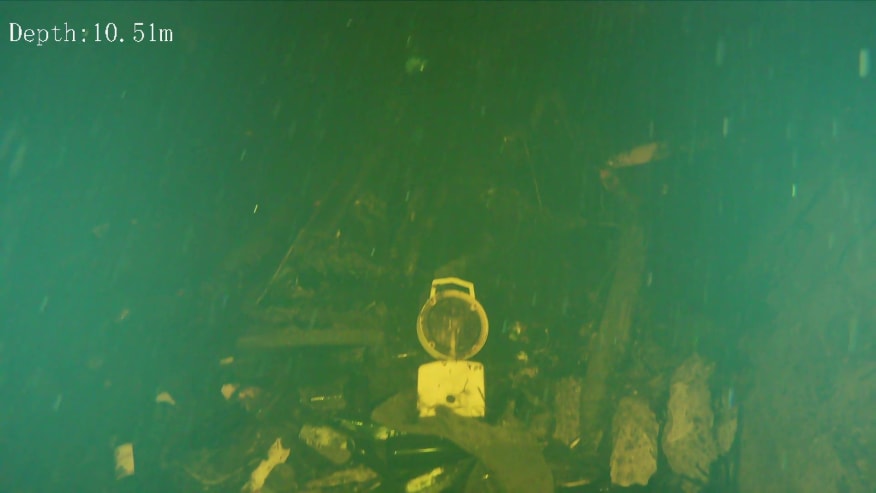
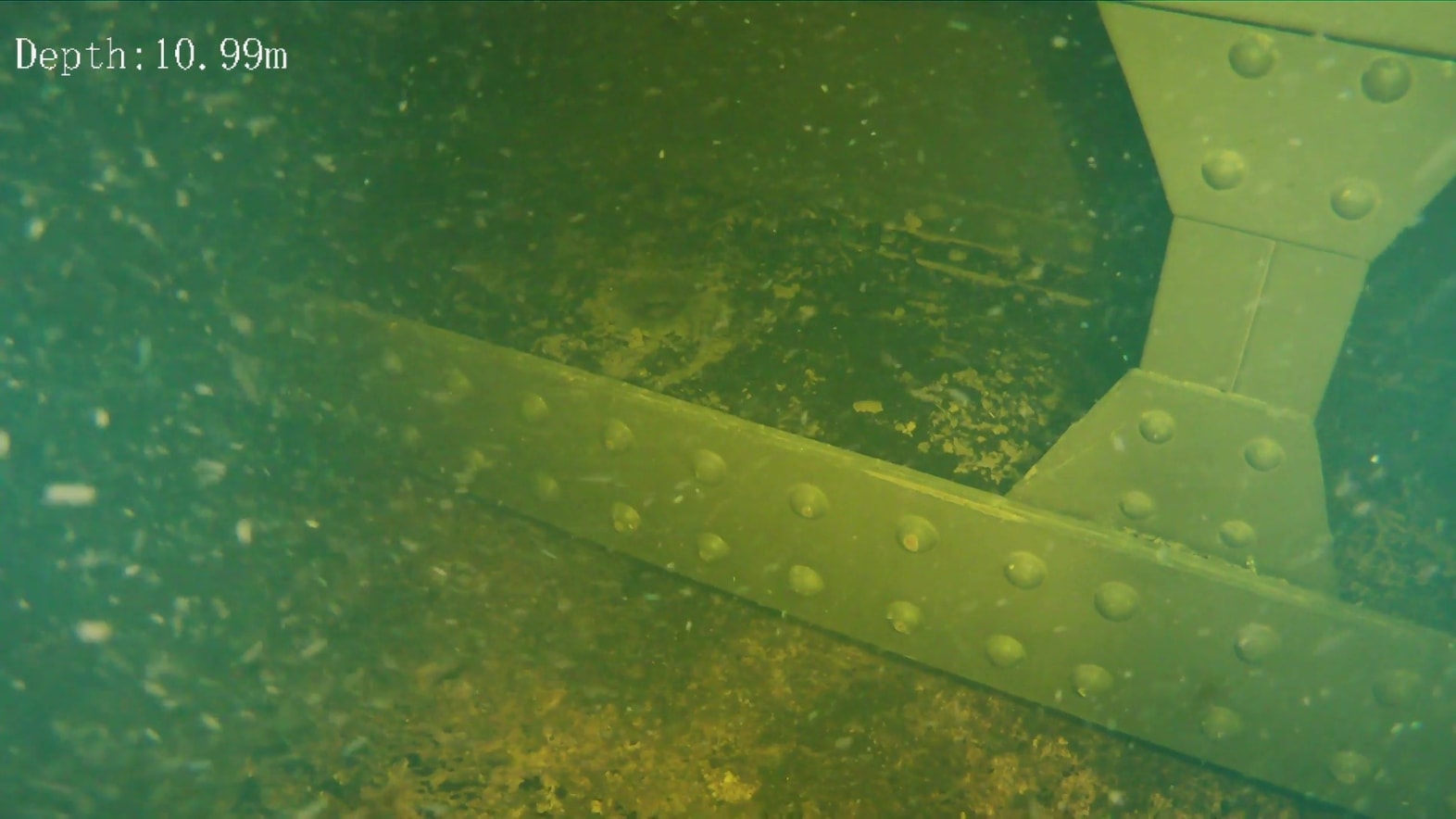
Underwater ROV footage inside an ESB hydroelectric dam at a depth of 10.51 metres
ROV footage captured at 10.51 metres depth inside an ESB hydroelectric dam. The ROV's onboard lights illuminate the surrounding underwater structure.
Equipment

A micro ROV built for confined spaces

The ROV used for this work is a new class of micro ROV, approximately the size of a cereal box. It is tethered — always physically connected to the operator by a long cable — which means it can be retrieved instantly at any point in the inspection. This is the fundamental safety advantage over a diver: if something goes wrong, you pull the drone out.

The ROV features a 4K camera and very high-powered lights, which are essential because most of the infrastructure it operates in is entirely dark. It has 360-degree thrusters, allowing it to move in any direction without turning. On-board sensors provide depth measurement, position holding, and altitude holding — the standard suite of features for a ROV of this class.

The system also supports accessories. A grab attachment allows the ROV to pick up and move objects. "We picked up a few dropped chains, lifting chains and stuff like that for gates and hydroelectric gates for the ESB in our time", Bob notes. This recovery capability means a single deployment can deliver both inspection data and practical task completion.

The micro ROV unit used for hydroelectric dam inspections — approximately the size of a cereal box
The micro ROV is approximately the size of a cereal box, allowing it to access confined spaces and narrow routes that are inaccessible to divers.
Methodology

How inspections are planned and executed

Before any site visit, Engineers With Drones request detailed drawings of the infrastructure to be inspected. These are reviewed to confirm that the work is suitable for ROV deployment and to map out the intended route. On site, the ROV is set up at a suitable deployment location and the operator navigates from that point to the target asset.

The core rule of thumb for feasibility is straightforward. "If we had a very, very, very long stick, we should be able to touch the item", Bob explains. That means the preferred route is a direct, unobstructed line from the operator to the inspection target. There are exceptions — if the access route has no sharp corners, edges, or snag hazards, the ROV can navigate more complex paths — but the straight-line principle guides most deployment decisions.

Scope

What gets inspected

The range of assets inspected across the ESB programme is broad. Each site visit is typically driven by a specific inspection need from the site manager, but the variety of infrastructure covered over the course of the programme is extensive.

Inlet screens

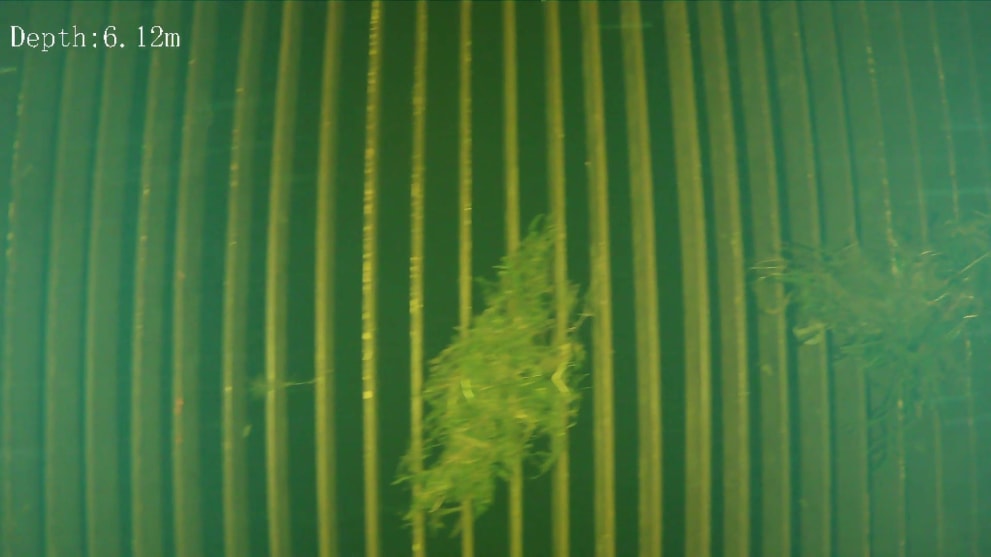
Inlet screens are one of the most frequently requested inspection items. Debris — tree trunks, branches, leaves, general river material — accumulates on the screens over time, and the screens exist specifically to prevent that debris from reaching the turbines. Regular visual inspection confirms whether blockage is developing and whether the screen itself is in good condition.

"This would have been done with divers back in the day, but nowadays they just call us in. We can do it in a day usually, pretty quick, no problem at all", Bob explains.

Turbines and spiral casings

Engineers With Drones have inspected turbines by approaching from the downstream side — swimming the ROV up inside the structure when the turbine is inactive to capture imagery of its condition. The spiral casing, which guides water into the turbine, has also been inspected at several sites.

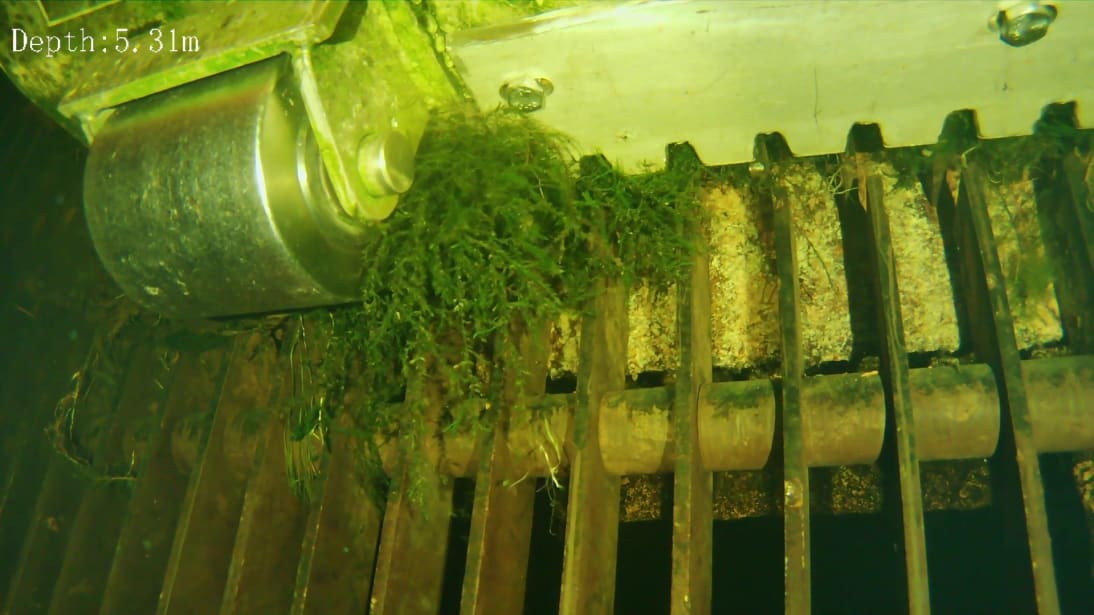
Underwater ROV footage showing the interior of hydroelectric dam infrastructure
The ROV is able to navigate inside inactive turbine infrastructure to inspect condition — something that would require full dewatering without an underwater drone.

Gates, sealing surfaces, and weirs

Gate sealing surfaces are inspected to confirm they are maintaining a proper seal and have not deteriorated. Weirs and associated structures are also part of the programme. The ROV provides detailed close-up imagery of sealing surfaces that would otherwise require the gate to be removed or the structure dewatered.

Scour drains and valves

Scour drains and valve infrastructure are also routinely inspected. The ROV navigates down through tubes and channels to assess the condition of valves and check for blockages or defects. "Anything you could put a cereal box into realistically, we've gotten into", Bob notes.

Case study

A standout dive — through the ventilation shaft to the turbine

One of the most technically demanding deployments in the ESB programme illustrates clearly what the ROV makes possible. The inspection required access to the turbine at the base of a dam — an asset that, in most circumstances, would require the entire structure to be drained down.

Instead, Engineers With Drones operated the ROV from the top of the dam, sending it down a ventilation shaft into the intake. The ROV then navigated through the intake and accessed the turbine directly. "That sort of dive would be impossible, literally, to do with divers or any other sort of structure", Bob explains. The confined nature of the route, combined with the darkness and the pressure environment, ruled out any human entry — but for the ROV, it was a complex dive that presented no operational problem.

Top of a hydroelectric dam showing the access point used to deploy the ROV into the ventilation shaft and intake
Operating from the top of the dam, the ROV was deployed down a ventilation shaft, through the intake, and to the turbine itself — a route that would be impossible for divers.

The tether provided the operational safety margin throughout. At any point, the operator could simply pull the ROV back out. In a confined environment with no visibility and no reliable communication, that physical connection is the entire risk-management strategy — and it works.

Analysis

Why the ROV succeeds where divers and dewatering do not

The ESB programme demonstrates two distinct scenarios where the ROV offers a fundamental operational advantage over the alternatives.

The first is replacing dewatering. To inspect underwater infrastructure without an ROV, the conventional approach is to drain down the relevant section of the structure entirely and erect scaffolding to provide access. This is expensive, time-consuming, and puts the generating station out of service for an extended period. The ROV eliminates that requirement entirely — the inspection happens in the water, with no downtime beyond the deployment itself.

The second is replacing divers in locations divers will not go. Many of the confined spaces and narrow channels that form part of hydroelectric infrastructure are assessed as too dangerous for divers to enter. As Bob Foley, founder of Engineers With Drones, explains: "A lot of the time divers won't go into the places we go because it's too dangerous for them, but we can go there no problem because it's a drone, and because the drone is a lot smaller than the diver. If something goes wrong, we can just pull the drone out."

In both cases, the ROV provides the inspection data the client needs — in high resolution, in real time — without the cost, the risk, or the operational disruption of the traditional alternatives.

Video footage

ROV inspection footage

ROV inspection footage captured during the ESB hydroelectric dam inspection programme, showing the type of underwater imagery provided to site managers for condition assessment.

Underwater ROV footage from the ESB hydroelectric dam inspection programme, showing inlet screens, turbines, and confined-space infrastructure accessed without divers or dewatering.
Let's talk

Speak to an engineer about your project

Complex surveys and inspections require more than just a pilot. Our engineers can help you scope your requirements and indentify the right approach.

Talk to an engineer

+353 (0)21 202 8281

Quickest for technical scoping

Email your brief

info@engineerswithdrones.ie

Best for sending detailed specs

Next steps

Where to find out more

You can find out more about our rivers and waterways inspections or our underwater ROV inspection equipment. You may also be interested in our case studies on the Parteen Weir underwater inspection and the Golden Falls penstock inspection. Alternatively, you can contact us here.

Last Updated: