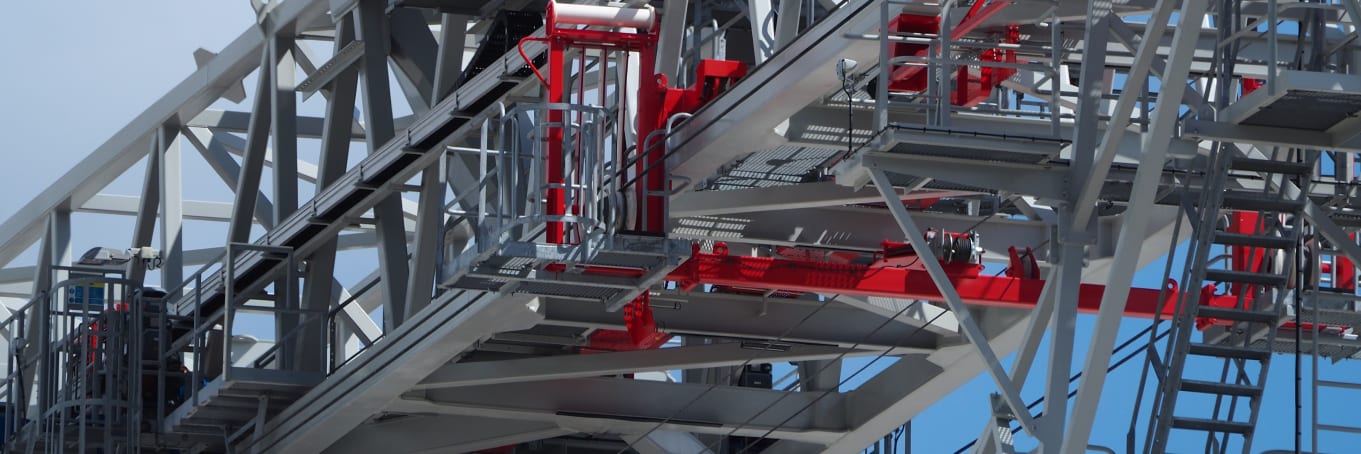
When a structure is too dangerous to approach, the drone goes first.
Overview
The Job at a Glance
A detailed drone inspection of a derelict port crane in Cork, carried out ahead of a planned decommissioning. The inspection produced a full defect report, classified by severity to allow the client to plan a safe approach and removal strategy.
Cork
Jetty end location, close to water, requiring full PPE including life jackets.
~2 hours in the field
From arrival on site to completion of data capture. All imagery verified on site before sign-off.
Report within 48 hours
The full inspection report, annotated imagery and defect classifications were delivered to the client within 48 hours of fieldwork.
Full RAMS prepared
A complete Risk Assessment and Method Statement was prepared and agreed with the client before any fieldwork commenced.
The challenge
You can't assess it if you can't safely approach it
The crane was located at the end of a jetty in Cork - relatively modest in size compared to the large ship-to-shore container cranes at modern port facilities, but a structure that had been left exposed to the elements for years with no maintenance. Size isn't what determines the hazard in that situation.
The client's concern was straightforward: the structure looked bad, and sending people in close without knowing the full picture wasn't acceptable. They needed that picture - a detailed, reliable understanding of the current condition of the crane - before they could safely plan the decommissioning work.
As Bob Foley, founder of Engineers With Drones, put it: "They were concerned that putting people close to the crane as it stood when we inspected it could be dangerous, so they decided to utilise a drone to get an idea of what they were dealing with before they approached it with the idea of removing it."
Technology
The high-optical-zoom camera
The key piece of drone technology for a job like this is the high-optical-zoom camera. This is a high-resolution sensor - at least 20 megapixels, in this case potentially up to 40 - paired with a long-focal-length lens, around 120mm, which translates to roughly 7x optical zoom in practical terms.
"That allows you to keep the drone away from the structure while still getting very high-resolution imagery," Bob explains. That matters a great deal when the structure you're inspecting is in an unknown structural state. You don't want the drone close to something that might shed material or partially collapse.
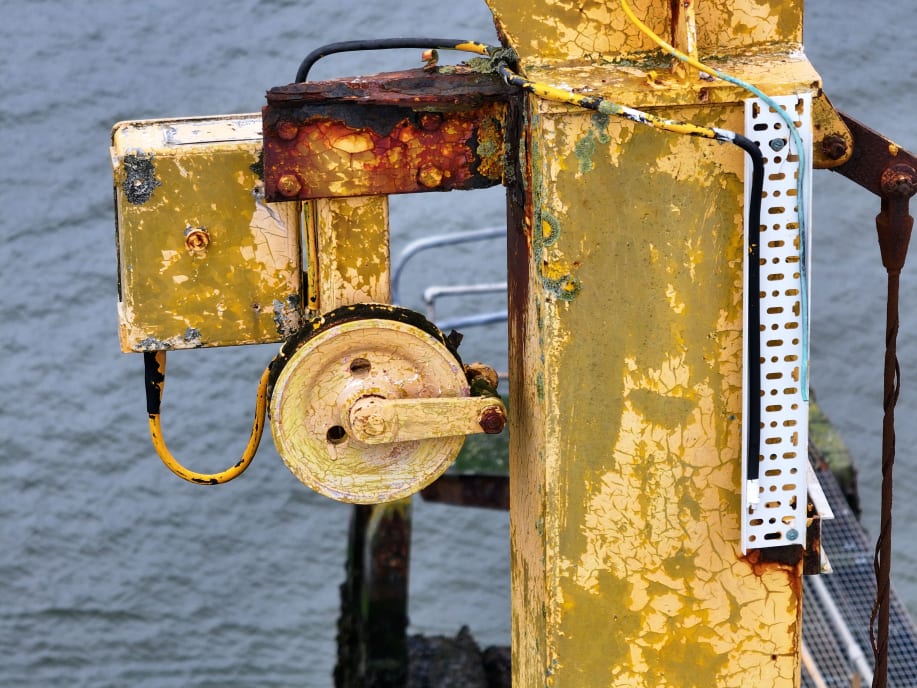
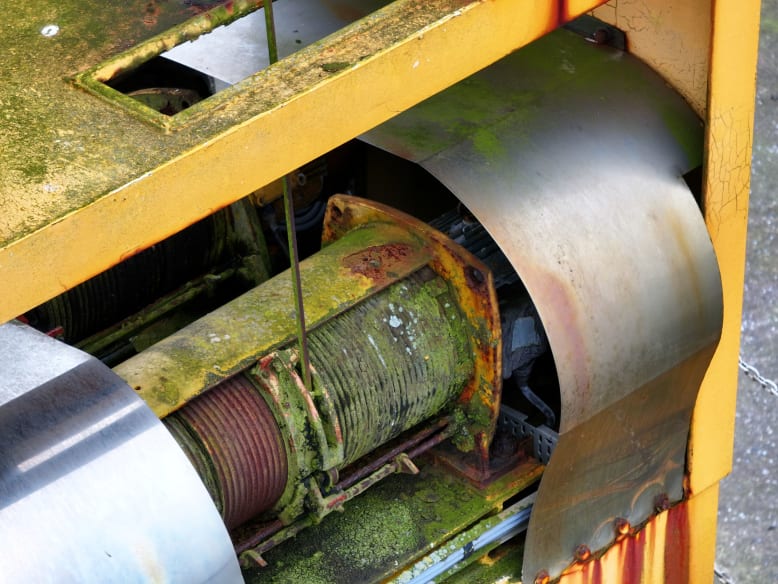
From a safe operating distance, the team was able to get detailed imagery of cable terminations, corroded fasteners, structural members, pivot points, and the condition of guard rails - all the critical elements of the crane that needed to be understood before any human approach.
Findings
What the inspection found
Context is everything in an inspection report. Showing a sheared bolt or a corroded joint in isolation tells you very little - you need to know exactly where it sits in the structure and what role it plays. Every image in the report was annotated and positioned relative to a structural diagram of the crane, so the client could immediately understand the significance of each finding.
The inspection covered all primary and secondary structural elements. The findings were classified by severity, with critical defects clearly flagged. Here is a summary of the major findings.
Cable condition
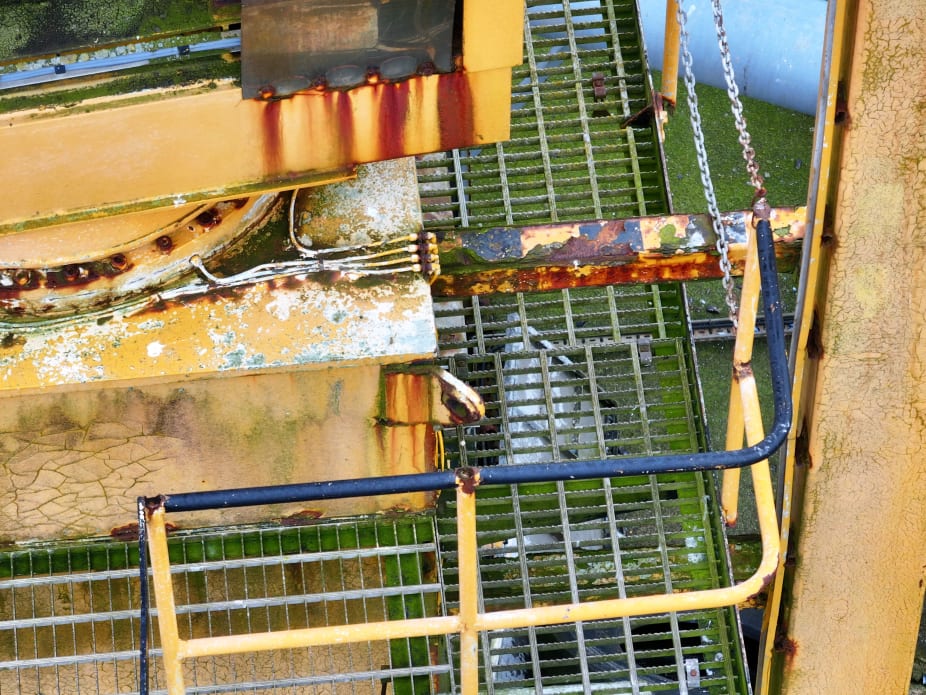
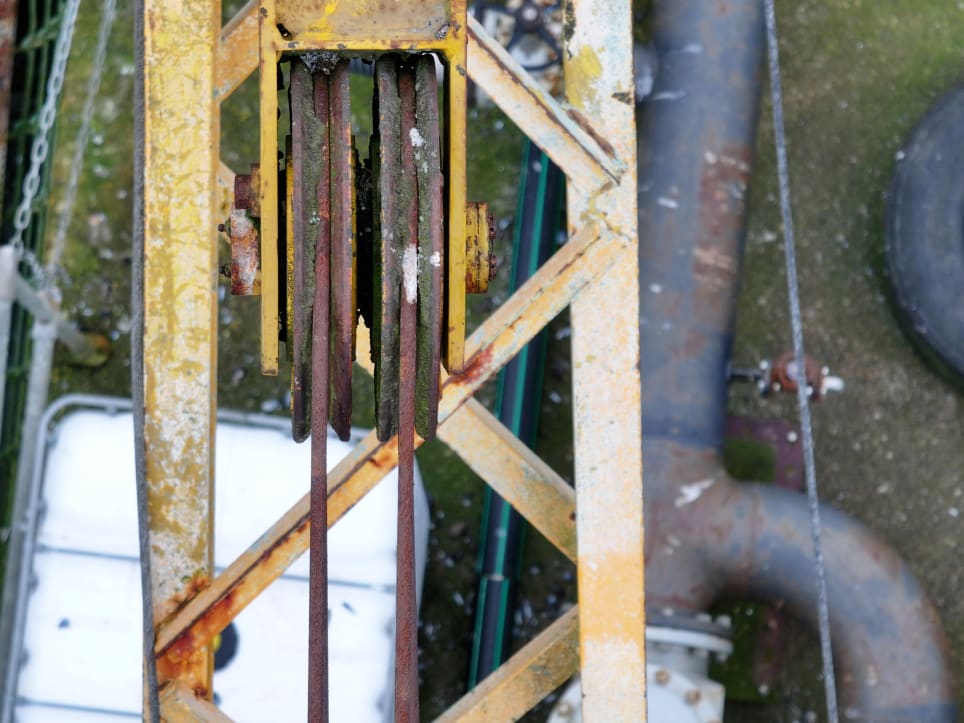
The drone was able to get right into cable terminations and fork connections, clearly showing the corrosion level on the cable strands. On the underside faces, biological growth was present. On the upper faces, the cables appeared cleaner but were still heavily corroded throughout.
Heavily corroded nuts holding the cable spool, and biological growth on the underside of cables, were clearly visible using the optical-zoom camera.
Primary jib pivot
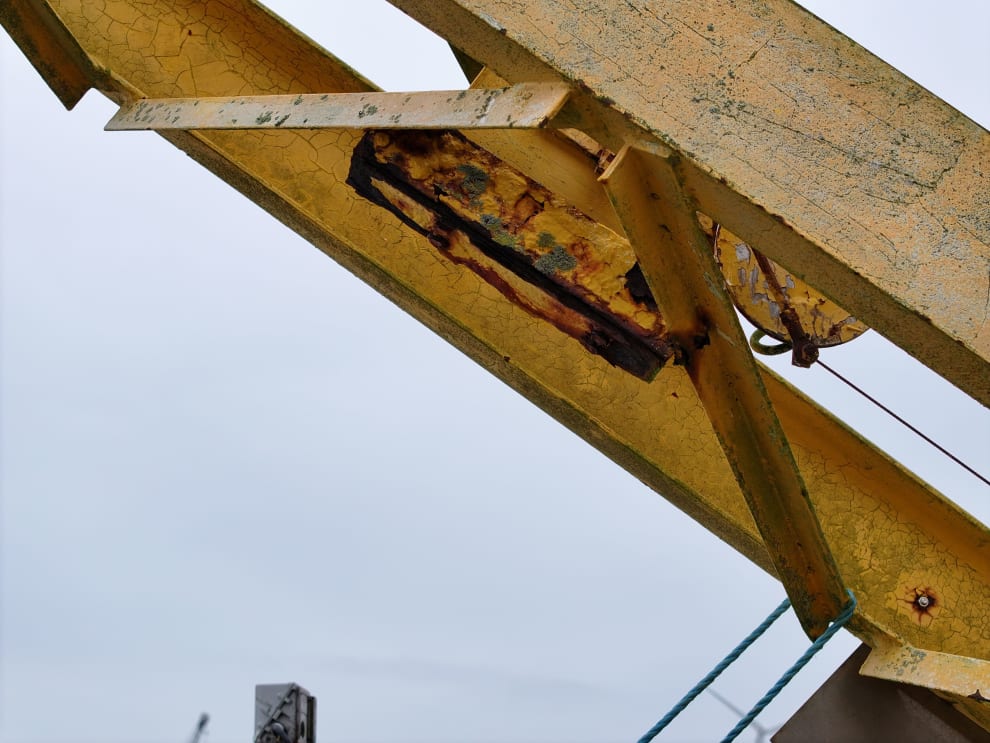
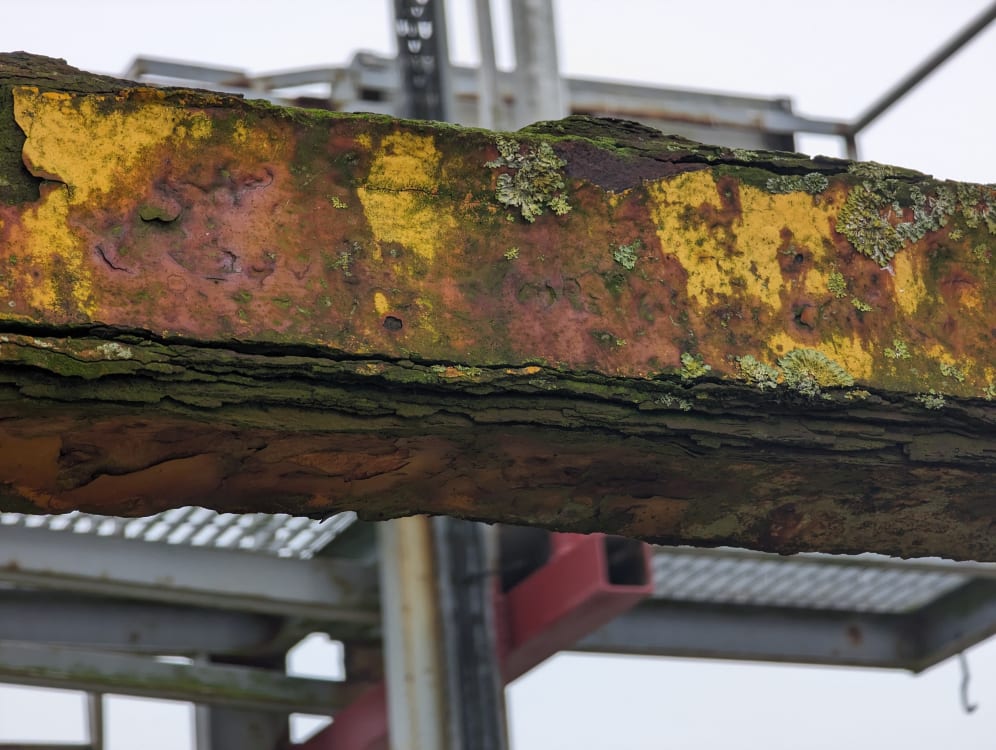
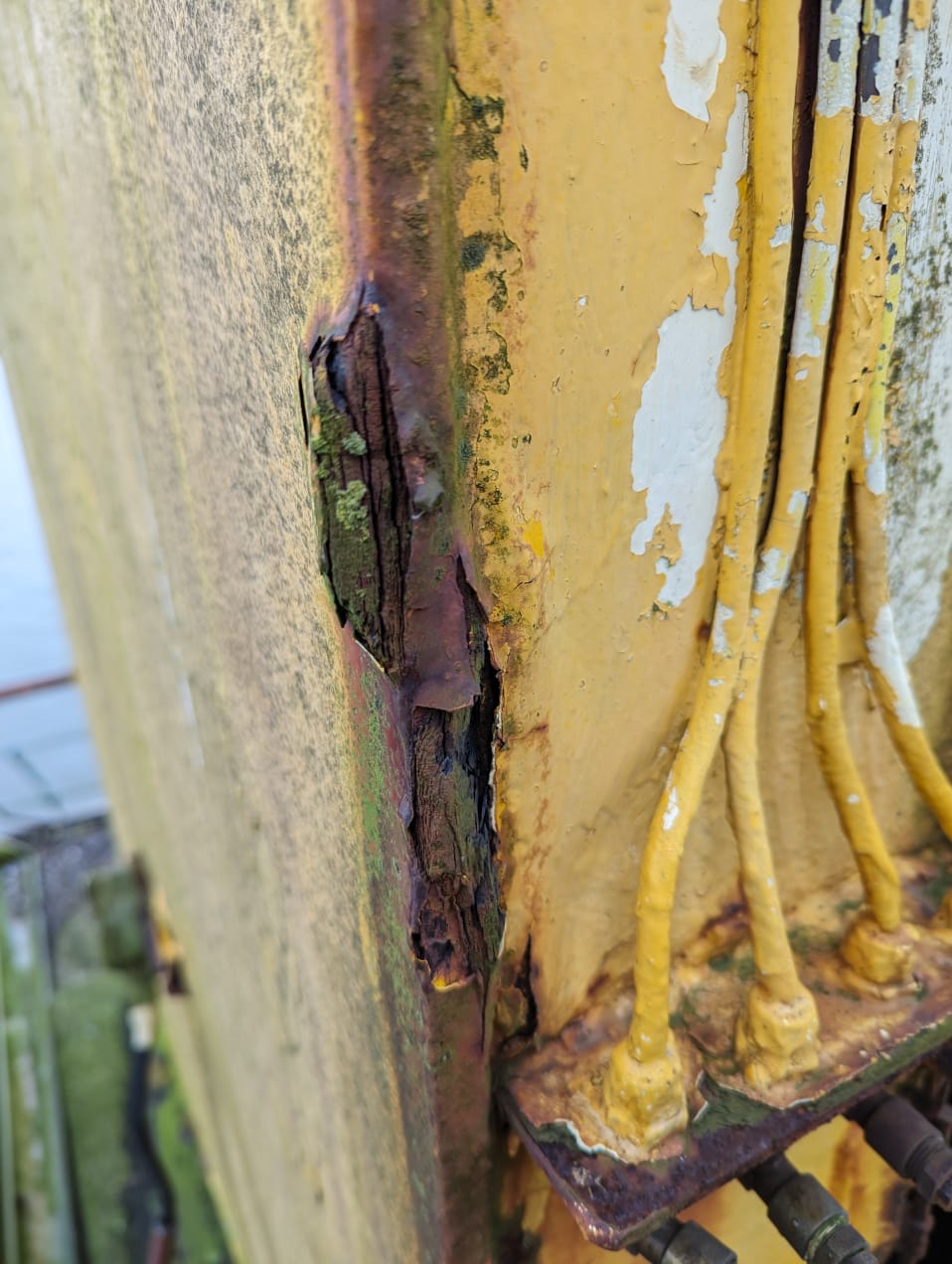
The primary pivot point for the jib is one of the most structurally significant components on the crane. The supporting structure around this pivot was found to be heavily corroded, with some elements close to corroding completely through. This was flagged as a critical finding.
The support structure around the primary jib pivot was found to be heavily corroded and in some areas close to corroding completely through.
Secondary support structure - critical-level defects
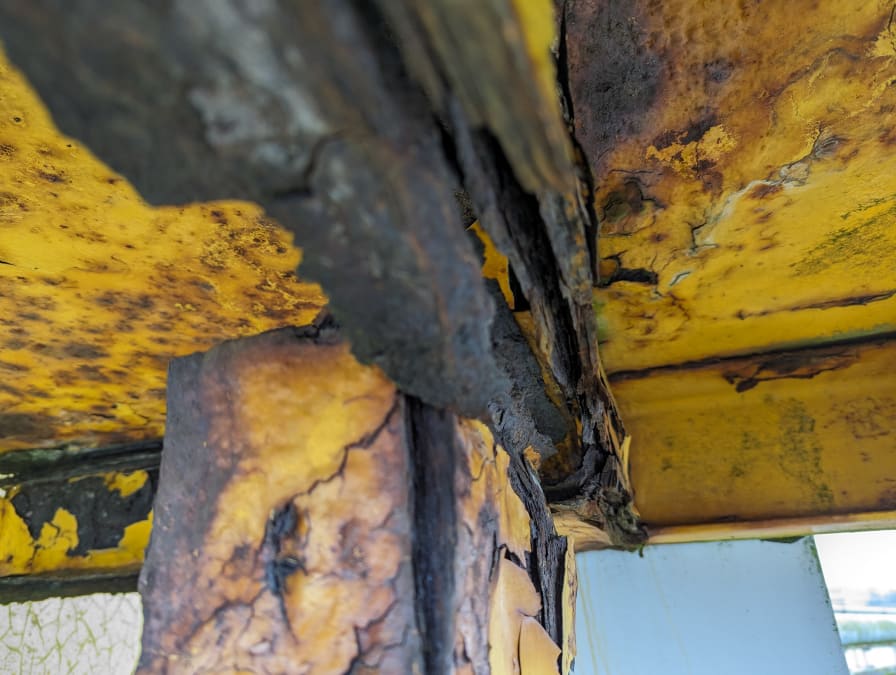
Flat horizontal surfaces had retained water over a long period. This caused significantly heavier corrosion on those horizontal faces compared to the vertical surfaces nearby. Several secondary structural members were found to be nearly corroded through. These were classified as critical-level defects due to the falling object risk they presented.
As Bob notes: "Some of these could be four or five hundred kilos of weight, steel beams, things like that. So you don't want that coming down." The presence of the drone, operating remotely, meant that none of the inspection team were exposed to that risk during the assessment.
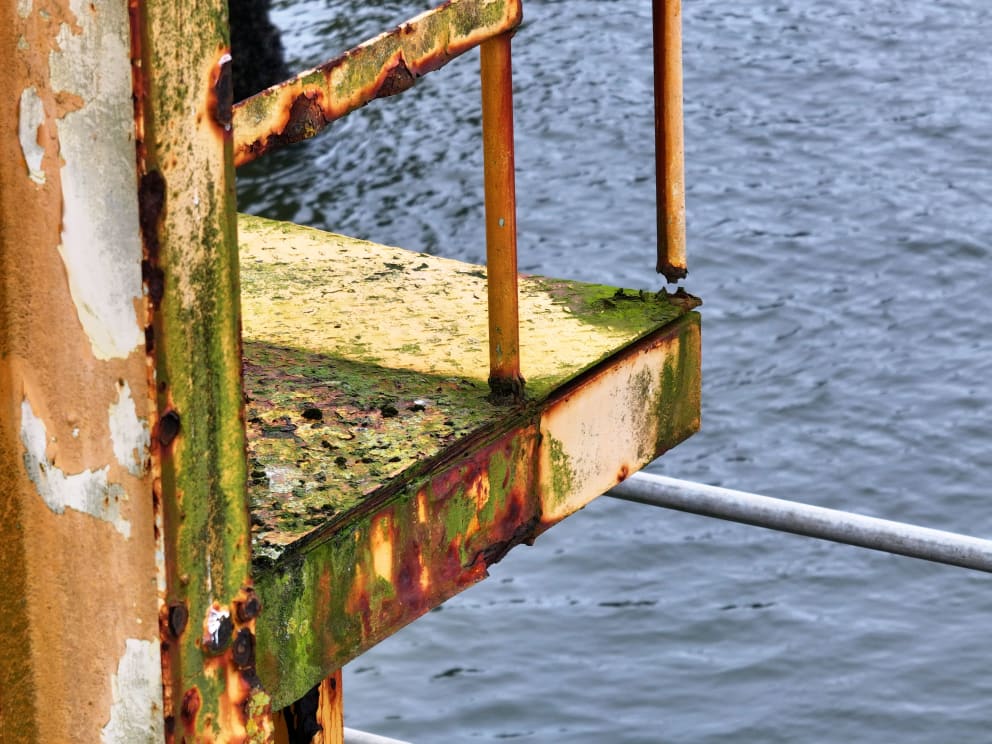
Guard rails - no material remaining
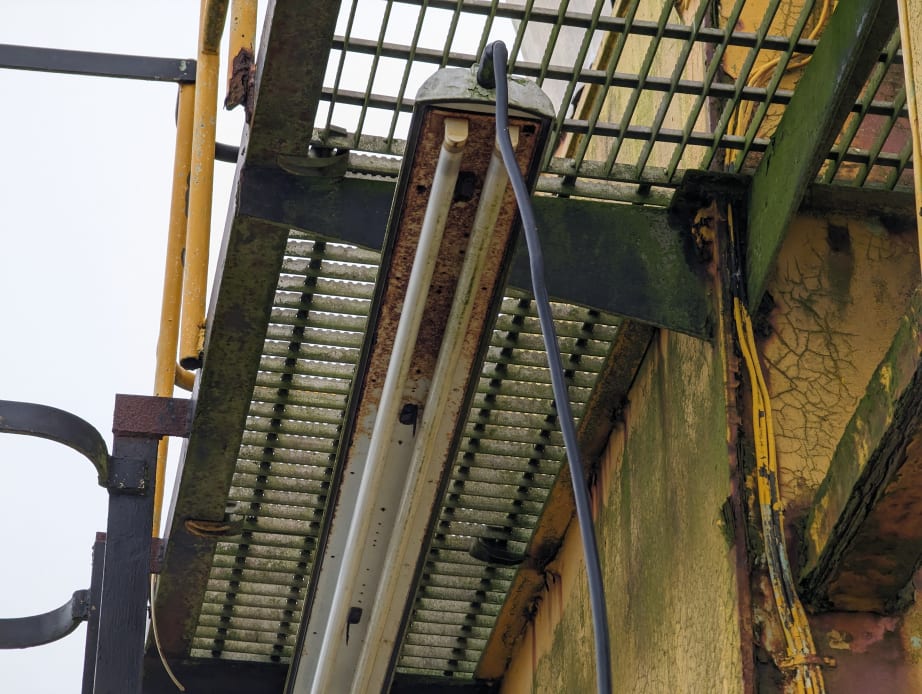
Perhaps the starkest finding in the report concerned the guard rails. These are the rails that any person climbing the crane would have relied on to prevent a fall. They were found to be entirely gone as functional steel components. "What used to be a steel member is now almost entirely corroded. There is no core material left at all; it is effectively gone, and what remains is iron oxide."
Guard rails that would have been relied on to prevent falls were found to be entirely gone as functional steel components.
To put it plainly: anybody who would have approached this crane and assumed the guard rails were safe had no idea of the actual condition of the structure. The drone inspection removed that uncertainty entirely.
Decommissioning
Why decommissioning isn't the simple part
There's a tendency to assume that taking something apart is less hazardous than operating something that's defective. In reality, decommissioning a structure in this condition is a skilled and genuinely dangerous operation. The people who do this work professionally know exactly how to cut, dismantle and lower structures like this without endangering themselves or anyone nearby. They aren't using spanners and checking torques - they're using oxygen lances and cutting equipment, and the approach is entirely different.
Knowing the condition of the crane in detail - where the worst corrosion was, which components were at risk of sudden failure, where safe angles of approach existed - was exactly what allowed those specialists to do their job safely. That's what the report gave them.
"Many people assume the dangerous part of mountain climbing is going up; in fact, coming down is often far more hazardous. Similarly, when dismantling a damaged structure, people must be especially cautious. If someone simply starts hitting it with a sledgehammer, that can create significant additional danger."
Bob FoleyFounder and Head Engineer
Outcome
Know before you go
"The primary thing that they gained from this particular report was knowledge of safety, knowledge of the structure as it stands right now and knowledge and insight on how they could go about decommissioning the crane."
With a full picture of the crane's condition, our client was able to identify the safe angles of approach, understand the specific hazards on the structure and hand that information over to the decommissioning team. Work that previously would have meant sending people in blind - or relying on binoculars from a distance - was now informed by detailed, classified, annotated imagery of every significant element of the crane.
Beyond the immediate safety benefit, the decommissioning also opened up the jetty again. With the unsafe crane structure safely removed, that area of the terminal could be brought back into use for vessels.
Fieldwork time: approximately two hours on site. Report in the client's hands: within 48 hours.
Comparative methodology
Why they chose us
The crane was in a critical condition and too dangerous to approach safely. A drone delivered a complete, classified defect assessment — without anyone setting foot near the structure.
Time in the field
~2 hoursvs no safe inspection possible
The full data capture was completed on site in approximately two hours, with imagery verified before leaving.
Personnel exposure
Zero exposurevs falling object risk
No one was required to approach the corroded structure at any point during the inspection.
Deliverable
Report in 48hvs no report possible
A full defect classification with annotated imagery was delivered to the client within 48 hours of fieldwork.
Efficient optionOur method
Using a drone
This is what the job looked like using drone technology.
~2 hours on siteThe complete data capture was finished well within half a day, with all imagery verified before leaving site.
No personnel near the structureThe unsafe condition of the crane was fully assessed before anyone was required to approach it.
All structural elements documentedPrimary and secondary members were photographed in high resolution, including features near the waterline.
Defects annotated and classifiedEach defect was given a severity classification and located on a structural diagram for the client's use.
Report within 48 hoursAnnotated imagery, severity classifications, and the full report were delivered two days after the site visit.
Decommissioning team fully informedThe client could plan a safe, methodical removal based on a complete understanding of the crane's actual condition.
Report deliveredDefect classification within 48 hrs
Manned approachTraditional method
Without a drone
What the job would have looked like without drone technology.
Binoculars from a distanceWithout a drone, a binocular scan from a safe distance was the only realistic option for this structure.
No defect report possibleWithout close access, a structured defect classification and annotated report couldn't be produced.
Decommissioning team approaching blindThe removal crew would have had to move in with limited information about the actual structural condition.
Falling object riskCritically corroded members posed a falling object hazard to anyone working close to the structure.
Unknown guard-rail conditionGuard-rail failures wouldn't be identified until someone physically relied on them during the decommissioning work.
Operational impactBlind approach & elevated risk
Let's talk
Speak to an engineer about your project
Complex surveys and inspections require more than just a pilot. Our engineers can help you scope your requirements and indentify the right approach.