Interior view of a spillway at Inniscarra Dam showing the concrete flat construction and supporting structure

Confined space work in hydro dam Cork

Inniscarra Dam, Cork Inspecting the interior of three spillway structures at Inniscarra Dam for ESB — the first time the upper reaches had been seen since the dam was built in the 1950s.
Overview

The Job at a Glance

A confined space drone inspection of three spillway interiors at Inniscarra Dam in Cork for ESB. The drone entered the hollow spillway structures — vast concrete chambers like the inside of a cathedral — and captured 4K video and still imagery of the concrete flats, supporting walls, and all visible defects. The inspection covered areas that had not been seen since the dam was constructed in the 1950s.

Inniscarra Dam, Cork

ESB hydroelectric dam on the River Lee. Three spillway structures with hollow interiors accessed by internal gangways above the river.

Confined space drone

Small cage-protected drone with built-in lights and 4K video recording, operating without GPS inside the enclosed spillway structures.

Condition assessment of concrete

Cracking, spalling, weeping, and calcite buildup documented across all three spillways — with an ESB civil engineer directing the inspection in real time.

No scaffolding, no confined space entry

The inward-slanting concrete walls made scaffolding impractical and rope access unsuitable. The drone eliminated both.

Background

Inniscarra Dam and the spillway structures

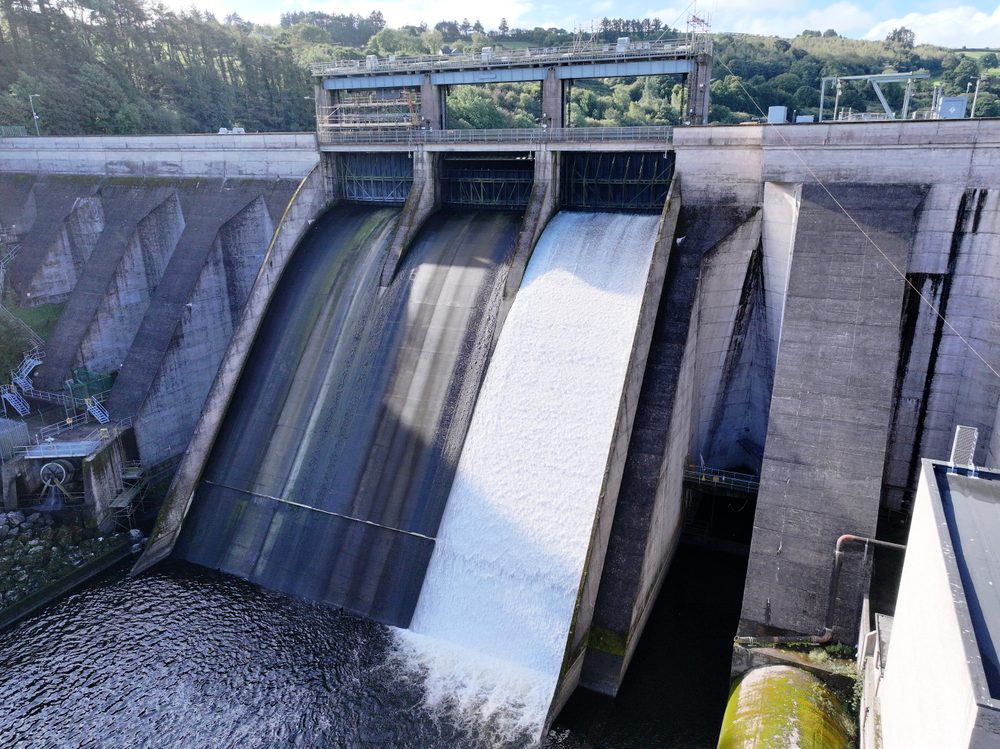
Inniscarra Dam is one of the ESB's hydroelectric stations on the River Lee in Cork. Its spillways — the designed overflow paths that carry excess water away from the dam — look like broad concrete ski ramps descending at a steep angle from the top of the dam to the river below. But the spillways are not solid. Each one is a hollow concrete structure, with an interior space that runs the full height of the structure.

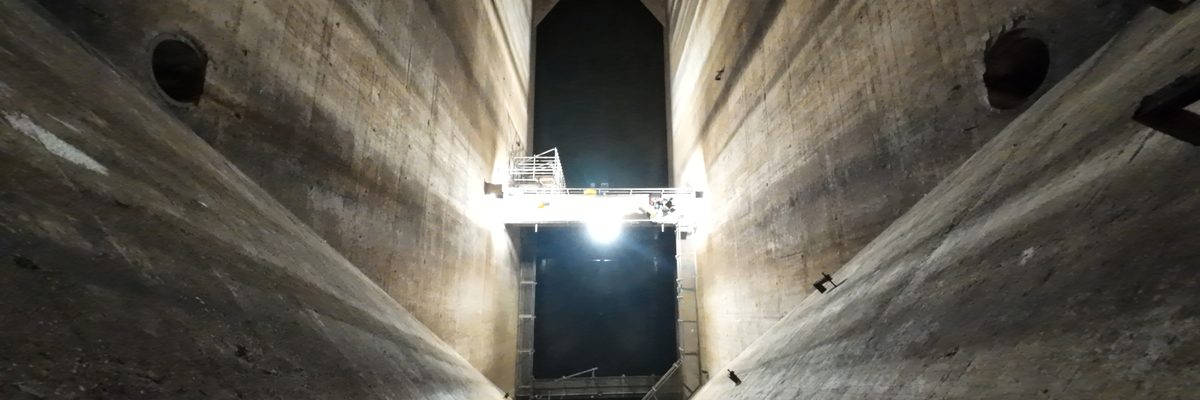
Inside, the spaces are vast — as Bob Foley, founder of Engineers With Drones, describes them: "Think like being inside a cathedral". The interior walls are made up of hundreds of individual concrete flats, each probably a foot thick or more, laid all the way up the ramp. Walkways and gangways run along the lower interior, while the base of the structure holds the river itself. The ceiling soars high overhead, and the walls slant inward as they rise — a geometry that makes conventional access extremely difficult.

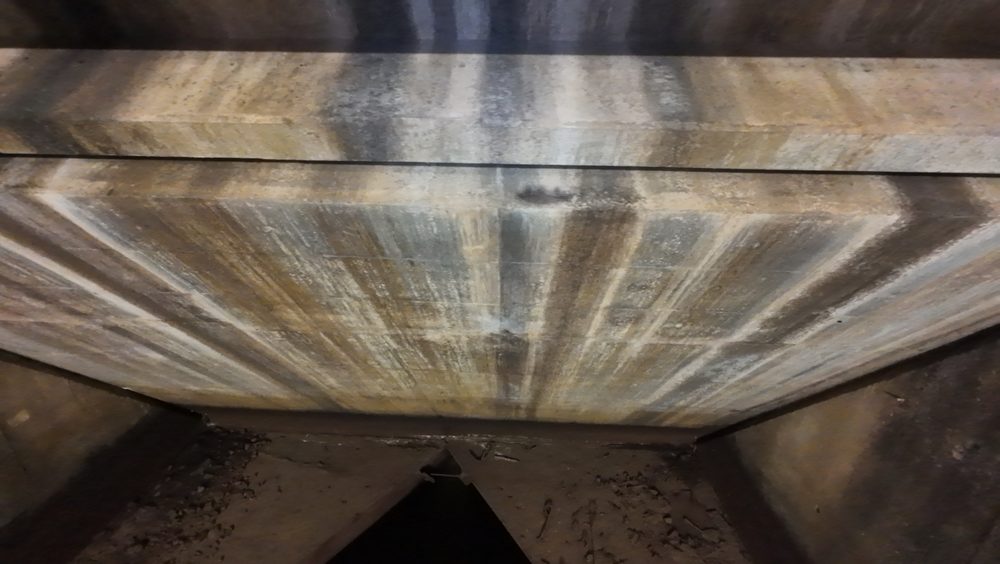
Interior view of the spillway structure showing the concrete flats and supporting framework
The interior of a spillway at Inniscarra Dam — a hollow concrete structure where hundreds of concrete flats line the walls and the river flows below.
The challenge

Concrete showing signs of distress in unreachable areas

The upper reaches of these spillway interiors had never been inspected up close since the dam was built. There were indications that some of the concrete might have issues — weeping in some places, spalling in others — and the ESB needed to understand the extent and severity of the problems before they could plan any remediation work.

The structure itself made conventional inspection nearly impossible. The interior walls slanted inward at every level, with no hard points to anchor rope access or scaffolding. "It was a very difficult structure to actually climb up," Bob explains. Erecting scaffolding would have required an enormous amount of material and an extraordinary cost — and even then, the inward slope of the walls meant there were few safe attachment points at any height. Rope access was not a viable alternative either.

The ESB asked Engineers With Drones if they had a solution. The answer was a confined space drone purpose-built for exactly this kind of work.

Technology

A confined space drone built for enclosed structures

The drone deployed for this inspection was a small confined space platform with several critical features for working inside the spillways. A protective cage surrounded the propellers, allowing the drone to make contact with walls without crashing — essential in a narrow, enclosed space where GPS is unavailable and the pilot navigates entirely by visual reference from the live camera feed.

The drone carried a 4K video camera and high-powered built-in lights, which were necessary because the spillway interiors receive no natural light beyond what enters through the access openings. The combination of cage protection, onboard lighting, and stable flight without GPS meant the drone could operate safely in the confined, dark, and geometrically challenging environment of the spillway interior.

Confined space drone inside the spillway structure showing the scale of the interior
The confined space drone operating inside a spillway at Inniscarra Dam — the cage protects the propellers, and the built-in lights illuminate the dark interior.
Methodology

Three spillways, systematic capture, live collaboration

With three spillways to inspect, the team adopted a uniform and repeatable approach for each one. The drone entered the spillway interior, and the pilot began a systematic capture of all the concrete flats that lined the walls all the way up the structure. The supporting structure walls were also inspected, with particular attention to any areas where cracking, spalling, weeping, or calcite buildup was visible.

The ESB had a civil engineer on site alongside the drone team throughout the day. The engineer watched the live feed from the drone on a screen and was able to direct the pilot to specific areas of interest in real time. Wherever the engineer saw something that warranted a closer look, the pilot adjusted the camera angle or moved the drone in for additional imagery, capturing exactly what a civil engineer would need to assess each defect.

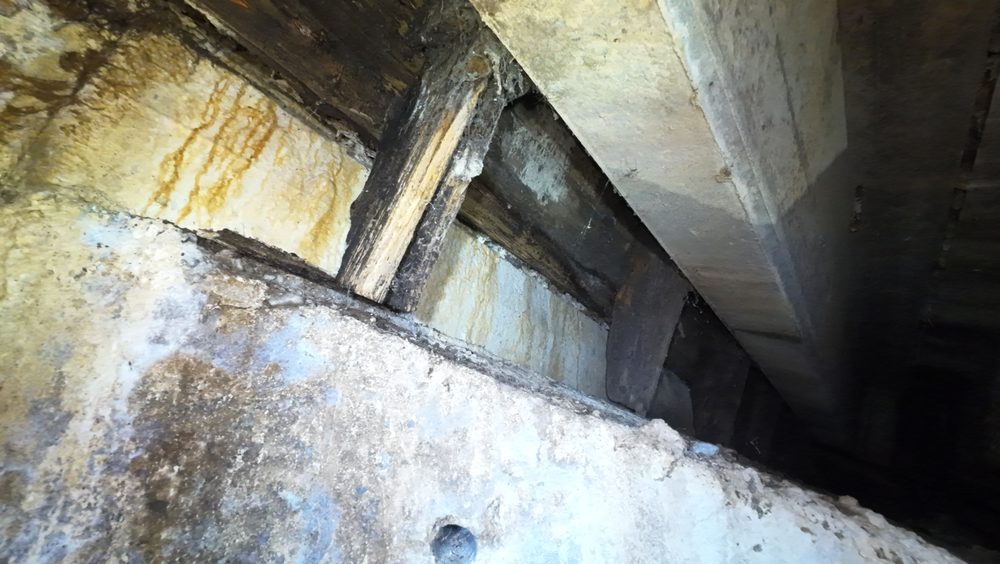
The inspection covered the full height of each spillway. At the top, the team found timber and debris that had been there since the original construction in the 1950s — material that nobody had seen or disturbed in the decades since. "Apparently we were the first people to be seeing these particular areas up the top since the dam had been built in the 50s," Bob recalls.

The upper interior of a spillway showing concrete flats and debris from original construction
The upper reaches of the spillway interior, where the drone captured imagery of areas that had not been inspected since the dam was constructed.
Findings

What the inspection revealed

The drone captured detailed imagery of all visible defects across the three spillways. The findings included areas of concrete cracking, spalling where the surface had broken away, and weeping where moisture was migrating through the concrete. Calcite buildup was also present in several locations — a mineral deposit that forms when water moves through cracks in the concrete and leaves a white residue as it evaporates.

Each defect was photographed and its location documented, giving the ESB's civil engineering team a complete visual record of the condition of every spillway interior. The team could then use that record to assess which areas needed remediation and to plan the appropriate repair work.

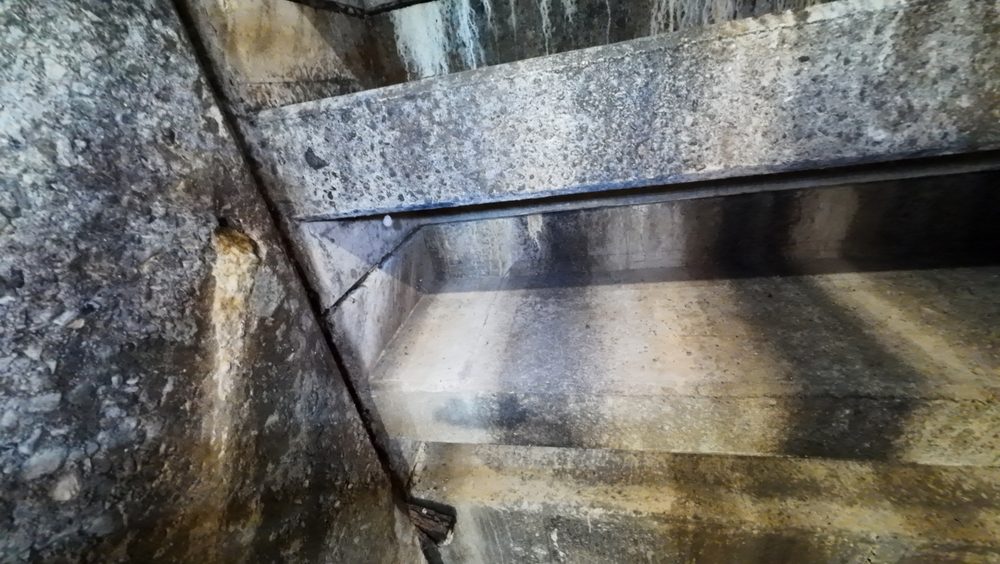
Close-up of concrete spalling and cracking on a spillway interior wall
Concrete spalling and cracking documented inside the spillway — one of several defect types identified during the inspection.
Calcite buildup and weeping on a concrete surface inside the spillway
Calcite buildup and moisture weeping visible on the concrete surface — indicators of water migration through the structure.
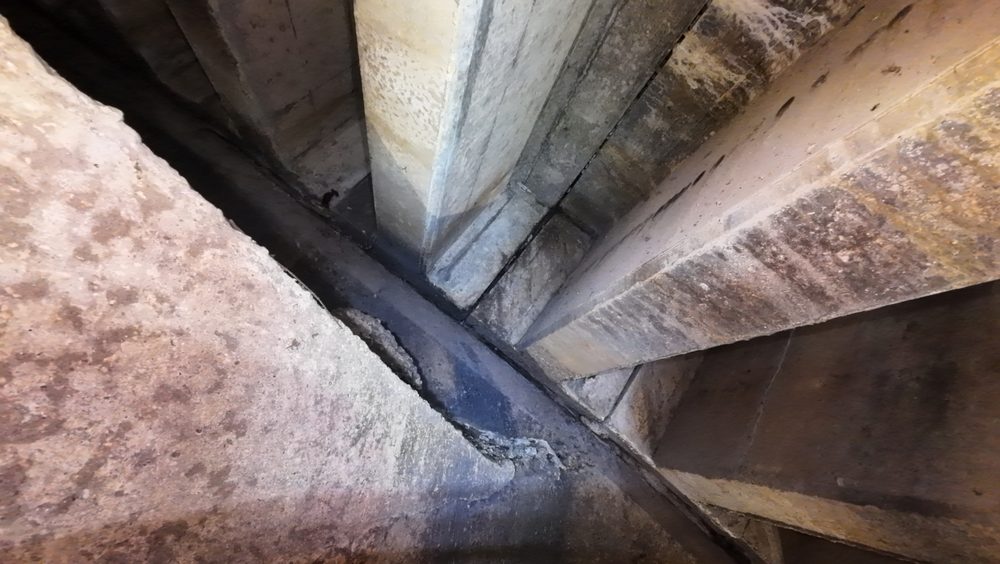
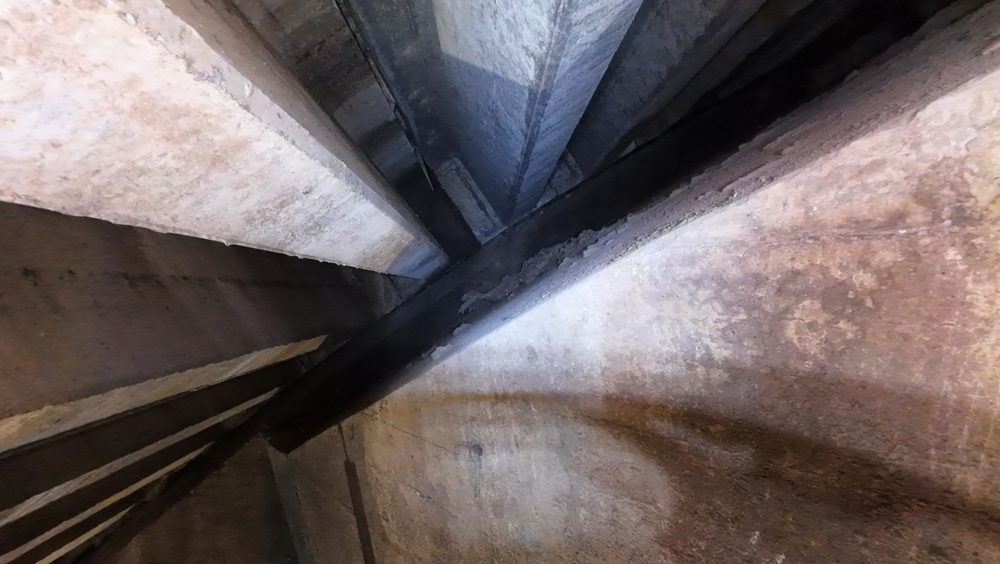
Interior supporting structure and wall connection points inside the spillway
Supporting structure and wall connections inside the spillway, all captured as part of the complete visual record for ESB's engineers.
Video footage

Confined space drone inspection footage

4K video footage captured inside the spillway structures at Inniscarra Dam, showing the concrete conditions, supporting structure, and the full height of each spillway interior.

Confined space drone footage from the Inniscarra Dam spillway inspection, showing 4K imagery of concrete conditions captured for ESB's engineers.
Comparative methodology

Why they chose a confined space drone

The inward-slanting walls, lack of hard attachment points, and sheer scale of the spillway interiors made scaffolding and rope access impractical. A confined space drone was the only viable method to reach the upper areas and deliver a complete visual record.

Access method
No scaffolding vs enormous scaffold structure

The drone flew the full height of each spillway interior. Scaffolding would have required an enormous structure with no reliable hard points to anchor against.

Safety risk
Zero confined space entry vs personnel at height on slanted walls

No person entered the confined space or worked at height inside the spillway. The drone eliminated both risks simultaneously.

Coverage
Full height, three spillways vs partial or no access

Every concrete flat, supporting wall, and defect was captured across all three spillways in a single day's fieldwork.

Efficient option Our method

Using a confined space drone

A safe, efficient, and highly targeted solution using advanced confined space drone technology.

  • No scaffolding required The drone flew the full height of each spillway interior without any access structure. No scaffold design, no material haulage, no erection time.
  • No confined space entry No person entered the spillway interior. The drone carried the camera; the pilot and the ESB engineer stayed outside, viewing the live feed.
  • Real-time collaboration with client The ESB civil engineer watched the live feed and directed the pilot to areas of interest, capturing exactly what was needed for assessment.
  • 4K imagery of every defect High-resolution video and still imagery of cracking, spalling, weeping, and calcite buildup, all documented with positional context.
  • Complete in a single day All three spillways were inspected in one day of fieldwork, with the full deliverable set compiled and uploaded to ESB's platform shortly after.
Project status Complete — all three spillways inspected
Manned approach Traditional method

Without a drone

The expensive, hazardous, and logistically impractical traditional approach.

  • Enormous scaffolding required The inward-slanting walls and lack of hard points meant an extraordinarily complex scaffold design with massive material requirements and prohibitive cost.
  • Rope access not viable The geometry of the structure — all surfaces slanted inwards with no reliable anchor points — ruled out rope access as a safe alternative.
  • Personnel at height in confined space Any manned approach would have required personnel to work at significant height inside a confined space above the river — a combination of hazards best avoided.
  • Extended disruption to station operations Scaffolding installation and removal would have required extended site access and potential operational constraints that the drone deployment completely avoided.
  • Limited visual record A scaffold-based inspection would have relied on manual observation and note-taking, producing a far less complete visual record than the drone's 4K imagery.
Operational impact Higher risk, cost and logistical complexity
Let's talk

Speak to an engineer about your project

Complex surveys and inspections require more than just a pilot. Our engineers can help you scope your requirements and indentify the right approach.

Talk to an engineer

+353 (0)21 202 8281

Quickest for technical scoping

Email your brief

info@engineerswithdrones.ie

Best for sending detailed specs

Next steps

Where to find out more

You can find out more about our confined space drone inspections or our rivers and waterways inspections. You may also be interested in our case study on the ESB hydroelectric dam ROV inspections programme. Alternatively, you can contact us here.

Last Updated: